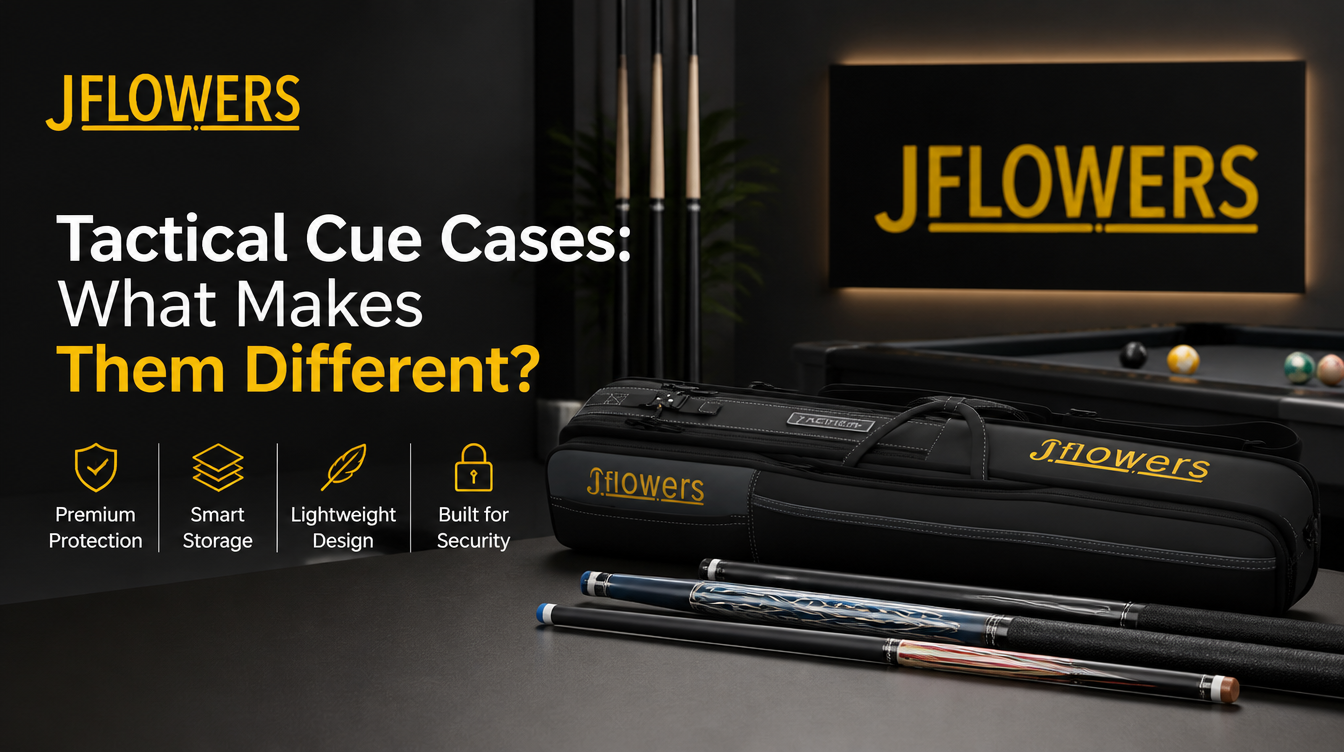
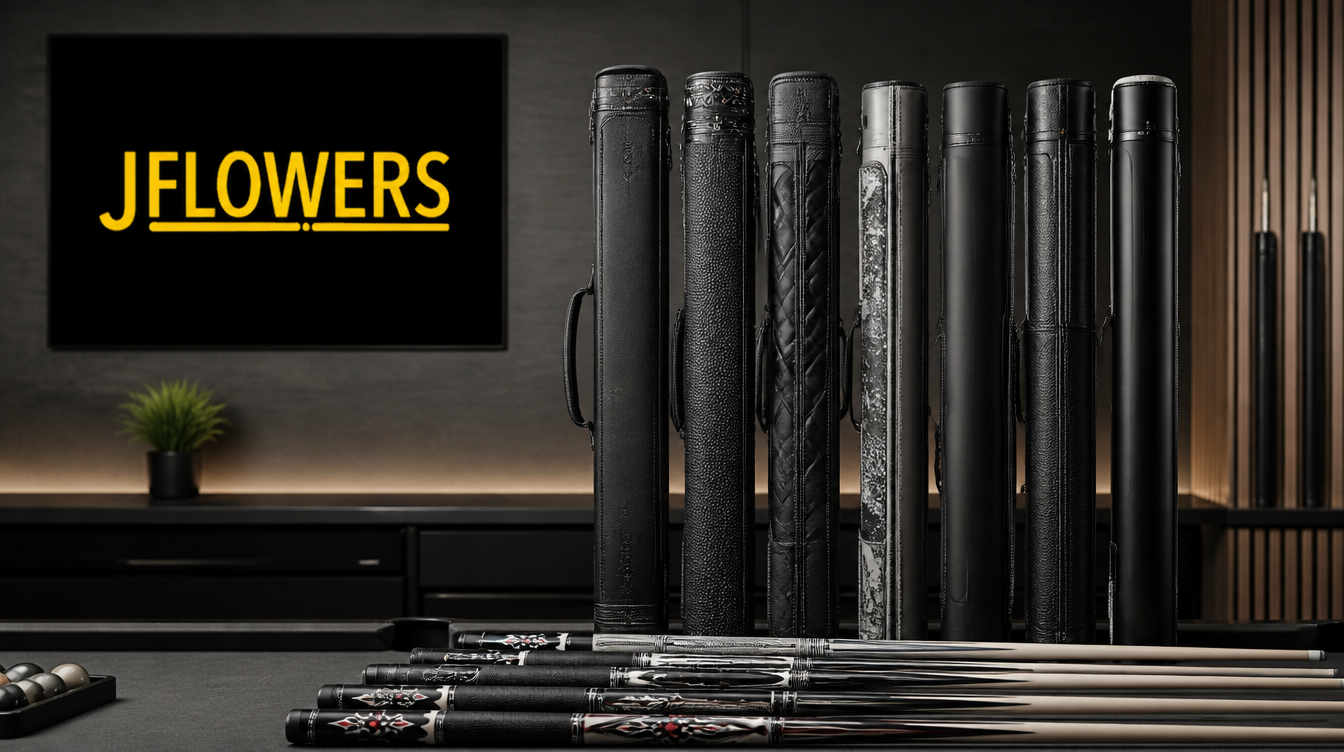
The term "tactical" gets applied to a lot of gear in the sporting world — sometimes as meaningful engineering description, sometimes as pure marketing. In the context of pool cue cases, tactical design refers to a specific approach to construction, carrying, and organization that differs meaningfully from standard cue cases.
Listen to this article
Beyond the standard case — what tactical design means for pool cue protection and carry
This guide explains what makes a tactical cue case different from a standard hard case, who benefits from that design, and whether the approach is worth it for your setup.
What “Tactical” Means in Case Design
In practical terms, tactical case design draws from military, law enforcement, and professional field equipment principles. The emphasis is on:
Durability under demanding conditions — materials and construction designed to handle rough use and harsh environments
Organization and accessibility — purpose-designed compartments and pockets for specific items, accessible quickly when needed
Carry versatility — multiple carry options for different situations (shoulder carry, hand carry, backpack-style)
Environmental resistance — materials that handle moisture, temperature variation, and UV exposure better than standard case materials
Low profile or professional appearance — often a deliberately understated aesthetic that doesn’t broadcast the contents
Construction Differences: How Tactical Cases Are Built
Shell Materials Where standard hard cases use ABS plastic or basic composite, tactical-designed cases often use higher-grade materials: reinforced ballistic nylon, aircraft-grade aluminum, or engineered composite materials used in professional equipment cases. These materials handle more impacts, more temperature variation, and more years of regular use than standard case materials.
Reinforced Stress Points The points where cases typically fail — corners, zipper attachment points, handle attachment, strap hardware — are specifically reinforced in tactical design. This means the case holds up when it gets knocked around, when it’s packed heavily, and when it’s used daily over years rather than occasionally.
Exterior Molle or Attachment Points Some tactical cue cases include MOLLE webbing or similar attachment systems on the exterior — allowing additional pouches or accessories to be attached modularly based on what the player needs. This is overkill for many players but genuinely useful for those who carry significant accessories and want everything organized and accessible.
Interior Organization Tactical cases typically have more deliberately designed interiors: dedicated elastic loops for chalk, specific pockets for tip tools, gloves, towels, and small accessories — all accessible without moving everything else. The logic is the same as a professional field kit: everything has a place, everything is accessible when you need it.
Carrying System: The Key Practical Difference
Standard cue cases offer a shoulder strap and a handle. Tactical cases often go further:
Padded backpack straps for carrying larger cases without shoulder fatigue over long distances
Multiple attachment points for clipping accessories externally
Reinforced grab handles at multiple points for different carry orientations
Detachable strap systems that convert between shoulder carry and hand carry
For tournament players who walk significant distances between the hotel, the venue, and their assigned playing area — sometimes multiple times a day over multiple days — the carry system is a genuine quality-of-life factor. Shoulder fatigue from a poorly designed strap accumulates over a tournament day in a way that a well-designed backpack system doesn’t.
Who Benefits From Tactical Case Design
Tournament Competitors Who Travel Players who fly to tournaments, carry multiple cues and significant accessory setups, and need their equipment to handle airline cargo conditions, hotel transport, and long venue walks. The durability and carry system advantages of tactical design show up most clearly in this context.
Players With Complete Competitive Setups Players who carry a playing cue, break cue, jump cue, multiple shafts, and a full accessory kit need more organizational capacity than a standard 2×2 case provides. Tactical cases in larger configurations provide that capacity in an organized, accessible way.
Players Who Value Durability Above Else Some players simply want to buy once and have a case that lasts a decade of regular heavy use without the closures failing, the shell cracking, or the interior padding compressing into uselessness. Tactical-grade construction delivers that longevity.
Who Probably Doesn’t Need Tactical Design
Players who play at one local venue and transport their cue short distances by car
Players with a single playing cue and minimal accessory needs
Players for whom the price premium of tactical construction isn’t justified by their usage pattern
A standard quality hard case in a 2×2 configuration serves the majority of serious players well. Tactical design earns its keep for the specific use cases above — it’s not necessary for everyone, and its design principles don’t help if you’re not using them.
Cue Armour approaches case design from the same performance-first philosophy as the rest of its product line. Tactical cases in the Cue Armour lineup are built to protect what’s inside — period. Construction quality that holds up to tournament travel. Organization designed for competitive players who know what they need accessible and when. Carry systems that work for all-day tournament use, not just the walk from the parking lot.
For competitive players who’ve outgrown a standard hard case and want equipment that matches their level of play, Cue Armour tactical cases are built to that standard.
Frequently Asked Questions
Is a tactical case heavier than a standard hard case? Often slightly, due to more durable materials and additional hardware. However, the carry system improvements — specifically backpack-style straps on larger cases — make the weight significantly more manageable than the equivalent standard case with a single shoulder strap.
What’s the price difference vs standard hard cases? Tactical-grade cases typically run $50-150 more than comparable standard hard cases. The premium reflects material quality, reinforced construction, and the more sophisticated carry system. For players who can justify the use case, the value is real. For players who don’t need the specific advantages, a quality standard hard case is better value.
Do tactical cases fit standard pool cues? Yes — tactical cue cases are designed to the same internal specifications as standard cue cases. The difference is in external construction, materials, and carry system — not in whether your cue fits inside.
Are tactical cases overkill for league play? For most league players who play at local venues and transport their cue by car, yes — a quality standard hard case in a 2×2 configuration is sufficient. Tactical design pays off for players who travel to tournaments, carry larger setups, or want the durability premium for heavy regular use.
What should I look for in a tactical cue case? Shell material and construction quality (not just “tactical” label but actual reinforced construction), carry system quality (padded backpack straps, reinforced handles), interior organization (dedicated compartments for specific items), and closure quality (metal hardware, quality zippers or latches). The brand’s reputation for durability is worth researching through player reviews.
Final Thoughts
Tactical cue case design is a meaningful engineering approach, not just an aesthetic. The durability, carry system, and organization advantages are real — but they’re most valuable for specific players in specific situations. Tournament competitors who travel, players with complete competitive setups, and anyone who wants equipment built to last a decade of heavy use will get full value from the tactical approach.
For everyone else: a quality standard hard case protects your cue properly and is the right call. Know your usage pattern and match the case to it.
After comparing JFlowers to Predator, Mezz, McDermott, Meucci, Jacoby, Pechauer, and a dozen more brands across every price point and construction philosophy — the question that started all of it deserves a direct answer: which pool cue brand actually offers the best value for serious competitive players in
2026?
Players Technology is one of the most widely used cue brands in American pool halls. Their two-piece cues at $40-$150 have introduced millions of American players to personal cue ownership. Nearly every serious pool player in America either started on a Players cue or played against someone who did. Comparing Players to JFlowers isn’t really a direct competition — it’s a marker on the journey from beginner to serious competitor.