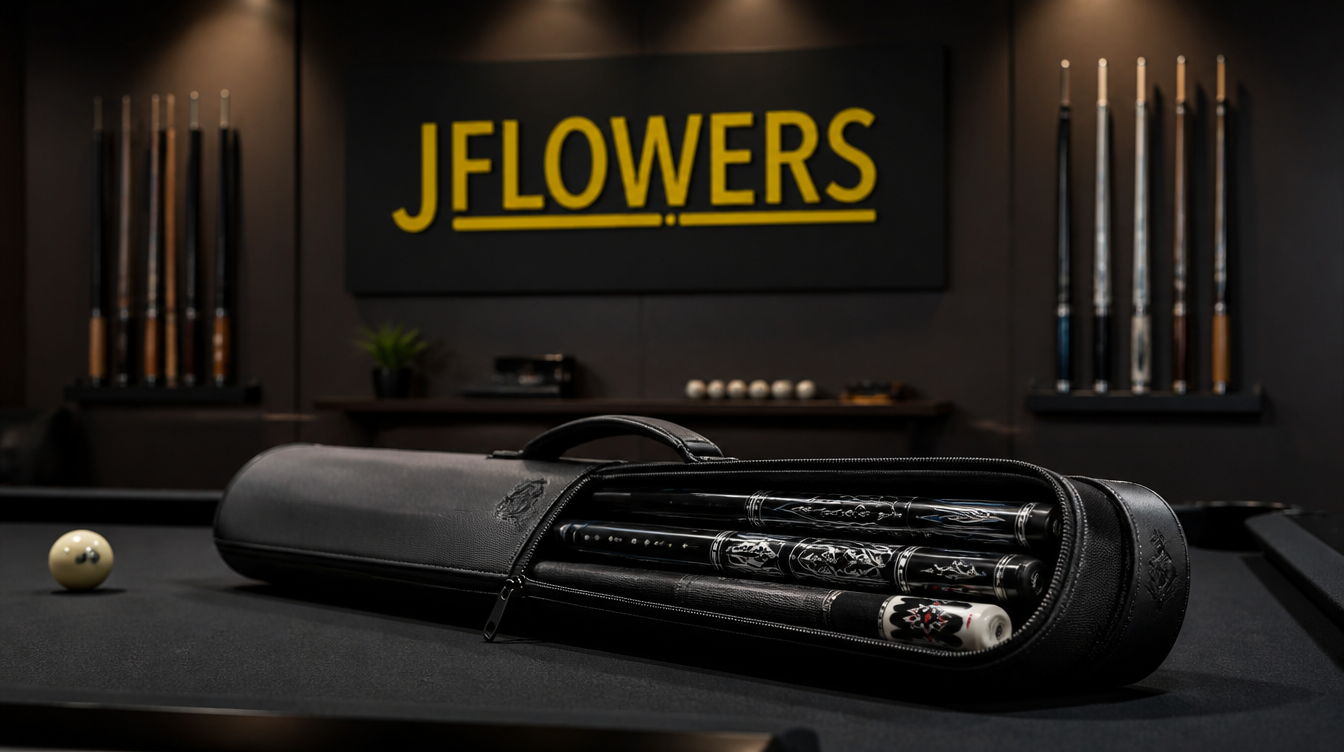
A lot of pool players think of a cue case as a nice-to-have — a convenience item that makes carrying the cue easier. In reality, a quality cue case is the single most important protective decision you make for your equipment. The cue you spent hundreds of dollars researching and selecting is only as well-protected as the case it lives in.
Listen to this article
It’s not an accessory — it’s the most important protection your cue gets
This guide makes the case for why a quality cue case is non-negotiable — and what you’re risking every time you skip it.
The Risk Is Real and Constant
Every time your cue is out of a proper case, it’s exposed to risks that a case eliminates. This isn’t theoretical. Pool players regularly deal with warped maple shafts from bad storage, cracked ferrules from falls, damaged joints from impacts, and tips that came off during transport. The vast majority of these incidents are preventable with a quality case.
A maple shaft left in a hot car without a case develops warp risk within hours in summer conditions
A cue leaned against a wall without a case has a meaningful chance of falling and landing on a ferrule or joint
A cue transported in a soft bag in a car trunk can absorb impacts that a hard case shell would stop before they reach the shaft
A cue stored in a humid basement without a case is exposed to exactly the conditions that cause maple to warp
The Investment Protection Argument
A quality pool cue represents a real financial investment. At $200-600 for a serious playing cue — and potentially another $100-200 for a break cue — you have $300-800 or more sitting in a stick of wood and carbon fiber.
A quality hard case in the $60-150 range protects that investment for years. The math is obvious: spending 15-25% of the cue’s value on a case that protects it from damage — that could cost $100-400 to repair or require full replacement — is an extremely rational investment.
Players who resist spending on a quality case and then deal with a warped shaft, a cracked ferrule, or a damaged joint almost always wish they’d bought the case. The case is always cheaper than the repair.
This point doesn’t get made enough: a cue that’s been protected properly plays better than one that hasn’t. Not because the protection improves the cue — but because it prevents the degradation that changes how a cue plays.
A maple shaft that develops a slight warp plays differently than a straight one. A ferrule that’s been impacted plays differently than an undamaged one. A tip that’s taken knocks in an unprotected case may have shifted or loosened. All of these affect performance — and all of them are prevented by a quality case.
If consistent performance matters to your game, protecting the equipment that produces that performance is part of the same commitment.
The Carbon Fiber Distinction — Still Needs a Case
Players who switch to carbon fiber sometimes think the case matters less because carbon fiber doesn’t warp. This is a misunderstanding of what the case protects against.
Carbon fiber doesn’t warp — correct. But carbon fiber can crack or chip from physical impact. The case protects against the impact damage that is the primary physical risk for carbon fiber shafts. Different threat, same solution: a quality hard case.
A Case Is Part of the Complete Setup
Serious pool players think of their setup as a complete system: the cue, the shaft, the tip, the chalk, and the case. The case is the component that makes all the other components function correctly over time. Without it, even the best cue setup gradually degrades.
When you’re shopping for a cue, budget the case at the same time. Don’t treat it as an optional add-on. A $400 cue in a $60 quality hard case is a complete setup. A $400 cue in a $15 soft bag is an incomplete one — regardless of how good the cue itself is.
Cue Armour is built for players who take their game and their equipment seriously. The same standards that drive the Cue Armour performance apparel line — built right, built to last, built for the demands of real competitive play — apply to the case lineup. When you invest in your cue, protect it the same way.
Frequently Asked Questions
Is any cue case better than no case? Yes — any case provides more protection than nothing. But the gap between a quality hard case and a soft bag is large enough that “technically a case” doesn’t mean “properly protected.” Get the right case.
My pool room has a rack for cues. Do I still need a case? A rack is fine for cues during play at a specific table. The case is for storage and transport —any time the cue leaves the table. A cue on a wall rack overnight in a pool room with no climate control is exposed to humidity and temperature risks that a case prevents.
I only play at home on my own table. Do I need a case? A case for home storage protects the cue from humidity, from falling over, and from accidental contact. It’s less critical than for players who transport their cue — but a properly stored cue lasts longer than one that’s leaned in a corner and exposed to whatever the home environment does seasonally.
Final Thoughts
A quality cue case is not an accessory. It’s the protection system for the most important tool in your game. The cost is small relative to what it protects. The protection it provides is real and meaningful. And the players who take this seriously — who treat the case as part of the complete setup — play on cues that stay in better condition for longer.
If you don’t have a quality hard case, that’s the next purchase. Before a new shaft, before a tip upgrade, before anything else — get your cue protected first.
After comparing JFlowers to Predator, Mezz, McDermott, Meucci, Jacoby, Pechauer, and a dozen more brands across every price point and construction philosophy — the question that started all of it deserves a direct answer: which pool cue brand actually offers the best value for serious competitive players in
2026?
Players Technology is one of the most widely used cue brands in American pool halls. Their two-piece cues at $40-$150 have introduced millions of American players to personal cue ownership. Nearly every serious pool player in America either started on a Players cue or played against someone who did. Comparing Players to JFlowers isn’t really a direct competition — it’s a marker on the journey from beginner to serious competitor.