Expensive vs Cheap Pool Cues: What You’re Actually Paying For
JFlowers Cues
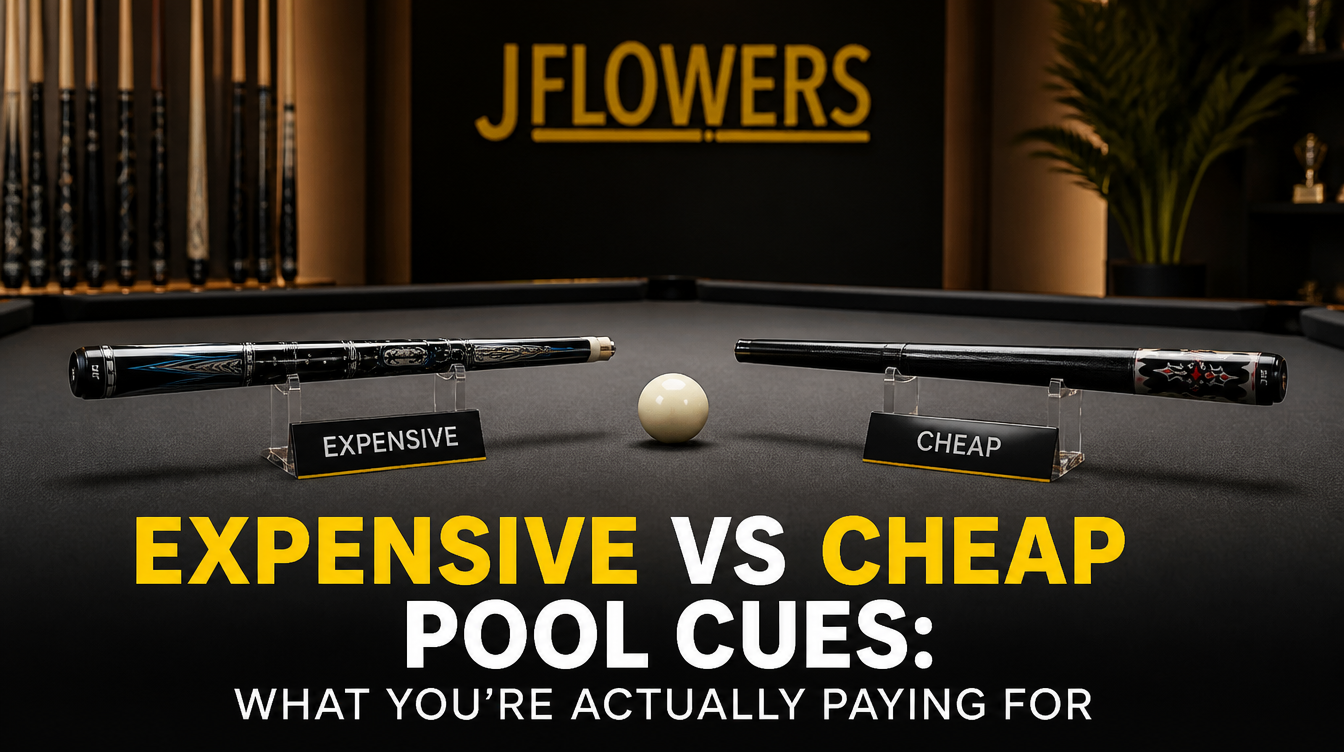
Walk into a sporting goods store and you can pick up a pool cue for $30. Walk into a specialty billiards shop and you can spend $1,500 on one. Both are pool cues. So what exactly is the difference? The honest answer comes down to five things: shaft quality, joint precision, tip and ferrule construction, balance design, and build consistency. Some of these differences are enormous between price tiers. Others are marginal once you're past a certain threshold.
Listen to this article
Where Cheap Cues Cut Corners
Shaft Straightness Mass-produced budget shafts are often slightly warped right out of the box. The wood isn’t aged or kiln-dried to remove moisture inconsistencies. A warped shaft adds unpredictable deflection to every shot and you’ll blame your stroke before you realize it’s the equipment.
Tip Quality Budget cues ship with cheap single-layer leather tips that chalk poorly and mushroom quickly. Fortunately this is one of the easiest problems to fix. A $15-$20 Taom or Kamui tip replacement transforms the contact feel. More on tip selection at Choosing the Right Pool Cue Tip.
Joint Tolerances A loose joint creates micro-movement between shaft and butt that you won’t see but will feel — especially over a full session. Cheap cues use stamped components with little quality control on thread fit. For a full breakdown of joint types and what they do, see Pool Cue Technology Explained.
Weight Distribution On a budget cue, weight placement is accidental. On a premium cue, balance is engineered. The difference is a cue that either fights your stroke or flows through it. Read How Cue Balance Affects Performance to understand what a deliberate balance point does for your game.
What Expensive Cues Actually Deliver
Shaft Consistency Premium shafts are made from aged, properly dried maple or from carbon fiber — both of which deliver predictable performance. Carbon fiber shafts like the JFlowers SMO eliminate wood’s susceptibility to humidity entirely. No swelling, no warping, no change in feel between a humid tournament day and a dry winter session. Full comparison at Carbon Fiber vs Maple Shafts: The Complete Comparison.
Ferrule and Tip Premium cues use quality ferrule materials — linen phenolic or carbon fiber — that don’t crack or compress over time. To understand how tip hardness affects your playing style, see Soft vs Medium vs Hard Pool Cue Tips.
Joint Precision Threads are machined to tolerances that create a tight, consistent connection every time. No wobble. Your shaft seats the same way every single assembly.
Balance Point Premium cue manufacturers design the balance deliberately — the weight block placement is intentional. You feel this immediately: the cue hangs naturally in your bridge hand and swings through the shot. See Forward Balance vs Rear Balance Pool Cues for more.
The Diminishing Returns Problem
Once you’re past around $500-$600 on a playing cue, the performance gains get smaller and the price gaps get bigger. A $1,200 Mezz and a $500 JFlowers with the SMO shaft are both genuinely premium instruments. Above $800, you’re increasingly paying for brand heritage, elaborate inlays, and collector resale value — none of which make the cue ball go where you want it any better.
When a Cheap Cue Is Actually Fine
You’ve been playing for less than six months
You play casually, once a week or less
You’re buying for a guest or beginner in your household
You play exclusively on bar tables and don’t compete
When You Should Absolutely Spend More
You play league pool (APA, BCA) regularly
You’ve developed a consistent stroke and want to remove equipment variables
You’ve been blaming your cue — and you’re probably right
Low risk for beginners who might not stick with the game
Can be improved with a better tip
Warp easily — often come warped out of the box
Loose joints undermine aim consistency
Stock tips mushroom quickly and chalk poorly
No real balance design
Premium cues ($300-$700)
Consistent shaft performance session to session
Quality joint allows same aim repeatability every assembly
Premium tips and ferrules last longer and perform better
Deliberate balance design works with your stroke
Higher upfront cost
Needs proper storage and protection to hold its value
Expert Recommendation For most players upgrading from a budget cue: the $300-$600 range from JFlowers, McDermott, or Predator is the right move. You’ll feel the difference in shaft consistency and joint quality immediately. If you’ve been playing on a cheap cue and wondering why your game plateaued, the equipment is a very real variable worth addressing.
Conclusion
The difference between cheap and expensive pool cues is real — up to a point. Shaft quality, joint precision, and balance design are genuine performance variables for anyone who takes the game seriously. But there’s a clear ceiling on what more money buys you in playability. Spend what your game demands, not more.
Frequently Asked Questions
Q: Is there a real difference between a cheap and expensive pool cue? Yes — in shaft straightness, joint precision, tip quality, and balance design. The gap is largest between the under-$150 bracket and the $300-$600 bracket. Q: Can a cheap cue hold you back? Yes. A warped shaft, loose joint, and dead tip all introduce variables that aren’t in your stroke — they’re in your equipment. A player with good mechanics on a bad cue underperforms their actual skill level. Q: Is a $300 pool cue a big improvement over a $100 one? Significantly, yes. At $300 from a quality brand you get a straight shaft, solid joint, and performance-grade tip. Q: What makes a pool cue expensive? Premium materials, tight manufacturing tolerances, quality control at every stage, shaft technology, brand heritage, and cosmetic craftsmanship. Q: Do expensive pool cues warp less? Yes. Premium maple shafts are made from aged, kiln-dried wood. Carbon fiber shafts don’t warp at all. Q: Should I replace the tip on a cheap cue? Yes — a $15-$20 tip upgrade is the cheapest way to improve a budget cue’s performance. It won’t fix shaft warping or joint slop, but it dramatically improves contact feel. Q: At what price point does a pool cue become worth it? The real quality jump happens around $200-$250 from a reputable brand. Q: Is carbon fiber worth it over maple? For competitive players who play regularly — yes. Carbon fiber doesn’t warp, delivers consistent low deflection, and holds up over years. Q: Can you tell a cheap cue from an expensive one by feel? Usually within the first few shots. The shaft feel under english, joint tightness, and balance point all register quickly.
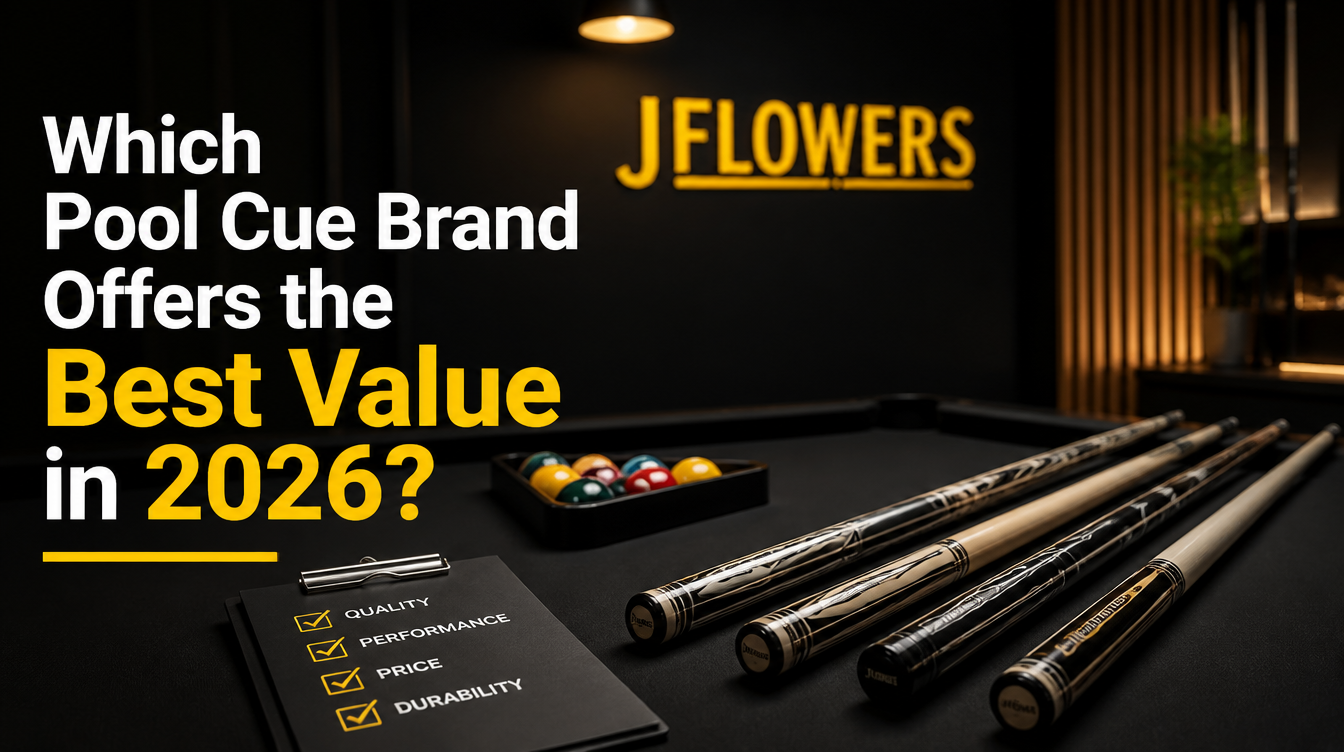
After comparing JFlowers to Predator, Mezz, McDermott, Meucci, Jacoby, Pechauer, and a dozen more brands across every price point and construction philosophy — the question that started all of it deserves a direct answer: which pool cue brand actually offers the best value for serious competitive players in
2026?
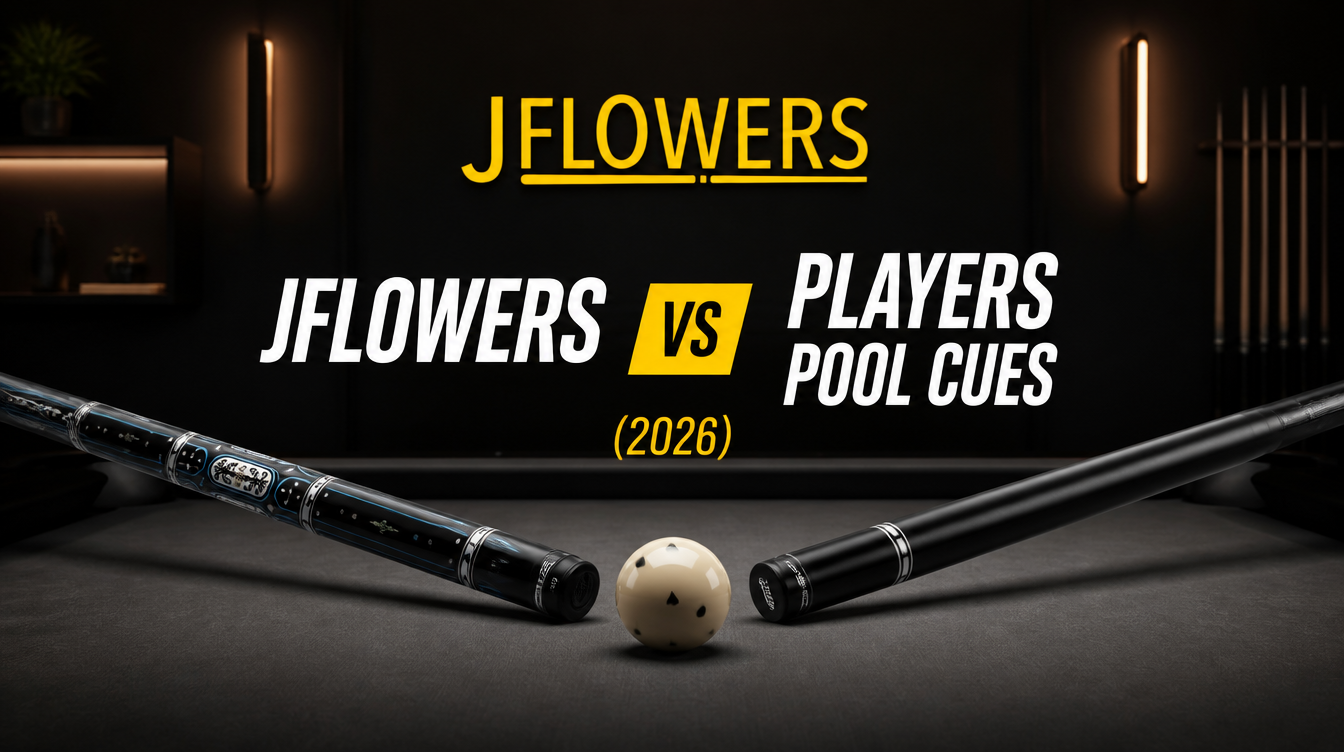
Players Technology is one of the most widely used cue brands in American pool halls. Their two-piece cues at $40-$150 have introduced millions of American players to personal cue ownership. Nearly every serious pool player in America either started on a Players cue or played against someone who did. Comparing Players to JFlowers isn’t really a direct competition — it’s a marker on the journey from beginner to serious competitor.