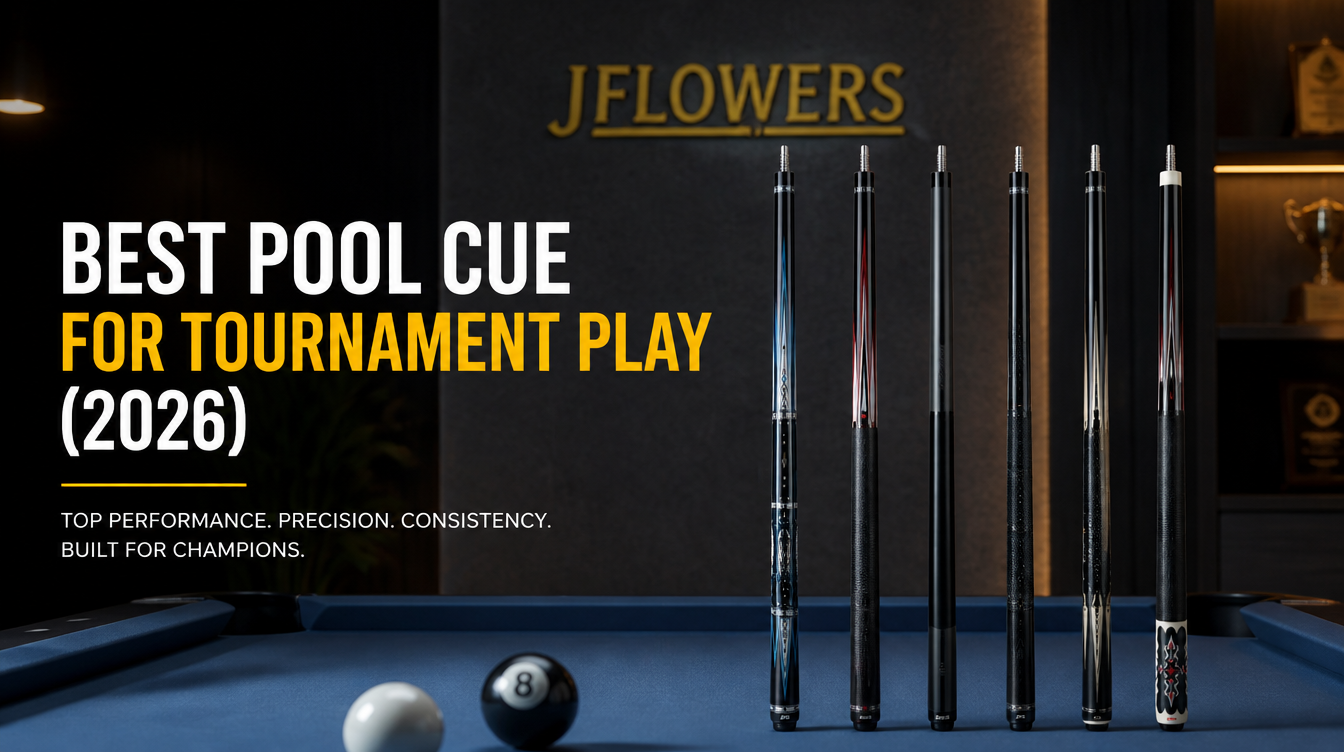
Tournament pool is a different animal from weekly league play. The stakes are higher, the nerves are real, and equipment that performs inconsistently in a regular session becomes a genuine liability when you're
playing a $500 entry fee bracket match. Everything gets amplified under tournament conditions — including equipment variability.
Listen to this article
This guide is written for players who compete in tournaments: local one-day events, regional championships, or national-level competition. The equipment requirements at this level are specific, and understanding them helps you walk into a tournament venue with a setup you trust completely.
What Tournament Play Demands From Your Cue
Tournament conditions introduce variables your regular playing environment doesn’t have: different lighting, different table cloth speed, different room temperature and humidity, and above all, elevated pressure. Your equipment has to remove variables, not add them.
Shaft consistency across different room conditions — humidity, temperature, altitude
Joint reliability — the shaft must seat identically in match after match
Tip condition at peak performance for the full tournament run
Cue balance that feels natural under pressure when your grip tightens
A setup you can completely trust so mental energy goes to the game, not the gear
Why Carbon Fiber Is the Tournament Standard
The tournament case for carbon fiber is the strongest case carbon fiber has. In a long tournament — three, four, five matches across a full day or weekend — a maple shaft is subject to humidity changes from moving between different building sections, handling by multiple people, and the accumulated stress of dozens of hours of play. A carbon fiber shaft performs identically from match one to match seven.
The JFlowers SMO Carbon Fiber Shaft does not change with tournament room conditions. The deflection behavior you practiced all week is the deflection behavior you get in the venue. For tournament players, that consistency is not a luxury — it’s a requirement. See Why Professionals Are Switching to Carbon Fiber for the competitive case made in full.
Never play a tournament on a questionable tip. Replace or refresh your tip in the week before a major event — not the day before, and certainly not the morning of. A fresh tip needs a brief break-in period before it performs at its best.
Taom tips are an excellent tournament tip choice for their consistency and shape retention over a long day of play. Carry a spare tip and a tip tool in your case — replacements happen. See Signs Your Cue Tip Needs Replacing so you can assess your tip honestly before leaving home.
Weight and Balance for Tournament Play
Play your tournament with the weight you practice with. This is not the time to experiment. If you’ve been playing 20oz all year, walk into the venue at 20oz. Tournament pressure already introduces enough unfamiliar variables — your equipment shouldn’t be one of them.
The balance point matters under pressure in a way it sometimes doesn’t in casual play. When your grip tightens under nerves, a well-balanced cue still flows through the stroke naturally. A poorly balanced cue gets worse. See How Cue Balance Affects Performance.
Protecting Your Tournament Cue
A hard case is non-negotiable for tournament travel. Your cue is traveling to an unfamiliar venue, potentially in a car, and being set down in unknown environments. Protect it. See Cue Case Buying Guide (2026) for the right case for the way you travel to tournaments.
Our Tournament Recommendation
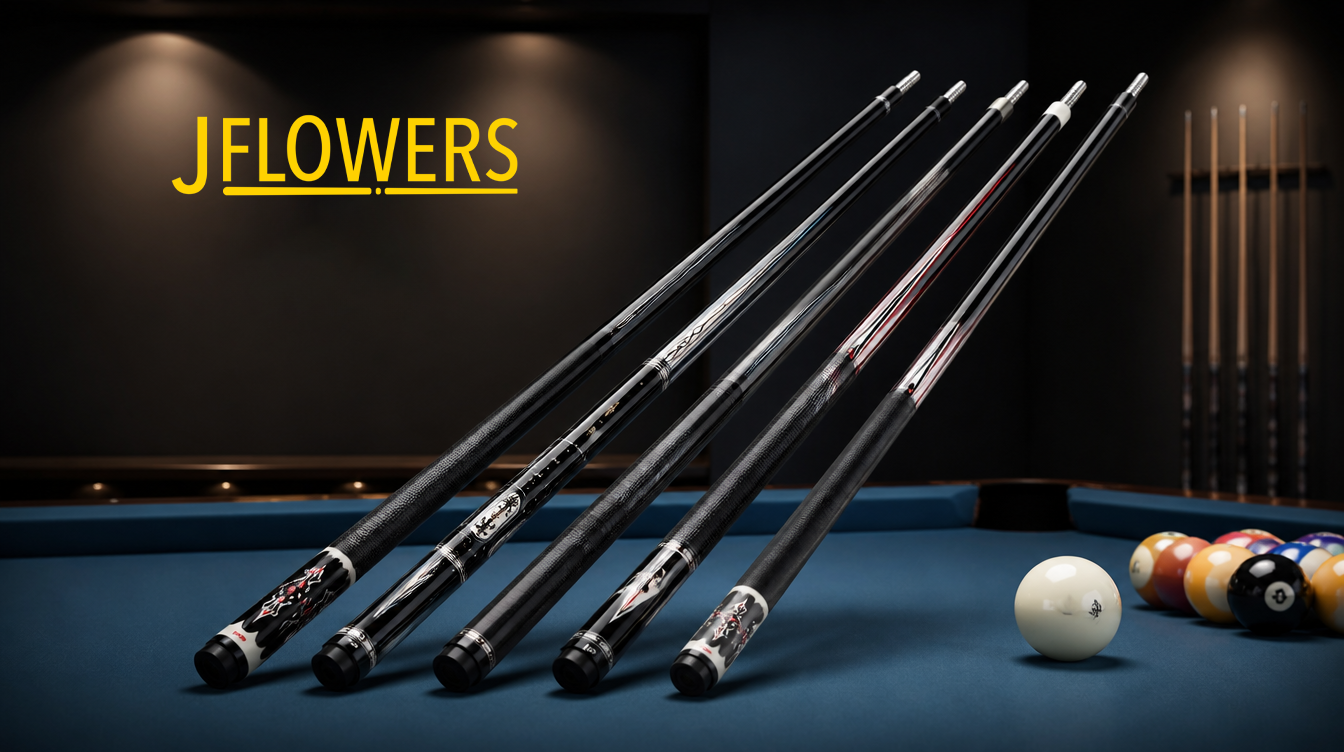
JFlowers playing cue with the JFlowers SMO Carbon Fiber Shaft is our 2026 tournament recommendation for competitive players. Carbon fiber consistency under tournament conditions is the primary reason — combined with JFlowers build quality that holds up through a long, demanding tournament weekend. Pair with a fresh Taom medium tip installed the week before the event, Taom chalk, and a quality hard case.
Pros and Cons
Carbon fiber for tournament play
No environmental variability — performs identically in any venue condition
Consistent deflection across match 1 and match 7 of a long bracket
No warp risk from tournament venue humidity or temperature
Confidence in equipment frees mental energy for strategy and execution
Higher cost than quality maple options
Adjustment period required before the first tournament — not last-minute
Premium maple for tournament play
Fully competitive — professionals have won everything on maple
Familiar feel for players deeply calibrated to wood
Environmental variability is real in unfamiliar venues
More maintenance required to keep performing across a long tournament
Expert Recommendation For tournament-level competitors: make the carbon fiber investment before your next major event. Practice on it for at least six to eight weeks before the tournament so the aim adjustment is fully internalized. Walk in with a JFlowers SMO shaft, a fresh Taom tip, and a hard case. Your equipment won’t be the reason you lose.
Conclusion
Tournament pool rewards preparation — on the table and in your equipment bag. A cue that performs consistently under the pressure, humidity, and travel stress of tournament play is not optional equipment for competitive players. The JFlowers playing cue with the SMO Carbon Fiber Shaft delivers that consistency. Show up prepared. Walk in confident. Let the other player worry about their equipment.
Frequently Asked Questions
Q: What makes a cue good for tournament play? Consistency above all — shaft that performs identically in any room condition, tip at peak condition, weight you’re practiced with, and a case that protects everything in transit. Q: Should I switch to carbon fiber for tournaments? Yes, if you have time to adjust before the event (6-8 weeks minimum). The consistency advantage of carbon fiber is most valuable in exactly the kind of multi-match, unfamiliar-environment scenario tournaments create. Q: When should I replace my tip before a tournament? The week before the event — not the day before. A fresh tip needs a brief break-in period before performing at its best. Q: Do I need a break cue for tournaments? For most tournament formats, yes. A dedicated break cue protects your playing cue and allows break-optimized equipment. Q: What chalk should I use in tournaments? Taom chalk is widely used at the competitive level for its chalk transfer rate and cue ball control. Carry your own — don’t rely on venue chalk. Q: How do I prepare my cue for a tournament? Clean the shaft, check the tip condition, verify the joint is tight, and test the balance. Make any repairs at least a week out so the cue is fully settled. Q: Is the JFlowers cue good for tournament play? Yes. The JFlowers playing cue with the SMO Carbon Fiber Shaft delivers the kind of consistent, reliable performance that tournament play demands. Q: What case should I bring to a tournament? A quality hard case. Soft bags don’t protect against the accidental impacts that happen in tournament venue environments. Q: How many shafts should I bring to a tournament? At minimum two — your playing shaft and a backup. If you use a break cue, that adds one more. Never go to a tournament with a single shaft.
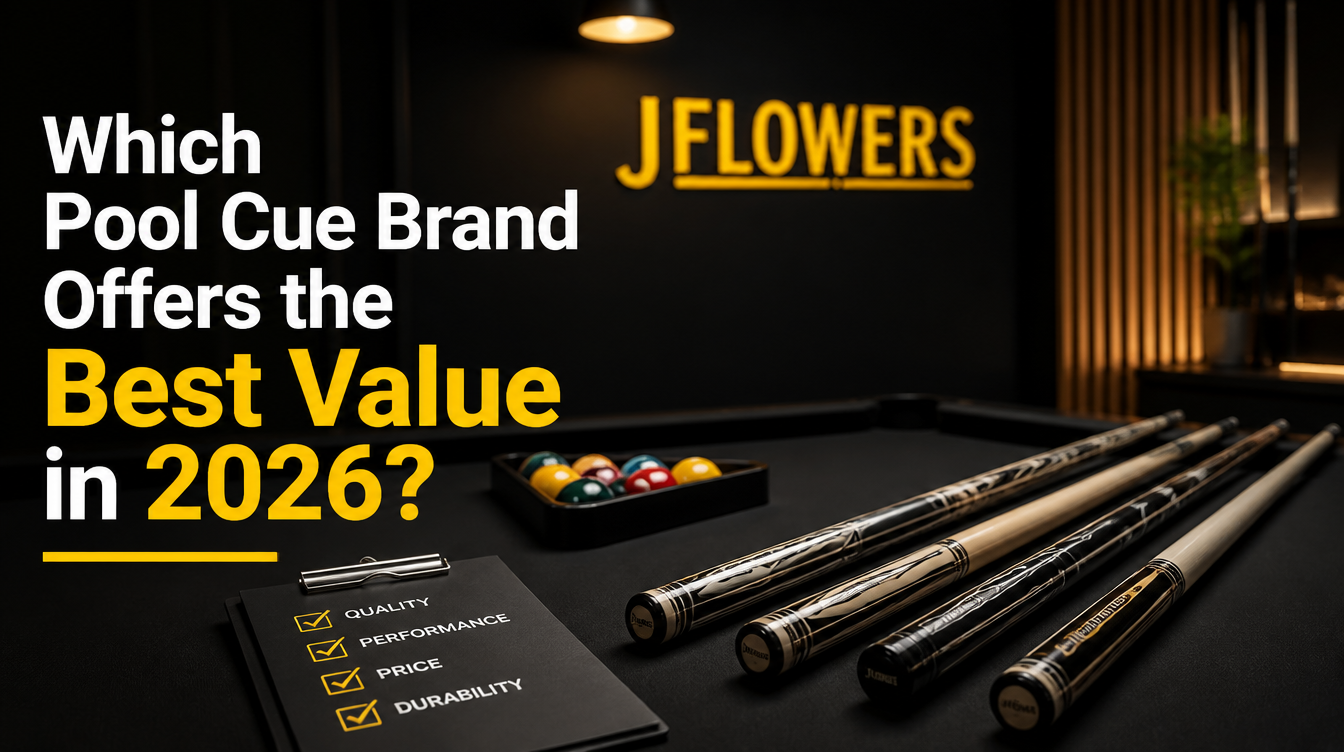
After comparing JFlowers to Predator, Mezz, McDermott, Meucci, Jacoby, Pechauer, and a dozen more brands across every price point and construction philosophy — the question that started all of it deserves a direct answer: which pool cue brand actually offers the best value for serious competitive players in
2026?
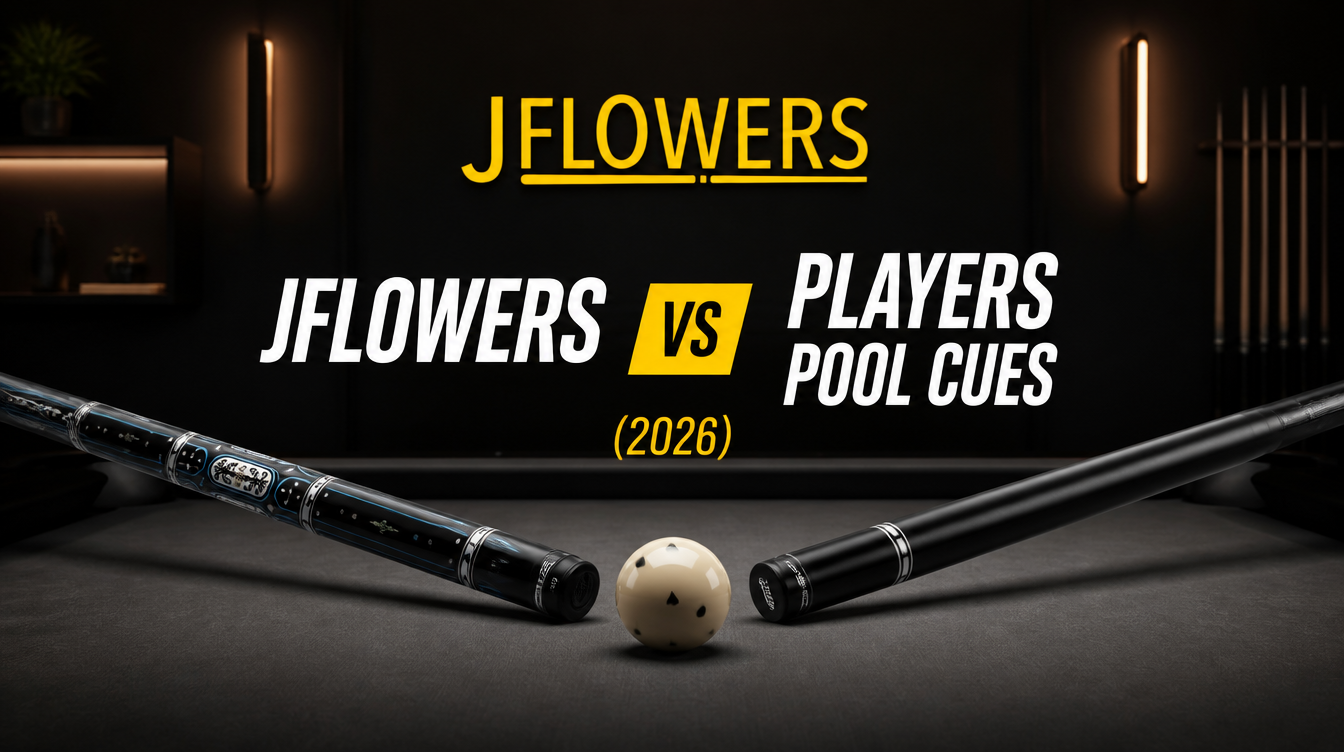
Players Technology is one of the most widely used cue brands in American pool halls. Their two-piece cues at $40-$150 have introduced millions of American players to personal cue ownership. Nearly every serious pool player in America either started on a Players cue or played against someone who did. Comparing Players to JFlowers isn’t really a direct competition — it’s a marker on the journey from beginner to serious competitor.