Pool cue shaft weight is one of the variables that affects both how a cue feels in your hand and how it performs on the table. When players switch from maple to carbon fiber, they often notice that the shaft feels different in a way that isn't purely about the hit — and weight distribution is a significant part of that
difference.
Listen to this article
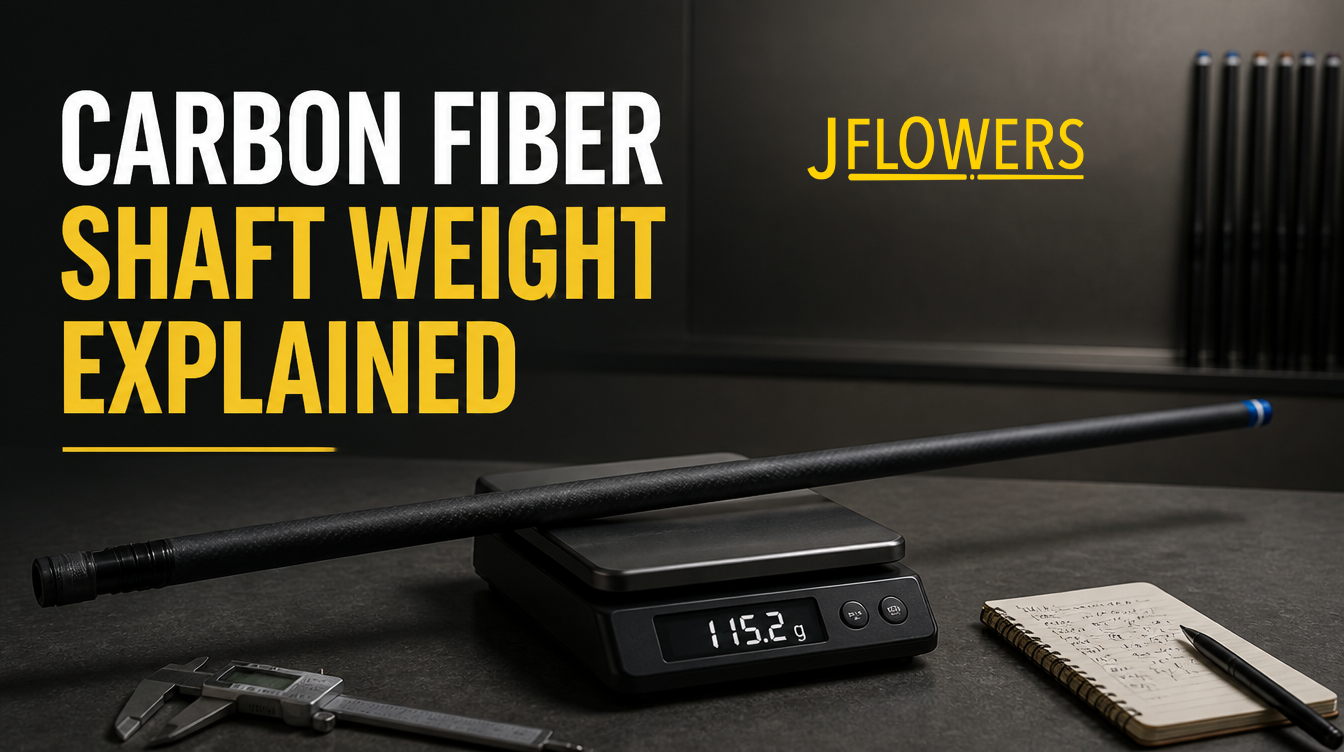
This guide explains how carbon fiber shafts approach weight differently from wood, why tip-end mass matters for deflection, and what you should know about carbon fiber shaft weight when choosing or comparing shafts.
Carbon Fiber vs Maple: Raw Weight Comparison
Carbon fiber composite is lighter per unit volume than maple. This means that a carbon fiber shaft of the same diameter and length as a maple shaft will typically weigh less — sometimes significantly less. Most quality carbon fiber shafts weigh between 3.5-4.5 oz, similar to or slightly lighter than quality maple shafts in the same length and diameter range.
The raw weight difference between carbon fiber and maple at comparable dimensions is not dramatic for most shafts — the bigger weight difference is typically in how that weight is distributed along the shaft’s length rather than the total weight.
Weight Distribution: Why It Matters
The most significant weight difference between carbon fiber and maple is in weight distribution — specifically at the tip end of the shaft. This is directly connected to the low-deflection advantage of carbon fiber.
One of the engineering approaches to reducing cue ball deflection is minimizing mass at the tip end of the shaft. A lighter tip end has less inertia during the impact, meaning the tip deflects less from the aim line during off-center hits. This is why ferrule-less carbon fiber shaft designs like the JFlowers SMO can achieve their low-deflection profile — there’s minimal mass at the very tip of the shaft.
Players switching to carbon fiber often notice that the shaft feels lighter in the bridge hand than their maple shaft — not necessarily because it weighs less overall, but because the weight distribution is different. With less mass at the tip end, the shaft has a slightly different balance character in hand. This contributes to the ‘different feel’ that players describe when first picking up a carbon fiber shaft. It’s not just the material properties of the hit — it’s also the slightly different weight distribution through the stroke. Most players adjust to this as part of the broader carbon fiber adjustment period.
When you add a carbon fiber shaft to a butt, the total assembled cue weight may be slightly different from what you’re used to with a maple shaft. If you’ve been playing at 20oz with a specific butt and maple shaft combination, adding a lighter carbon fiber shaft may bring your assembled weight to 19.5oz or 19oz.
Most quality butts have weight bolt systems or internal weight adjustability that lets you add weight to compensate. Always check your assembled cue weight after switching shafts. For the full framework on cue weight selection, see How Cue Weight Affects Your Stroke.
Hollow vs Solid Carbon Fiber Constructions
Different carbon fiber shafts use different internal constructions — some are solid carbon fiber composite, some are hollow tube designs, and some use a combination. These different constructions affect the shaft’s weight, stiffness distribution, and feel in different ways.
The JFlowers SMO uses a construction specifically optimized for the balance between low deflection, appropriate stiffness, and comfortable weight feel. The specific construction details contribute to the shaft’s consistent performance profile and its feel through the bridge hand during play.
Pros and Cons
Carbon fiber shaft weight characteristics
Reduced tip-end mass directly contributes to low-deflection performance
Consistent weight throughout the shaft’s life — no changes from moisture
Lighter weight per volume allows thin-wall constructions with more consistent stiffness
Different weight distribution from maple requires adjustment in total cue assembly weight
May need weight bolt adjustment to maintain preferred total cue weight
Expert Recommendation When switching to the JFlowers SMO Carbon Fiber Shaft, check your assembled cue weight after fitting the shaft. If you’ve been playing at a specific weight, adjust your butt’s weight bolts to compensate for any difference. The shaft’s weight distribution is engineered for performance — let the total cue weight serve your game.
Conclusion
Carbon fiber shaft weight is about more than the number on a scale — it’s about how that weight is distributed and what that distribution does for your performance. The tip-end mass reduction in well-designed carbon fiber shafts like the JFlowers SMO is a direct contributor to their low-deflection advantage. Understand the weight, check your assembled cue weight, adjust if needed, and let the performance do the rest.
Frequently Asked Questions
Q: Are carbon fiber shafts lighter than maple? Slightly, in many cases — carbon fiber composite is lighter per unit volume than maple. The difference is not always large, but weight distribution (specifically at the tip end) differs significantly. Q: Does carbon fiber shaft weight affect deflection? Yes — reduced tip-end mass is one of the mechanisms that reduces cue ball deflection in well-designed carbon fiber shafts. Q: Will switching to carbon fiber change my cue’s total weight? Possibly. Carbon fiber shafts are often slightly lighter than comparable maple shafts. Check assembled cue weight after switching and adjust weight bolts if needed. Q: What is the typical weight of a carbon fiber pool cue shaft? Quality carbon fiber shafts typically weigh between 3.5-4.5 oz, comparable to or slightly lighter than premium maple shafts. Q: Why does tip-end mass matter for pool cue performance? Lower tip-end mass reduces the inertia of the shaft tip during off-center impacts, causing less deflection from the aim line and producing lower cue ball squirt. Q: Does a lighter carbon fiber shaft mean a lighter total cue? Not necessarily — total cue weight depends on both shaft and butt weight. Most quality butts have adjustable weight systems that compensate for shaft weight differences.
After comparing JFlowers to Predator, Mezz, McDermott, Meucci, Jacoby, Pechauer, and a dozen more brands across every price point and construction philosophy — the question that started all of it deserves a direct answer: which pool cue brand actually offers the best value for serious competitive players in
2026?
Players Technology is one of the most widely used cue brands in American pool halls. Their two-piece cues at $40-$150 have introduced millions of American players to personal cue ownership. Nearly every serious pool player in America either started on a Players cue or played against someone who did. Comparing Players to JFlowers isn’t really a direct competition — it’s a marker on the journey from beginner to serious competitor.