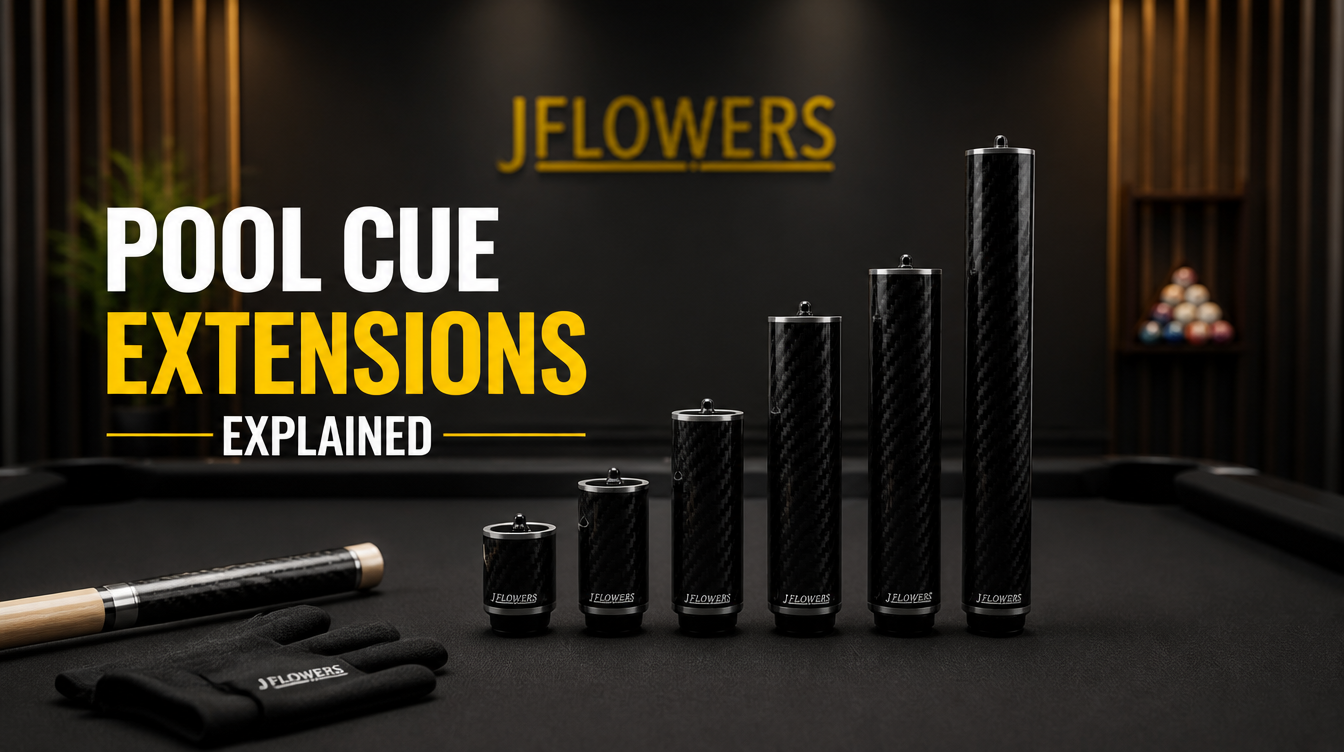
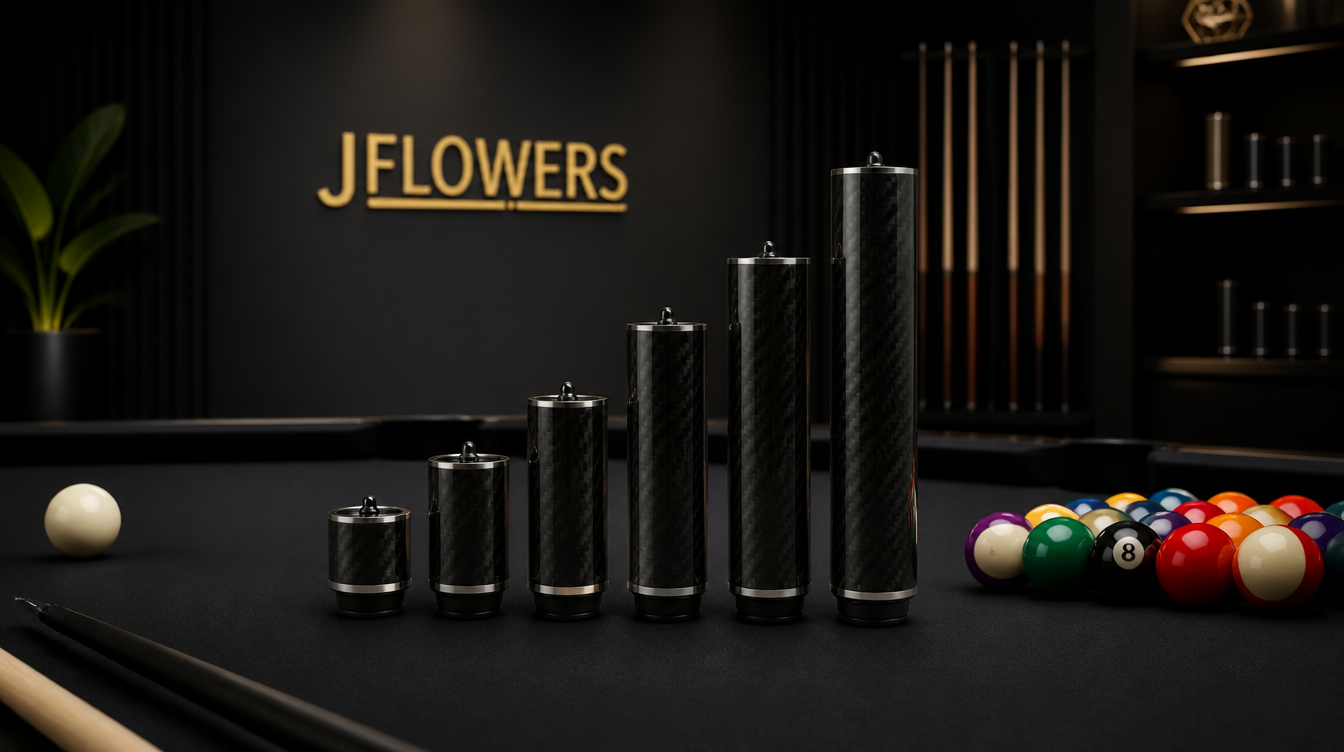
Pool cue extensions are the accessory players reach for when the cue ball is too far from the table edge for a comfortable bridge, but using the mechanical bridge feels awkward or imprecise. An extension adds 6-12 inches to the butt of the cue, allowing a normal grip and stroke on shots that would otherwise require an uncomfortable stretch or a mechanical bridge.
Listen to this article
This guide covers how extensions work, when they help, and what to look for in a quality extension.
What a Cue Extension Is
A cue extension is a component that attaches to the butt end of the cue, adding length. Most extensions are cylinder-shaped pieces that thread onto the butt cap threads or a dedicated extension pin. They range from 4-12 inches in added length, with 6-inch and 9-inch being the most common options.
Good extensions are made from materials that don’t add excessive weight — typically lightweight aluminum, carbon composite, or quality polymer. The connection to the cue must be secure without any flex or wobble that would affect stroke delivery.
When Extensions Help’),
Extensions are specifically useful for one scenario: reach shots where the cue ball is positioned far from the rail or in a location that requires your bridge hand to be too far from your body for comfortable, controlled stroke delivery.
Center-table cue ball positions where the cue ball is more than arm’s length from the nearest rail
Shots where a mechanical bridge would be required without the extension, but the mechanical bridge handling would be slower or less precise
Players of smaller stature or shorter arm span who encounter reach limitations more frequently
When Extensions Don’t Help (and Can Hurt)’),
Extensions are not a general-purpose tool. Using an extension on shots that don’t require it:
Changes the feel and balance of the cue — the extension shifts the balance point toward the rear and adds length to the delivery system
Affects stroke mechanics because the grip hand position on the butt changes relative to the cue’s balance
Slows your setup and execution compared to a normal unextended bridge
The discipline of using extensions only when genuinely needed — rather than habitually for any slightly long shot — is part of developing a complete positional game that minimizes the need for them.
Quality Markers for Extensions’),
Secure, wobble-free connection to the cue butt — any flex in the extension introduces inconsistency into the stroke
Lightweight construction — extensions shouldn’t significantly change the total cue weight
Correct thread specification — the extension must match your cue butt’s thread specification (most standard extensions fit standard thread butts)
Length option that suits your typical reach gap — a 6-inch extension is adequate for most players; 9-inch for players with more frequent long-reach needs
Extensions vs Mechanical Bridge’),
The choice between an extension and a mechanical bridge depends on shot characteristics. Extensions work when your body mechanics allow a normal bridge position — just further from your body. Mechanical bridges work when the shot geometry requires the bridge to be positioned in a way your body can’t reach at all, or when obstacles block a normal bridge position.
Extensions are small enough to fit in most case side pockets. A compact folding extension is even more convenient — some designs fold to half their extended length for storage. For tournament players who frequently encounter center-table position plays, carrying an extension in the case is worthwhile. For everyday league play, the venue’s mechanical bridge handles most situations where an extension would help.
Pros and Cons
Pool cue extensions
Natural stroke mechanics on reach shots that would otherwise require a mechanical bridge
Compact and easy to carry in a case pocket
Can improve shot quality on reach positions for shorter-stature players
Changes cue balance and feel when attached
Slows setup slightly compared to normal shooting position
Not needed for most shots — should be used selectively
Expert Recommendation Competitive players who regularly encounter center-table reach positions: a quality 6-inch extension in the case pocket is a worthwhile accessory. Use it only when it genuinely solves a reach problem that would otherwise require an awkward stretch or a mechanical bridge. Don’t use it habitually for shots that don’t require it.
Conclusion
Pool cue extensions solve a specific problem — reach shots beyond comfortable natural bridge range — and shouldn’t be used for anything else. A quality compact extension in the case pocket gives you a natural stroke option on those shots rather than struggling with an awkward stretch or a mechanical bridge. Use it when you need it; leave it in the pocket when you don’t.
Frequently Asked Questions
Q: What is a pool cue extension? An accessory that attaches to the cue butt to add 4-12 inches of length, allowing a normal bridge and grip on reach shots. Q: When should I use a cue extension? When the cue ball position requires your bridge to be further from your body than allows a comfortable, controlled stroke. Not for shots where a normal position is achievable. Q: How do cue extensions attach? Most extensions thread onto the butt cap threads. Some cues have a dedicated extension pin. Check your cue’s butt thread specification before purchasing. Q: Do extensions affect shot accuracy? A quality extension with a secure, wobble-free connection minimizes accuracy effects. A poorly made extension with any flex will affect stroke delivery. Q: What length extension should I get? 6-inch is adequate for most players. Players of smaller stature or who encounter more frequent extreme reach positions may prefer 9-inch. Q: Can I use an extension with a JFlowers cue? Yes — standard extension fittings are compatible with standard butt thread specifications. Confirm the thread spec before purchasing.
After comparing JFlowers to Predator, Mezz, McDermott, Meucci, Jacoby, Pechauer, and a dozen more brands across every price point and construction philosophy — the question that started all of it deserves a direct answer: which pool cue brand actually offers the best value for serious competitive players in
2026?
Players Technology is one of the most widely used cue brands in American pool halls. Their two-piece cues at $40-$150 have introduced millions of American players to personal cue ownership. Nearly every serious pool player in America either started on a Players cue or played against someone who did. Comparing Players to JFlowers isn’t really a direct competition — it’s a marker on the journey from beginner to serious competitor.