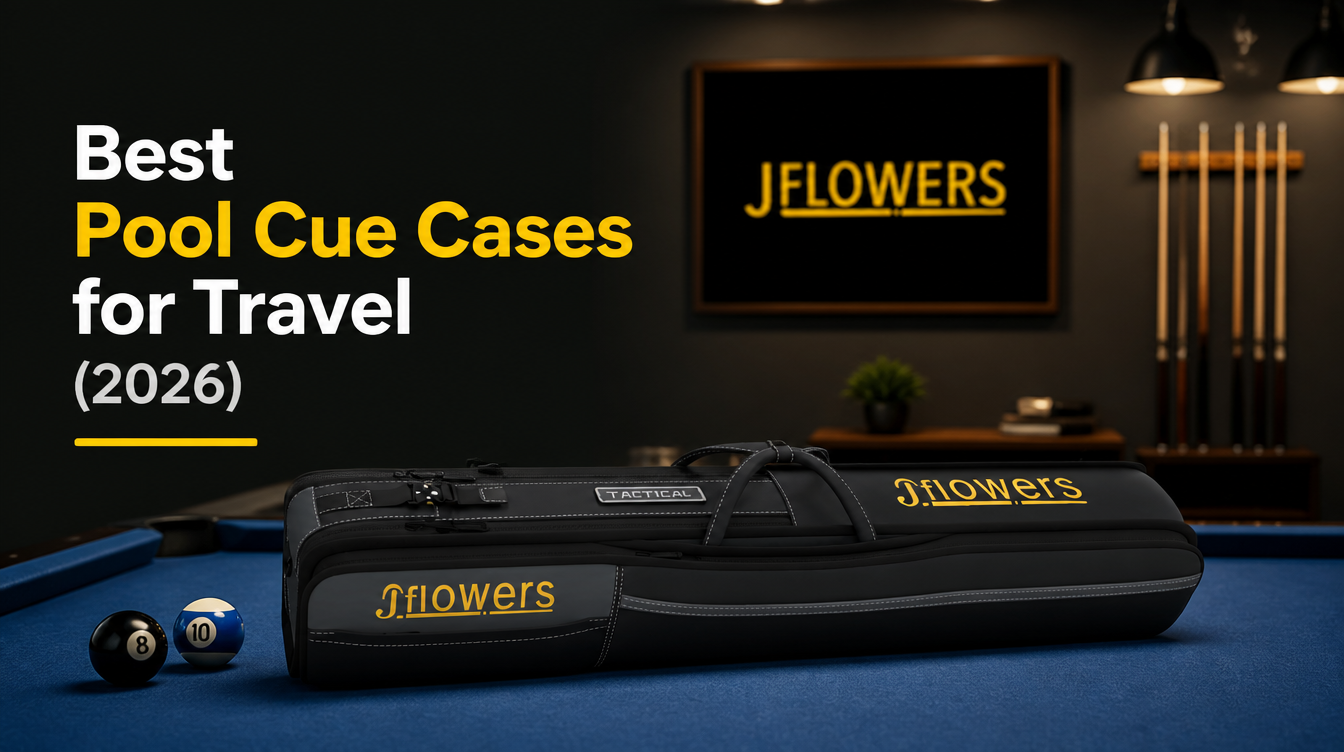
The cue case that works for walking to your local pool hall every Thursday may not be the right case for a weekend tournament three hours away. And the case that handles a road trip to regionals may not be
adequate for a flight to a national event. Travel puts specific demands on cue cases that everyday local use doesn't.
Listen to this article
This guide breaks down what makes a cue case good for travel, the different requirements for different types of travel (driving vs flying vs walking distance tournaments), and how to choose the right case for the way you actually travel with your cue.
What Travel Demands From a Cue Case
Travel introduces threats that everyday local use doesn’t:
Impact: the case gets dropped, thrown in car trunks, tossed by baggage handlers
Compression: luggage stacked on top, bags wedged into overhead compartments
Temperature extremes: hot car trunks, cold cargo holds on aircraft
Vibration: road vibration over long drives, aircraft turbulence
Theft risk: valuable equipment in a case people don’t recognize as valuable
A travel case needs to address all of these. Soft cases fail at impact and compression — the two most common threats in travel environments.
Car Travel: The Baseline
Car travel is the most common travel scenario for pool players. The cue goes in the trunk, the back seat, or the rear cargo area — all environments where uncontrolled movement and occasional impacts are possible.
For car travel: a hard case is strongly recommended. Even a quality hard 2×4 tube case at $60-$100 protects against the trunk impacts and compression that most road trips involve. Place the case where it won’t roll or be knocked by shifting cargo. Don’t lean other luggage directly against the shaft tube sections of the case.
Temperature consideration for car travel: if you have a wood shaft, avoid leaving the cue in the car between sessions — summer heat drives moisture out of wood and can cause warping. Carbon fiber shafts are unaffected. For the full temperature impact discussion, see How Humidity and Temperature Affect Your Pool Cue.
Tournament Road Trips
Tournament travel by car deserves the same hard case recommendation as everyday car travel, with one addition: consider what happens to your case at the tournament venue. Busy tournaments have crowded staging areas, cases piled in corners, and plenty of accidental contact. A hard case protects the cue whether it’s in the car or leaning against the wall at the tournament.
Tournament travel case features worth having: a handle that makes carrying easy, enough capacity for your full playing setup (at least 2 shafts — your playing shaft and a backup), and external pockets for chalk, tips, and accessories so you’re not opening the case every five minutes at the table.
Airline Travel
Airline travel is the most demanding cue transport scenario. Checked baggage is handled by equipment and people with no investment in its care. The case will be thrown, stacked, compressed, and potentially exposed to moisture in aircraft cargo holds.
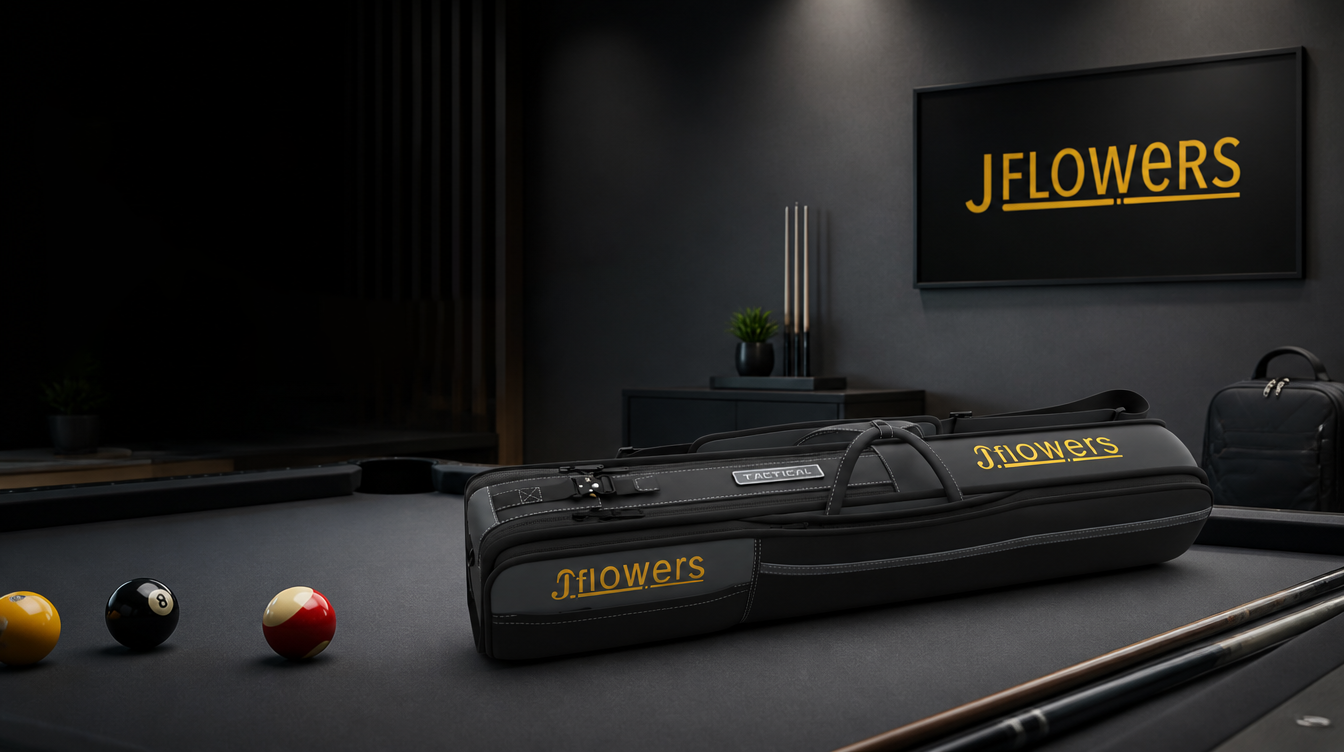
For flying with pool cues: a tactical hard case with lockable latches, rubber gasket seals, and foam interior is the professional standard. Pelican cases and equivalent tactical hard cases are used by professional players flying to international events. The cost ($150-$400) is justified by the protection they provide for what’s inside.
Alternative for air travel: some players use padded sports equipment cases designed for long items. These provide more impact protection than soft cases but less than dedicated hard tactical cases. For the complete airline travel guide including airline-specific policies, see Airline Travel with Pool Cues.
Key Features for Travel Cases
Hard exterior — non-negotiable for any travel where the case leaves your hands
Lockable latches — protects against accidental opening and provides security
Full-length shaft support — shaft tubes that support from tip to joint without allowing movement
Tip end padding — soft cushioning at the tip end of shaft tubes
Capacity for your full setup — playing shaft plus backup shaft minimum
Comfortable carry — handle quality, strap options, and overall ergonomics for the distances you’re covering
Case Capacity for Travel
For most competitive players who travel: a 2×2 or 2×4 case configuration is right. Two butts and two or four shafts covers your playing setup with a backup. Players who carry a separate break cue need a 3×5 or 3×8 configuration. For the full capacity decision guide, see How Many Butts and Shafts Do You Need?.
Protecting the JFlowers SMO in Transit
The JFlowers SMO Carbon Fiber Shaft is structurally robust along its length and completely unaffected by temperature and humidity changes during travel. The primary vulnerability is the tip end — a hard impact at the tip can chip the carbon fiber. Choose a travel case with soft padding at the tip end of each shaft tube. With that protection in place, the SMO travels as well as any shaft on the market.
Pros and Cons
Hard travel cases
Protection against the full range of travel threats
Lock-capable for security
Suitable for airline checked baggage
Heavier than soft alternatives
More expensive than soft cases at equivalent capacity
Quality soft cases for light travel
Lighter weight for walking distance transport
Better accessory organization
Cannot protect against impact or compression
Not acceptable for airline checked baggage or car trunk use
Expert Recommendation For serious tournament travel: a hard 2×4 case for car transport, and a tactical hard case for airline travel. The investment in proper travel cases protects the investment in your equipment. Don’t fly with your cue in a soft case — the baggage handling environment will find the weakness.
Conclusion
Travel with your cue demands more from the case than local use. Match the case to the travel — hard case for car and tournament travel, tactical hard case for airline travel. The right case protects the equipment investment across every mile of the trip.
Frequently Asked Questions
Q: What is the best cue case for travel? For car travel and general tournament use, a quality hard 2×4 case. For airline travel, a tactical hard case with lockable latches and foam interior. Q: Can I take a pool cue on a plane? As checked baggage in a hard case, yes. As carry-on, sometimes — this depends on the airline. See our airline travel guide for airline-specific policies. Q: How do I protect my cue in a car trunk? Use a hard case. Don’t lean other luggage against the shaft tube sections. If you have a wood shaft, avoid leaving the cue in a hot car for extended periods. Q: What is a tactical cue case? A military-style hard case with foam interior, lockable latches, and often a rubber gasket seal. Provides the highest level of protection for airline travel. Q: How many shafts should I travel with? At minimum two — your playing shaft and a backup. If you have a break cue, that adds one more to your capacity needs. Q: Is a 2×4 case enough for most players? Yes — two butts and four shafts covers the playing cue, break cue, and backup shafts for most competitive setups.
After comparing JFlowers to Predator, Mezz, McDermott, Meucci, Jacoby, Pechauer, and a dozen more brands across every price point and construction philosophy — the question that started all of it deserves a direct answer: which pool cue brand actually offers the best value for serious competitive players in
2026?
Players Technology is one of the most widely used cue brands in American pool halls. Their two-piece cues at $40-$150 have introduced millions of American players to personal cue ownership. Nearly every serious pool player in America either started on a Players cue or played against someone who did. Comparing Players to JFlowers isn’t really a direct competition — it’s a marker on the journey from beginner to serious competitor.