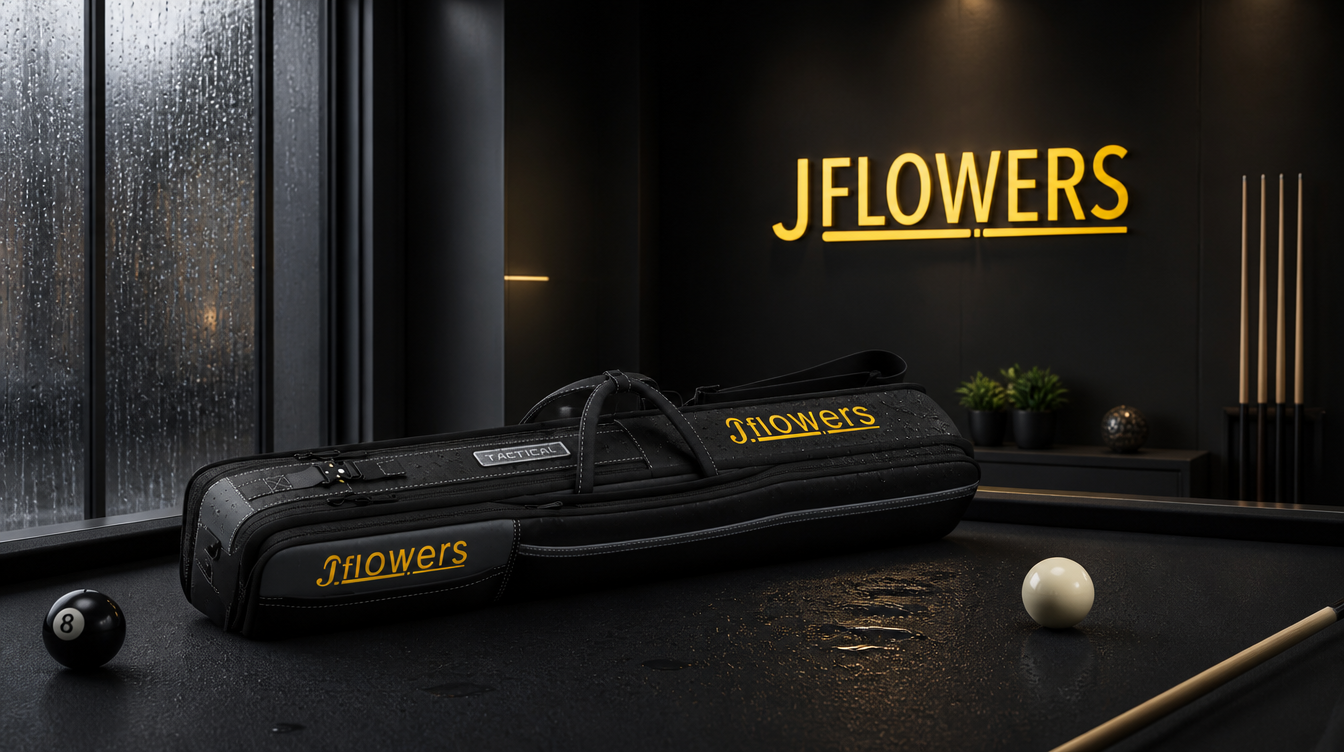
Moisture is an enemy of pool cues — particularly wood shafts that warp when exposed to humidity, leather wraps that deteriorate from sustained moisture, and metal joint components that can tarnish or corrode. A waterproof or water-resistant case provides an additional layer of protection for your equipment against rain, spills, and humid environments.
Listen to this article
This guide covers who genuinely needs water resistance in a cue case, the difference between water-resistant and genuinely waterproof options, and what to look for when moisture protection is a priority.
Water-Resistant vs Waterproof: The Real Difference
Most quality cue cases marketed as ‘waterproof’ are technically water-resistant — they resist moisture penetration up to a point but aren’t designed for submersion or sustained heavy rain exposure. True waterproof means the interior stays dry regardless of how much water is applied externally. Most ‘waterproof’ cue cases are somewhere between these poles.
The key features that determine water resistance:
Exterior fabric treatment — DWR (durable water repellent) coating causes water to bead off rather than absorb into the fabric
Zipper type — standard zippers allow moisture to pass through; sealed/waterproof zippers prevent this
Seam sealing — unsealed seams are moisture entry points even on treated fabric
Interior lining — a moisture-resistant interior lining provides a secondary barrier
Who Needs Water Resistance
Water resistance in a cue case matters most for:
Players who walk to pool halls and carry their case in rain or snow
Outdoor event players (charity tournaments, outdoor pool events, summer leagues)
Players who store their case in cars where condensation is a concern
Traveling players in humid climates or during wet weather
For players who drive directly from home to climate-controlled pool halls and back, water resistance is a lower priority. The case rarely encounters moisture, and basic splash resistance from any quality case material is adequate.
Hard Cases and Water Resistance
Hard tactical cases — the military-style hard cases used for airline travel — offer the best combination of water resistance and physical protection. Most quality tactical cases have rubber gasket seals around the lid that provide genuine moisture resistance. The Pelican and similar case styles are popular among serious pool travelers for this reason.
These cases aren’t typically marketed specifically as pool cue cases but serve the purpose excellently. The foam interior can be cut to fit any cue configuration, and the hard exterior with rubber seal provides protection from both impacts and moisture. For the full tactical case breakdown, see Tactical Cue Cases Explained.
Soft Cases and Water Resistance
Quality ballistic nylon soft cases with DWR treatment provide good splash resistance for rain and minor spills. The fabric repels light moisture effectively. The limitation: the zippers on most soft cases are not sealed, meaning sustained exposure allows moisture to enter through the zipper openings.
For sustained wet weather, a ballistic nylon case with a DWR treatment is fine for walking in rain if you’re moving quickly to cover. For extended outdoor exposure or heavy rain, a hard case with a gasket seal is more reliable.
Water Resistance and Carbon Fiber vs Wood Shafts
This is worth understanding clearly. Carbon fiber shafts like the JFlowers SMO are completely unaffected by moisture — the material doesn’t absorb water and isn’t damaged by sustained exposure. If your case gets wet and the carbon fiber shaft is exposed to moisture, no permanent damage occurs.
Wood shafts are more sensitive. A wood shaft exposed to moisture from a compromised case can absorb that moisture and begin the moisture cycling that causes warping. For wood shaft users, water resistance in a case is more practically important. For the full humidity and temperature impact on your cue, see How Humidity and Temperature Affect Your Pool Cue.
Practical Water Protection Strategies
Beyond case selection, these habits protect your equipment from moisture:
Dry the case exterior before opening after rain exposure — don’t open a wet case and drip moisture inside
Allow wet exterior to dry before storage — storing a wet case in a closet breeds mildew
Use silica gel packets inside the case in very humid environments
Wipe down the cue after any moisture exposure before returning it to the case
Pros and Cons
Waterproof / water-resistant cases
Protects against rain exposure during transport
Provides peace of mind in variable weather conditions
Hard tactical cases with gasket seals offer comprehensive moisture protection
Most ‘waterproof’ cases are water-resistant to varying degrees, not genuinely waterproof
Truly waterproof features (sealed zippers, gasket seals) add cost
Expert Recommendation For most players: a quality ballistic nylon case with DWR treatment provides adequate splash and rain resistance for normal transport situations. For players who regularly transport their cue in wet weather or fly frequently: a hard tactical case with a gasket seal is the complete solution for both impact and moisture protection.
Conclusion
Water resistance in a cue case is a legitimate consideration for players who regularly transport their equipment in rain or humid conditions. For most players, quality ballistic nylon with DWR treatment is adequate. For serious travelers or outdoor event players, a hard tactical case with gasket seals solves both the moisture and impact protection problems simultaneously.
Frequently Asked Questions
Q: Are pool cue cases waterproof? Most quality cases are water-resistant — they repel rain and minor spills. Truly waterproof cases with sealed zippers and gasket seals are available in tactical hard case designs. Q: Do I need a waterproof cue case? Depends on your transport conditions. If you regularly walk in rain or play outdoor events, water resistance is worth prioritizing. For controlled indoor transport, basic splash resistance from any quality case is adequate. Q: Do waterproof cue cases protect wood shafts from humidity? They protect against external moisture exposure (rain, spills). Ambient humidity penetrates any case over time — a waterproof case is not a humidity-controlled environment. Q: What is the most waterproof cue case? Tactical hard cases with rubber gasket seals (Pelican-style) offer the most complete moisture protection available in pool cue travel cases. Q: Does moisture damage a carbon fiber shaft? No. Carbon fiber is completely unaffected by moisture. Water resistance in a case matters more for wood shafts, leather wraps, and metal components.
After comparing JFlowers to Predator, Mezz, McDermott, Meucci, Jacoby, Pechauer, and a dozen more brands across every price point and construction philosophy — the question that started all of it deserves a direct answer: which pool cue brand actually offers the best value for serious competitive players in
2026?
Players Technology is one of the most widely used cue brands in American pool halls. Their two-piece cues at $40-$150 have introduced millions of American players to personal cue ownership. Nearly every serious pool player in America either started on a Players cue or played against someone who did. Comparing Players to JFlowers isn’t really a direct competition — it’s a marker on the journey from beginner to serious competitor.