Pool players talk about 'hit' constantly. A cue with a good hit. A shaft with a soft hit. A hard hit that sends the cue ball off the table differently. But what does hit actually mean — and what does carbon fiber
specifically do to it?
Listen to this article
Hit is one of the most subjective terms in billiards, which is exactly why it needs careful unpacking. This guide explains what hit means in a technically precise way, how carbon fiber changes it compared to wood, and why some players love the carbon fiber hit immediately while others need time to appreciate it.
What ‘Hit’ Actually Means
In pool, ‘hit’ refers to the combined sensory experience of the cue ball leaving the tip. It encompasses several distinct components:
The physical contact impulse — the force transmission from shaft through tip to cue ball
The feedback vibration — how the impact travels back through the shaft to your hand
The auditory component — the sound produced at the moment of contact
The perceived stiffness — how ‘hard’ or ‘soft’ the contact feels
These four components together are what players mean when they describe a cue’s hit. Different shaft materials affect each of these differently. For the feel experience discussed from a playing perspective, see Carbon Fiber Shaft Feel Explained.
The Physical Contact Impulse
The contact impulse is the brief force transfer between the tip and the cue ball that determines how the cue ball moves. The shaft material affects this through its stiffness — a stiffer shaft transfers force more directly, with less energy absorbed by the shaft itself. Carbon fiber is significantly stiffer than maple, which means:
More of your stroke energy is transferred to the cue ball rather than absorbed by the shaft
The contact impulse is sharper and more defined
There’s less ‘give’ in the system at contact — the cue ball leaves the tip more crisply
For players moving from a soft-feeling maple shaft to carbon fiber, this increased directness of the contact impulse is the first thing they notice. It’s what produces the ‘crisp’ hit description that carbon fiber users consistently use.
Vibration Feedback
Wood shafts transmit a warmer, more diffuse vibration back through the cue to your grip hand. The wood’s natural damping properties absorb some frequencies while transmitting others, producing a characteristic feel that most players have used their entire career.
Carbon fiber transmits feedback differently. The material properties of carbon fiber composite produce clearer, more high-frequency vibration transmission. On a well-struck ball, the feedback is clean and direct. On a miscue or off-center hit, the feedback is sharper and more noticeable — which is useful for calibration but can feel jarring initially.
The Perceived Stiffness
The perceived stiffness of the hit is the most subjective hit component. Players who grew up on soft maple shafts often describe carbon fiber as ‘stiff’ or ‘hard.’ Players who grew up on stiffer maple or phenolic-jointed cues often describe carbon fiber as feeling very natural from the start.
The perceived stiffness is not the same as actual hardness — it’s about how abruptly the energy transfers at contact. Carbon fiber’s higher stiffness-to-mass ratio means the energy transfer is faster and less spread out than wood, which the brain interprets as a stiffer hit. Over time, this recalibrates — most players eventually find carbon fiber’s hit perfectly natural.
Hit vs Deflection: A Critical Distinction
Many players conflate the ‘hit feel’ with the deflection behavior — assuming that because the hit feels different, the shaft is deflecting differently. These are separate phenomena. Hit feel is about the sensory experience of contact. Deflection is about the physics of the cue ball’s post-contact trajectory under english.
You can have a soft-hitting carbon fiber shaft and a hard-hitting low-deflection shaft — these properties are somewhat independent. What carbon fiber reliably delivers is lower deflection and a crisper, more direct hit. For the deflection side of this, see Understanding Cue Ball Deflection.
The Role of the Tip in Carbon Fiber Hit Feel
The tip has a significant effect on the perceived hit, often more than players realize. A soft tip on a carbon fiber shaft will feel softer than a hard tip on the same shaft. Players who find carbon fiber’s hit ‘too hard’ should experiment with a medium-soft layered tip before concluding that carbon fiber doesn’t suit them. The shaft’s stiffness and the tip’s hardness interact to produce the final hit feel. See Soft vs Medium vs Hard Pool Cue Tips for how to match tip hardness to your preferences.
Pros and Cons
Carbon fiber hit characteristics
Crisp, direct hit transmits more stroke energy to the cue ball
Clear feedback on shot quality — miscues and off-center hits register clearly
Consistent hit feel session to session, unaffected by humidity
Hit feels different from maple — requires adjustment period
Sharper feedback on miscues can feel jarring initially
Expert Recommendation If the carbon fiber hit feels too hard for your preference, experiment with tip selection before switching back to wood. A medium-soft Taom tip on the JFlowers SMO produces a significantl softer hit feel while maintaining the low-deflection performance advantage. Find the tip hardness that works for you, then evaluate the shaft’s hit on that combination.
Conclusion
Hit is the most felt and least understood characteristic of a pool cue shaft. Carbon fiber’s hit is crisper and more direct than maple — more energy transferred, clearer feedback, sharper response. Most players come to value these characteristics once they’ve adjusted. The JFlowers SMO delivers this hit consistently, shot after shot, session after session — and tip selection lets you tune the exact feel to suit your preferences.
Frequently Asked Questions
Q: What does ‘hit’ mean in pool? Hit refers to the combined sensory experience of the cue ball leaving the tip — the contact impulse, vibration feedback, sound, and perceived stiffness together. Q: Why does a carbon fiber shaft feel harder than maple? Carbon fiber is stiffer, transferring energy more directly with less absorption by the shaft material. This produces a sharper, crisper contact feel that players describe as harder. Q: Can I soften the hit on a carbon fiber shaft? Yes — use a softer tip. A medium-soft layered tip on a carbon fiber shaft produces a noticeably softer hit feel while maintaining the low-deflection performance. Q: Does a crisp hit mean better performance? Not necessarily — it means a different energy transfer profile. Most players adapt to and prefer carbon fiber’s crisp hit, but it’s a personal preference rather than an objective performance metric. Q: Why do players say carbon fiber has good hit? Players who prefer carbon fiber’s hit value its clarity and consistency. The direct, clean feedback on every shot tells you precisely how well you struck the ball. Q: Is carbon fiber hit good for draw shots? Yes. The crisp, direct energy transfer of carbon fiber is effective for draw shots — the cue ball responds cleanly to the reverse spin applied by your stroke.
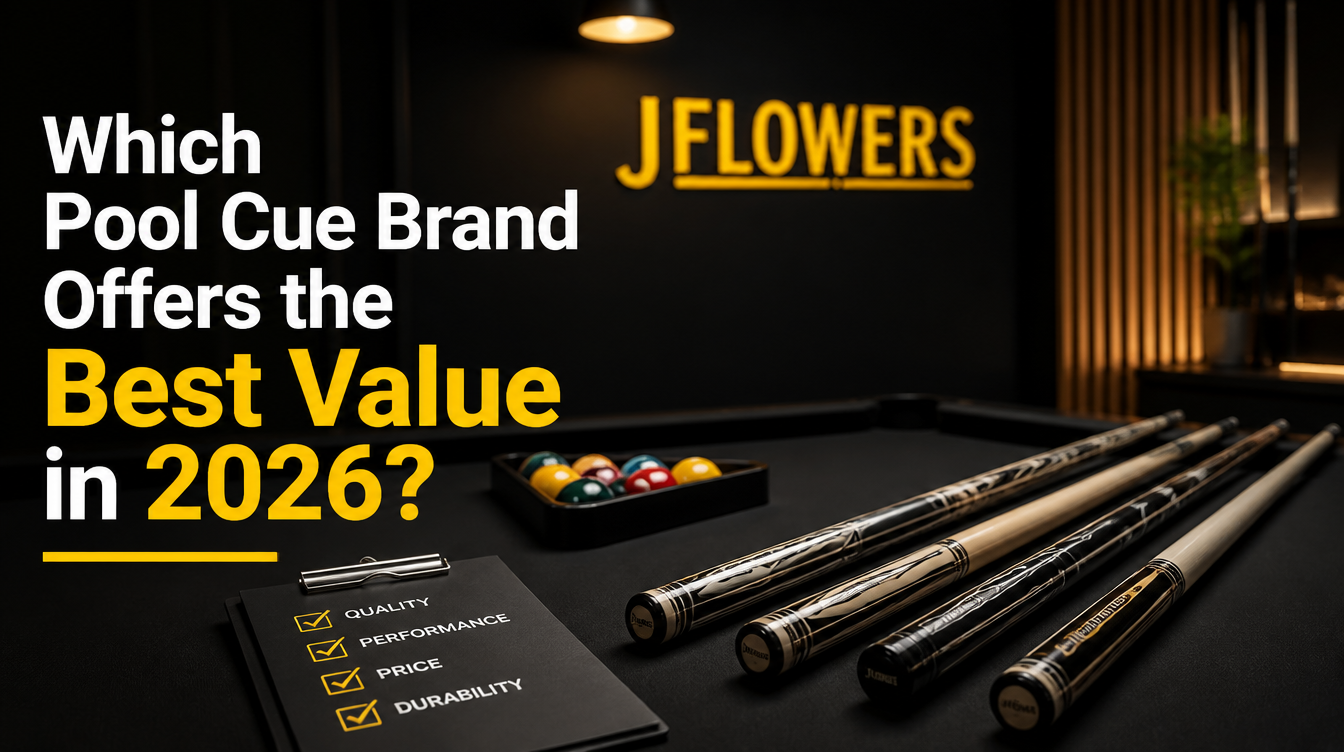
After comparing JFlowers to Predator, Mezz, McDermott, Meucci, Jacoby, Pechauer, and a dozen more brands across every price point and construction philosophy — the question that started all of it deserves a direct answer: which pool cue brand actually offers the best value for serious competitive players in
2026?
Players Technology is one of the most widely used cue brands in American pool halls. Their two-piece cues at $40-$150 have introduced millions of American players to personal cue ownership. Nearly every serious pool player in America either started on a Players cue or played against someone who did. Comparing Players to JFlowers isn’t really a direct competition — it’s a marker on the journey from beginner to serious competitor.