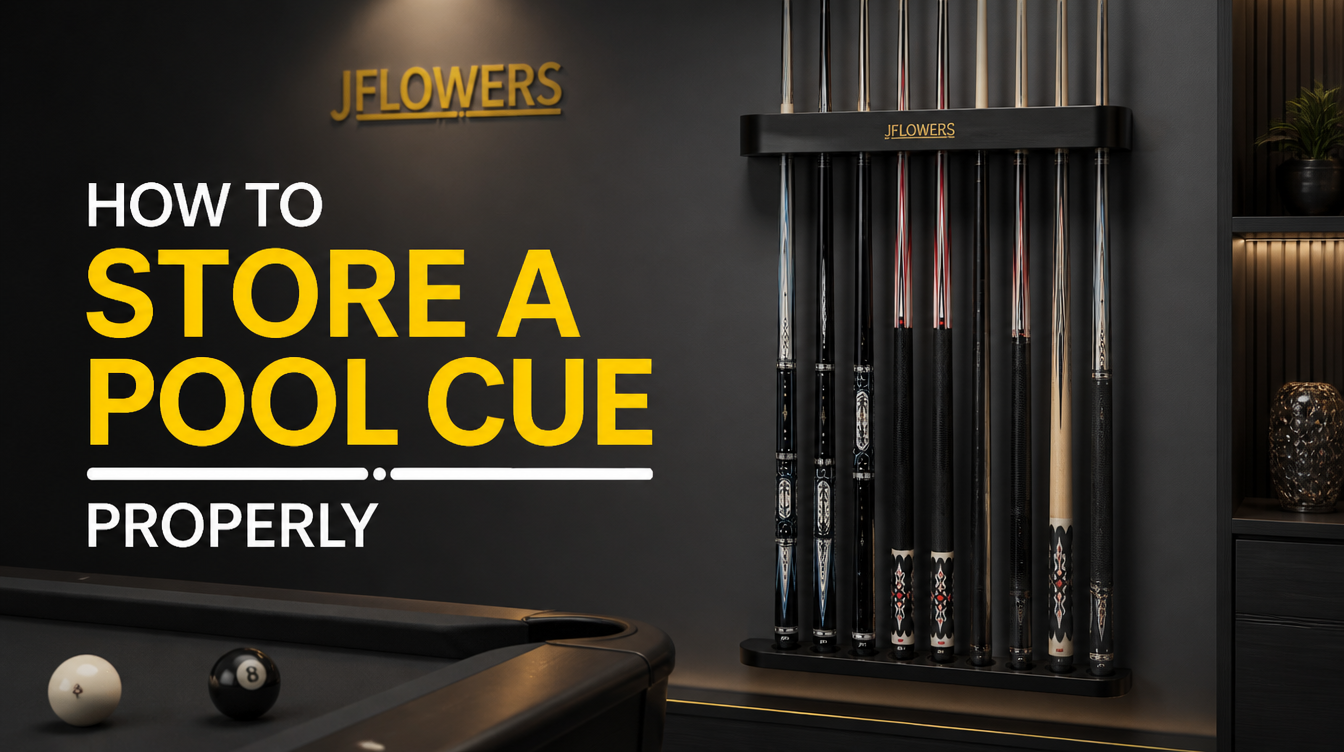
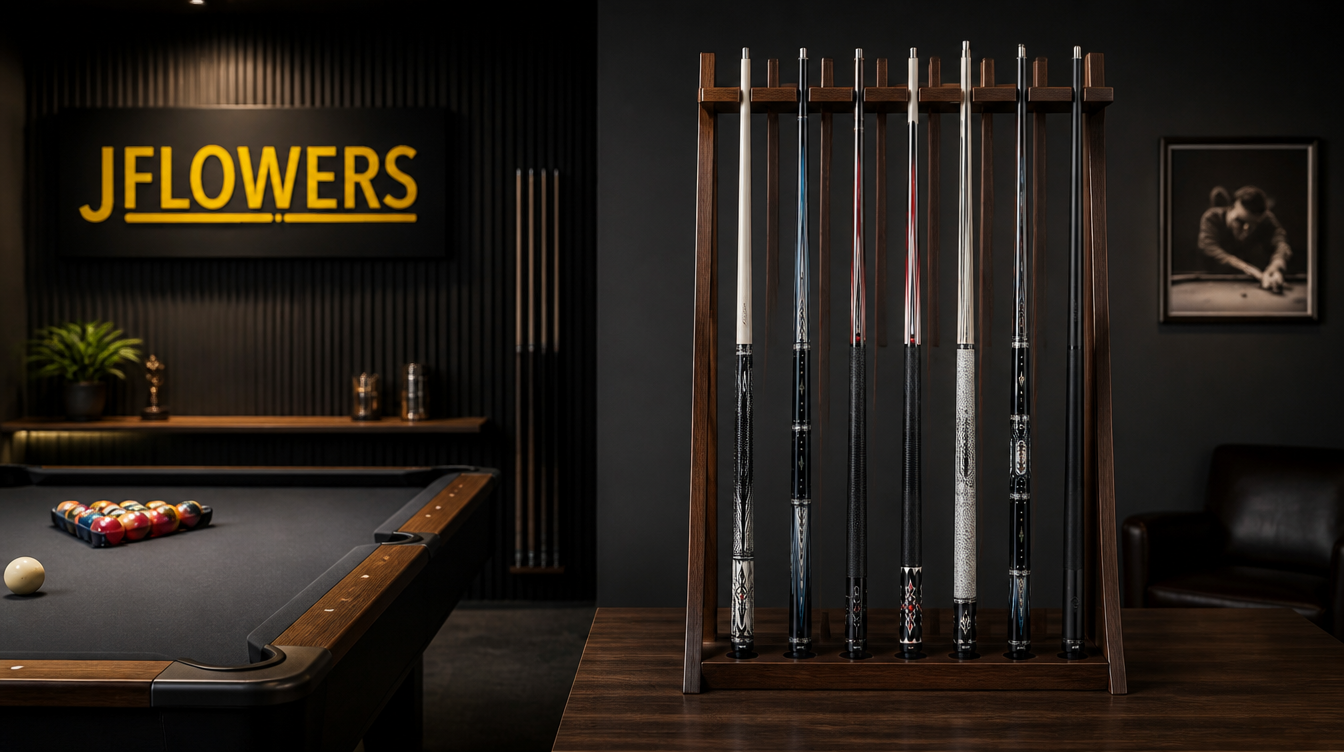
More pool cues get damaged in storage than in play. A cue that's hit tens of thousands of shots without issue can develop a warp in a few months from being stored badly. The irony is that proper storage doesn't cost anything — it's just about breaking a few bad habits and building a few good ones.
Listen to this article
The storage habits that protect your investment — and the ones that destroy it
This guide covers how to store your cue at home, in your car, and during transport — for both maple and carbon fiber shafts, with the specific differences that matter between them.
The Single Most Important Storage Rule
Always store your cue in a case. This one rule, applied consistently, prevents the vast majority of cue damage that happens outside of play. A case protects against physical impact, humidity extremes, direct heat, and the casual damage that happens when a cue is left out in the open.
This seems obvious but the number of players who leave their cue leaned against a wall, propped in a corner, or laid across a table “just for tonight” is remarkable. Every time a cue is left out of its case is an opportunity for something to go wrong — a fall, a humidity spike, someone knocking it over, a pet, a child, a door.
The case is cheap insurance on an investment that may have cost you several hundred dollars.
Storing a Maple Shaft Cue
Maple is a natural material that responds to its environment. Everything about maple shaft storage comes back to managing environmental exposure.
Temperature and Humidity The biggest threat to a maple shaft is extreme or rapidly changing humidity. When humidity is high, wood fibers absorb moisture and swell. When it’s low, they dry and contract. Repeated cycles of this — or sustained exposure to high humidity — is how warps develop. Store maple shaft cues in an environment with reasonably stable temperature and humidity. A climate-controlled room is ideal. Avoid:
Basements that get humid in summer — humidity damage is very common in basement storage
Garages without climate control — temperature and humidity swings can be severe
Near HVAC vents that blow directly on the cue — the constant airflow creates drying cycles
Near windows where direct sunlight can heat the cue — heat and UV both affect wood
Vertical vs Horizontal Storage Vertical storage (cue standing upright) is generally preferred for maple shafts — gravity acts evenly along the length rather than creating a subtle sag over time. If you store horizontally, support the cue at multiple points — not just the ends — to distribute the weight evenly.
In the Case Store the cue broken down into its two pieces (shaft and butt separated) if your case accommodates this — the joint can be a point of stress if the cue is stored assembled and the case puts any pressure on it. Most proper cue cases are designed for disassembled storage.
Carbon fiber storage is significantly less demanding than maple. The material doesn’t respond to humidity or temperature in any meaningful way — which is one of its biggest practical advantages.
You still need a case — but for different reasons. Carbon fiber doesn’t warp. What it can do is crack or chip from physical impact. The case protects against impact damage, not environmental damage.
Humidity and temperature: not a concern. Store in a hot car, a basement, a garage — the shaft performs the same.
Vertical vs horizontal: doesn’t matter. Carbon fiber doesn’t sag or lean regardless of orientation.
Always in a case: yes — primarily for impact protection.
Choosing the Right Case
Hard-Sided Cases Hard-sided cases provide the best protection against both environmental factors and physical impact. For a cue that you’re transporting regularly — to league play, tournaments, pool halls — a hard-sided case is the right choice. The rigid shell protects against being dropped, bumped in the trunk of a car, or having other items stacked on top of it.
Hard cases come in multiple configurations: 1×1 (holds one butt and one shaft), 2×2, 3×5, and various larger configurations for players who carry multiple shafts and accessories. At minimum, a 1×1 hard case is what you need for regular transport.
Soft-Sided Cases Soft cases are lighter and easier to carry but provide significantly less protection. They’re acceptable for players who only use them for short carries (walking into a pool hall from the parking lot) but shouldn’t be relied on for travel or for cues stored in a car. A soft case over a cue in a trunk provides almost no meaningful protection against impact. Premium Features Worth Having
Interior padding that holds cues securely without pressure on the joint
Separate shaft and butt compartments that prevent rubbing
Exterior pockets for chalk, tip tools, and accessories
Shoulder strap for comfortable carry
Moisture-resistant exterior material
Storing Your Cue in a Car
This is where most cue storage advice gets ignored, and where maple shafts suffer the most damage. Cars experience extreme temperature and humidity swings — a car parked in the sun can reach 140°F+ in summer, which combined with high humidity creates ideal conditions for warping maple.
For Maple Shafts Avoid leaving a maple shaft cue in a hot car for extended periods. If you must transport in a car, keep the cue in the passenger compartment (air-conditioned) rather than the trunk when possible. If the cue will be in the car for more than a few hours in summer heat, take it inside.
For Carbon Fiber Shafts Car storage is not a meaningful concern for carbon fiber. The material handles the temperature and humidity extremes of vehicle storage without any effect on performance. Leave it in the trunk all week if that’s what your schedule requires — it plays the same when you come back to it.
This is one of the most practically significant advantages of carbon fiber for players who transport their cue regularly. The storage anxiety that maple owners deal with simply doesn’t apply.
Long-Term Storage
If you’re storing a cue for an extended period — months rather than sessions — a few additional considerations apply:
Clean the shaft thoroughly before long-term storage — don’t store chalk and oil buildup for months
For maple: store in a stable humidity environment — consider a room with a dehumidifier in humid climates
For both: store in a hard case to protect against physical damage and light exposure
Check on maple shafts periodically during long storage — sight down the shaft every few months to verify it’s staying straight
Can I store my cue standing up in a corner without a case? We’d strongly advise against it. Even set aside the warp risk for maple — a cue leaning in a corner can fall, get knocked over, or get handled roughly. The case is the right answer.
Does a pool cue need to be stored at a specific humidity level? For maple: ideally between 45-55% relative humidity, which is typical indoor comfort range in most climates. Extreme high or low humidity accelerates warping risk. Carbon fiber: no humidity concern.
Is it okay to store my cue assembled? Generally better to store disassembled — shaft and butt separated. This eliminates any stress on the joint during storage. Most proper cases are designed for disassembled storage anyway.
How should I store a cue tip I’m not using yet? Keep unused tips in their original packaging in a cool, dry place. Extreme heat can affect tip hardness and shape before installation.
My cue was stored badly and now has a slight warp. What can I do? Minor warps in maple shafts can sometimes be corrected by a cue technician through careful application of heat and pressure. Significant warps are harder to fully correct. Prevention through proper storage is much more effective than treatment after the fact.
Final Thoughts
Proper cue storage is simple: always use a case, keep maple shafts away from humidity extremes and temperature swings, and store assembled cues broken down into their components. Five seconds of putting the cue in its case after every session is the most effective cue maintenance habit you can build.
After comparing JFlowers to Predator, Mezz, McDermott, Meucci, Jacoby, Pechauer, and a dozen more brands across every price point and construction philosophy — the question that started all of it deserves a direct answer: which pool cue brand actually offers the best value for serious competitive players in
2026?
Players Technology is one of the most widely used cue brands in American pool halls. Their two-piece cues at $40-$150 have introduced millions of American players to personal cue ownership. Nearly every serious pool player in America either started on a Players cue or played against someone who did. Comparing Players to JFlowers isn’t really a direct competition — it’s a marker on the journey from beginner to serious competitor.