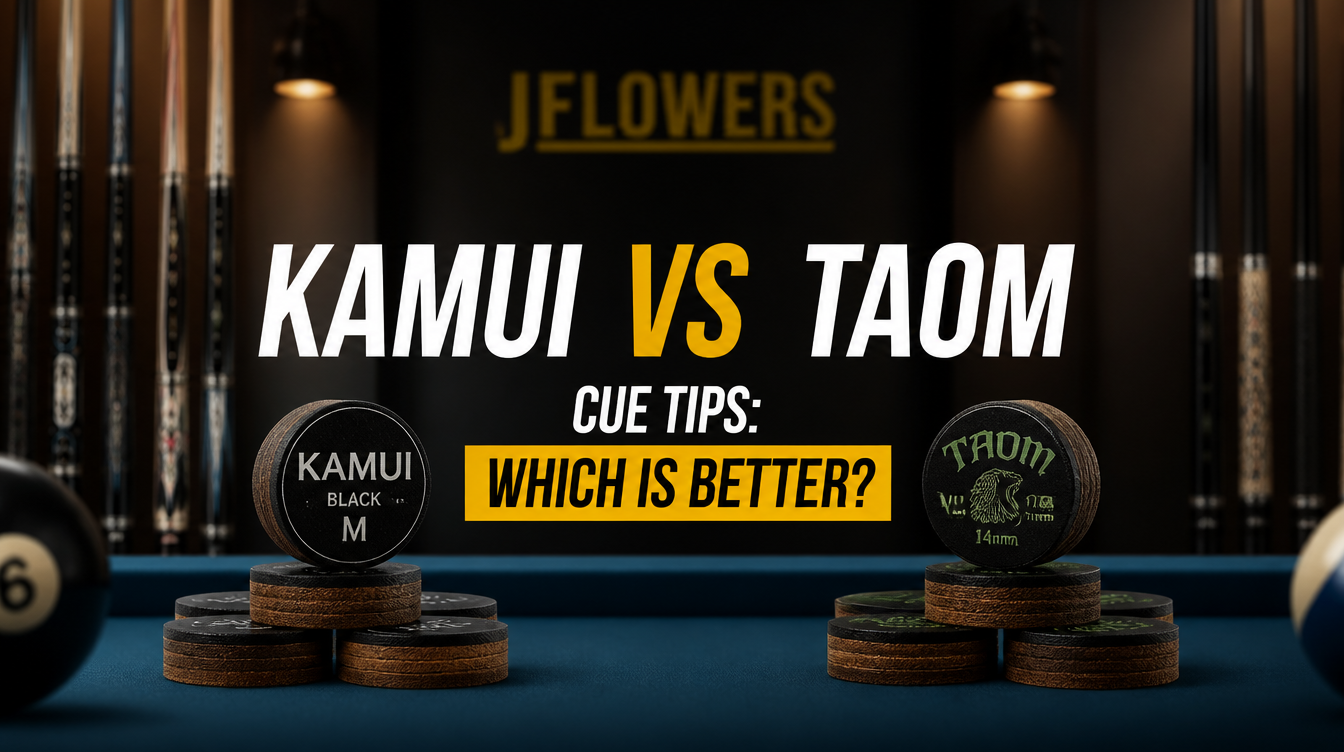
If you're serious about your tip selection, this is the debate you'll eventually hit: Kamui or Taom. Both are premium layered tip brands with strong followings at the competitive level. Both are used by professional players. Both cost more than the competition. And both are genuinely excellent.
Listen to this article
So which one is right for you? The honest answer is that it depends on your playing style, your hardness preferences, and in some cases, your shaft type. This guide goes head to head on every relevant criterion.
Brand Background
Kamui is a Japanese brand founded in 2007. They were early in the premium layered tip market and built a loyal following quickly, particularly among nine-ball players who valued the exceptional chalk retention of the early Original series.
Taom is a Finnish brand that entered the tip market more recently but gained ground quickly. Taom also produces a highly regarded chalk, and the tip-and-chalk combination has become particularly popular at the tournament level. Taom has strong representation on the European and international tour circuits.
Construction
Both brands produce layered tips — multiple thin layers of leather pressed together, which provides better shape retention and more consistent hardness than single-layer alternatives. For why layered construction matters, see Layered vs Single-Layer Tips.
Kamui’s layering is extremely precise and consistent. The Original series uses 14 layers; the Black series uses a different construction optimized for firmer hardness grades. Taom’s layered construction is also excellent but uses a different manufacturing approach. The specific layer count and bonding method contribute to each brand’s distinct feel character.
Feel Comparison
Kamui tips, particularly in softer grades, have a characteristic ‘gripping’ feel — they hold the cue ball very well during contact, which players describe as an almost tacky feel on english shots. This is a function of Kamui’s surface texture and material selection.
Taom tips tend to feel slightly firmer and more defined at the same nominal hardness. Where Kamui grips, Taom transmits. Both deliver excellent cue ball feedback, but the character is different. Players who prefer more direct, crisp feedback often prefer Taom. Players who prefer the maximum english grip of softer contact tend to prefer Kamui.
Both brands have excellent chalk retention — significantly better than economy tips. In direct comparison, Kamui’s surface is often described as retaining chalk slightly better than Taom in the same hardness grade. The Kamui surface texture naturally holds chalk well.
However, Taom tips are specifically designed to pair with Taom chalk. When used together, the Taom chalk-and-tip combination produces exceptional results — with the chalk formulated to transfer cleanly onto the Taom tip surface and bond effectively. Players using Taom chalk on Taom tips often find the combination outperforms Kamui tips with generic chalk.
Shape Retention
Shape retention — how well the tip maintains its radius under repeated impacts — is excellent in both brands. Kamui holds shape well; Taom holds shape equally well. Neither brand mushrooms quickly under normal competitive use. The difference here is minimal and within individual tip variation rather than brand-level difference.
Hardness Range and Options
Kamui offers: 0.98 (extremely soft), soft, medium-soft, medium, medium-hard, hard, and super-hard. An exceptionally wide range that suits players across the entire spectrum of preferences.
Taom offers: soft, medium-soft, medium, medium-hard, and hard. Slightly fewer options at the extreme ends but covers the needs of the vast majority of players. For guidance on which hardness matches your game, see Choosing the Right Pool Cue Tip.
Price
Kamui: $20-$35 per tip depending on series and retailer. Taom: $15-$25 per tip. Taom is consistently less expensive than Kamui for comparable quality. For players buying tips regularly, this difference adds up meaningfully over a season of competitive play.
Compatibility With Carbon Fiber Shafts
Both brands work well on carbon fiber shafts. For ferrule-less designs like the JFlowers SMO, tip installation requires specific adhesive and preparation regardless of brand. Both Kamui and Taom tips bond effectively to carbon fiber shaft material with the right installation technique.
Which Professionals Use What
Professional tour usage is roughly split between the two brands, with regional preferences playing a role. Kamui has stronger presence on the American and East Asian circuits. Taom is dominant on the European circuit and has growing global representation. Neither brand has a meaningful professional performance advantage — this is a personal preference split.
Pros and Cons
Kamui tips
Exceptional chalk retention, particularly the Original series
Wide hardness range — 0.98 to super-hard covers all preferences
Strong tour presence and well-proven at every competitive level
Higher price than Taom for comparable hardness grade
The ‘gripping’ feel can feel too sticky for players who prefer crisper contact
Taom tips
Excellent value relative to quality — less expensive than Kamui
More defined, crisp feel character preferred by many competitive players
Exceptional performance when paired with Taom chalk
Slightly narrower hardness range than Kamui
Feel may be too firm for players who strongly prefer the softest grades
Expert Recommendation Our recommendation: Taom for most competitive players. The combination of excellent quality, accessible pricing, and exceptional performance with Taom chalk makes Taom our default tip recommendation. If you specifically prefer maximum chalk grip and don’t mind the premium price, Kamui Original in your preferred hardness is also excellent. Try both if you can — the right answer for you may depend on feel preferences that only playing with each will reveal.
Conclusion
Kamui and Taom are the two best-performing tip brands on the market. The choice between them comes down to feel preference: Kamui for players who want maximum chalk grip and softer contact character, Taom for players who prefer crisp, defined feedback and the chalk-and-tip system advantage. Try both with the same hardness grade on the same shaft over a month of play and you’ll know which one is yours.
Frequently Asked Questions
Q: Are Kamui or Taom tips better? Both are excellent. Kamui has more grip feel and exceptional chalk retention. Taom has a crisper, more defined feel and is better value. Most players who try both have a clear preference. Q: What’s the difference between Kamui and Taom tips? Kamui has a slightly grippier, softer feel at the same hardness grade. Taom feels crisper and more direct. Taom pairs exceptionally well with Taom chalk. Q: Which is more expensive, Kamui or Taom? Kamui is typically more expensive at $20-$35 per tip vs Taom at $15-$25. Q: Do professional pool players use Kamui or Taom? Both are used at the professional level. Regional preferences affect which brand dominates in different circuits. Q: Can I use Taom chalk with Kamui tips? Yes. Many players mix brands. The Taom chalk-and-Taom tip combination is particularly well-regarded because they’re designed together. Q: What hardness Kamui tip should I choose? Medium is the most popular starting point. Kamui also offers medium-soft for players who want more grip and medium-hard for players who want more precision. Q: What hardness Taom tip should I choose? Medium for most competitive players. Medium-soft for players who use a lot of slow english. Medium-hard for players who prefer crisp, precise contact. Q: Are Kamui tips good for carbon fiber shafts? Yes. Kamui tips work well on both ferrule-equipped and ferrule-less carbon fiber shaft designs with the right installation technique.
After comparing JFlowers to Predator, Mezz, McDermott, Meucci, Jacoby, Pechauer, and a dozen more brands across every price point and construction philosophy — the question that started all of it deserves a direct answer: which pool cue brand actually offers the best value for serious competitive players in
2026?
Players Technology is one of the most widely used cue brands in American pool halls. Their two-piece cues at $40-$150 have introduced millions of American players to personal cue ownership. Nearly every serious pool player in America either started on a Players cue or played against someone who did. Comparing Players to JFlowers isn’t really a direct competition — it’s a marker on the journey from beginner to serious competitor.