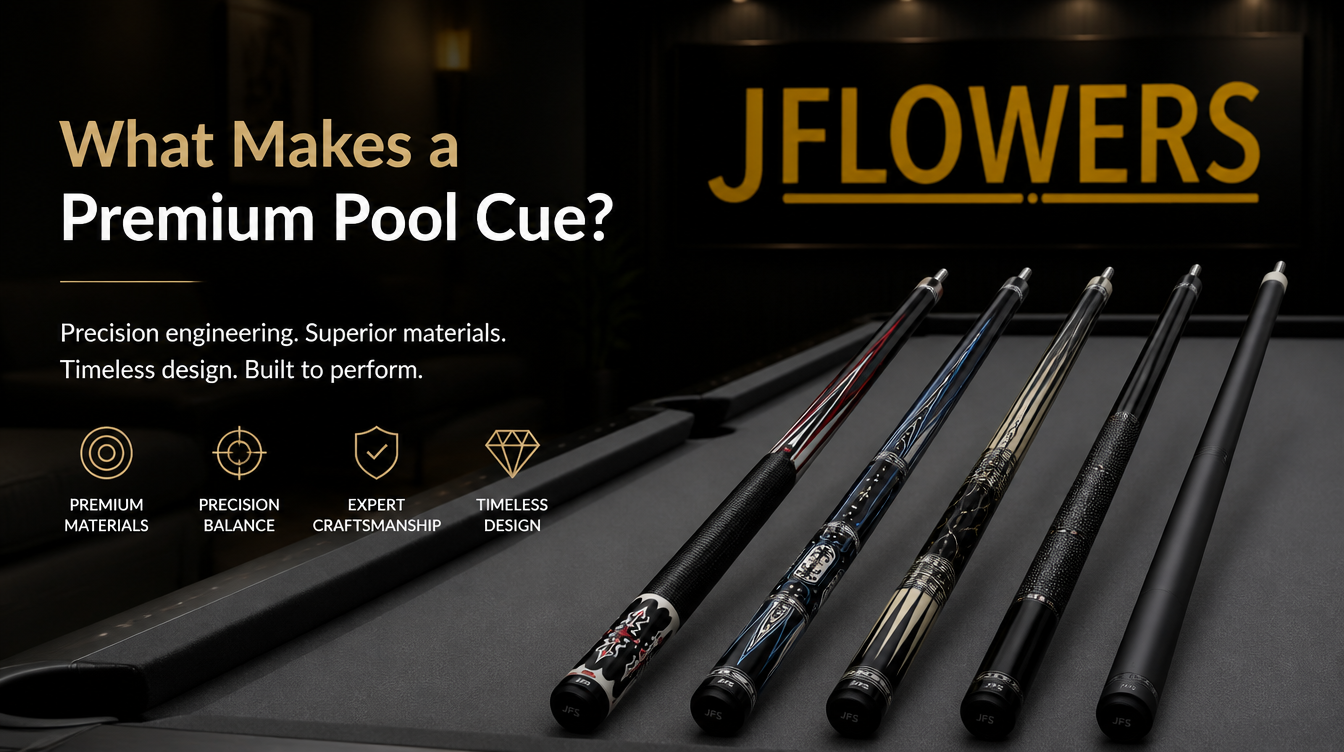
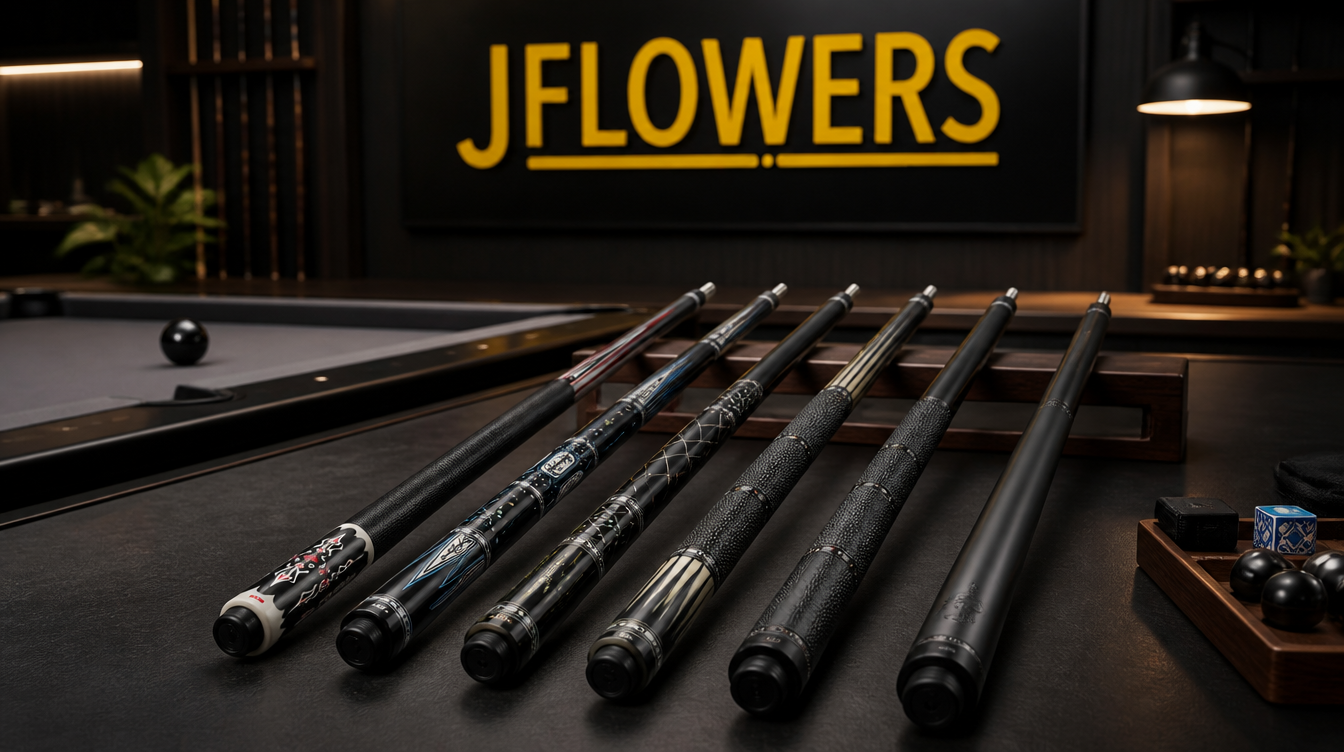
Not every expensive pool cue is actually premium. And not every premium cue will break the bank. Once
you understand what separates a quality stick from a cheap one, you'll stop buying on price alone — and
start buying on what the cue is actually built from.
Listen to this article
This guide breaks down every component that contributes to a pool cue’s quality — from the shaft and joint down to the wrap and tip. Whether you’re buying your first real cue or deciding whether to upgrade, this is the framework that makes the decision clear.
A premium pool cue isn’t defined by the price tag. It’s defined by how consistently it performs, how long it holds up, and how much it helps rather than fights your natural stroke.
It Starts With the Shaft
The shaft is the single most important component on a pool cue. Everything else affects aesthetics and feel-in-hand. The shaft affects how the cue ball moves. A quality shaft needs to be straight, consistent in taper, and predictable under english. Premium maple shafts are kiln-dried and aged to reduce the moisture content that causes warping over time. Carbon fiber shafts like the JFlowers SMO have changed what premium looks like. They don’t warp, don’t swell in humidity, and deliver extremely consistent low-deflection performance session after session. For a full breakdown of the trade-offs, see Carbon Fiber vs Maple Shafts: The Complete Comparison.
What separates a premium shaft: straightness, consistent diameter, quality finish, and predictable deflection under side spin. To understand how deflection works in practice, read Understanding Cue Ball Deflection.
Taper and Diameter
Shaft taper — how the shaft narrows from joint to tip — directly affects how it feels in your bridge hand and responds during the stroke. A pro taper stays at a consistent diameter for a longer distance before narrowing. A European taper begins narrowing much earlier and produces a more flexible feel. Diameter matters too. Most shafts run between 11.75mm and 13mm. Tighter diameters (12mm and under) suit players who use a lot of english. Wider shafts suit straight-ball and break specialists. Full breakdown at What Is a Pro Taper Shaft? and How Shaft Diameter Changes Feel.
Joint Quality
The joint is where the shaft meets the butt. On a cheap cue, this connection is loose and made from inferior materials. On a premium cue, it’s tight, true, and built from materials that maintain integrity over years of play.
Common joint materials: stainless steel, brass, phenolic resin, and wood-to-wood. Phenolic and stainless give a crisper hit. Wood-to-wood is softer and preferred by players who want more feel on contact. A sloppy joint creates micro-movement that undermines aim consistency. For a full overview of joint types, see Pool Cue Technology Explained.
The Tip and Ferrule
The tip is the only part of the cue that touches the cue ball. Its hardness, shape, and condition directly affect every shot. A cheap tip on a $1,000 cue underperforms a quality tip on a $200 cue.
Premium cues ship with layered tips from respected manufacturers — Kamui, Taom, Tiger. Layered tips hold shape better, chalk up more consistently, and last longer than single-layer leather. Not sure which hardness is right for your game? See Soft vs Medium vs Hard Pool Cue Tips and Choosing the Right Pool Cue Tip.
Butt Construction and Balance
The butt is where weight distribution lives. A premium butt is built with internal weight blocks placed deliberately so the balance point sits where it should for your grip style. Budget cues cut corners here — weight distribution is accidental rather than designed. Premium cue makers control the balance point on purpose. Read How Cue Balance Affects Performance and Forward Balance vs Rear Balance Pool Cues to understand what a deliberate balance point does for your stroke.
Wrap Materials
The wrap affects grip feel and how well you control the cue under pressure. Three options dominate: Irish linen (most popular among competitive players), leather (preferred by players who like a polished feel), and wrapless (increasingly popular with carbon fiber setups).
Visual Finish and Inlays
Premium cues look premium: consistent finish, inlays cut precisely and sanded flush with the surface. Budget cues often use decals instead of real inlays and thick or uneven lacquer. This is the category most players notice first — but it matters least to your game. A beautiful cue with a bad shaft loses to a plain cue with a great shaft every time.
Build Consistency
The real separator between premium and cheap at scale: does the 50th cue off the production line play the same as the first? Budget brands cut tolerances to reduce cost. Premium manufacturers invest in quality control that keeps every cue within spec. JFlowers Cues maintains this commitment — every SMO shaft and playing cue is built to consistent specifications.
Pros and Cons
What you get with a premium cue
Consistent performance shot to shot, session to session
Shaft materials that resist warping and humidity degradation
Tight joint tolerances that maintain aim repeatability
Quality tips and ferrules that last longer and chalk better
Better resale value if you decide to move on
Higher upfront investment
Needs proper storage and case protection to hold its value
Subjective preferences mean premium doesn’t always mean right-for-you
Expert Recommendation A premium pool cue earns its price tag through performance, not aesthetics. The JFlowers playing cue lineup delivers on shaft quality, joint precision, and balance design without the inflated pricing of legacy brand names. Pair it with a Taom tip and the JFlowers SMO carbon fiber shaft and you have a genuinely premium setup for a fraction of what some well-known brands charge.
Conclusion
A premium pool cue is defined by what it does for your game. Shaft quality, joint precision, balance, and tip choice are the variables that affect performance. Visual finish is nice but secondary. The JFlowers lineup delivers on all performance criteria at a price point that doesn’t require a collector’s budget.
Frequently Asked Questions
Q: What is considered a premium pool cue? A premium pool cue is defined by shaft straightness and consistency, tight joint tolerances, quality tip and ferrule, deliberate balance design, and materials that maintain performance over time. Q: How much does a premium pool cue cost? A genuinely premium playing setup — cue plus quality shaft — typically runs $400-$900. You can get premium performance at the lower end of that range from brands like JFlowers. Q: Does a better cue make you a better player? It won’t fix fundamental mechanics, but a quality cue removes variables. A warped shaft, dead tip, or loose joint are all obstacles to improvement. Q: What is the best shaft material for a premium cue? Both premium maple and carbon fiber have strong cases. Carbon fiber is more consistent across humidity and temperature. The right answer depends on your game and preferences. Q: Are carbon fiber shafts premium? Yes. Quality carbon fiber shafts like the JFlowers SMO represent some of the most technically advanced options available — low deflection, warp resistance, and long-term consistency. Q: What makes a pool cue tip premium? Layered construction, consistent hardness, good chalk retention, and the ability to hold shape. Kamui and Taom are widely considered the gold standard. Q: Is a heavier cue better? Not necessarily. The right weight lets you stroke through the ball naturally. Most players end up between 18.5oz and 21oz. Q: Do expensive cues have better inlays? Usually. Premium cues use genuine wood, shell, or metal inlays. Budget cues use decals that wear off. But inlays affect aesthetics, not performance. Q: How do I know if a pool cue is good quality? Roll it on a flat surface for straightness. Thread the joint and check for play. A premium cue rolls straight, joints without wobble, and is finished cleanly end to end.
After comparing JFlowers to Predator, Mezz, McDermott, Meucci, Jacoby, Pechauer, and a dozen more brands across every price point and construction philosophy — the question that started all of it deserves a direct answer: which pool cue brand actually offers the best value for serious competitive players in
2026?
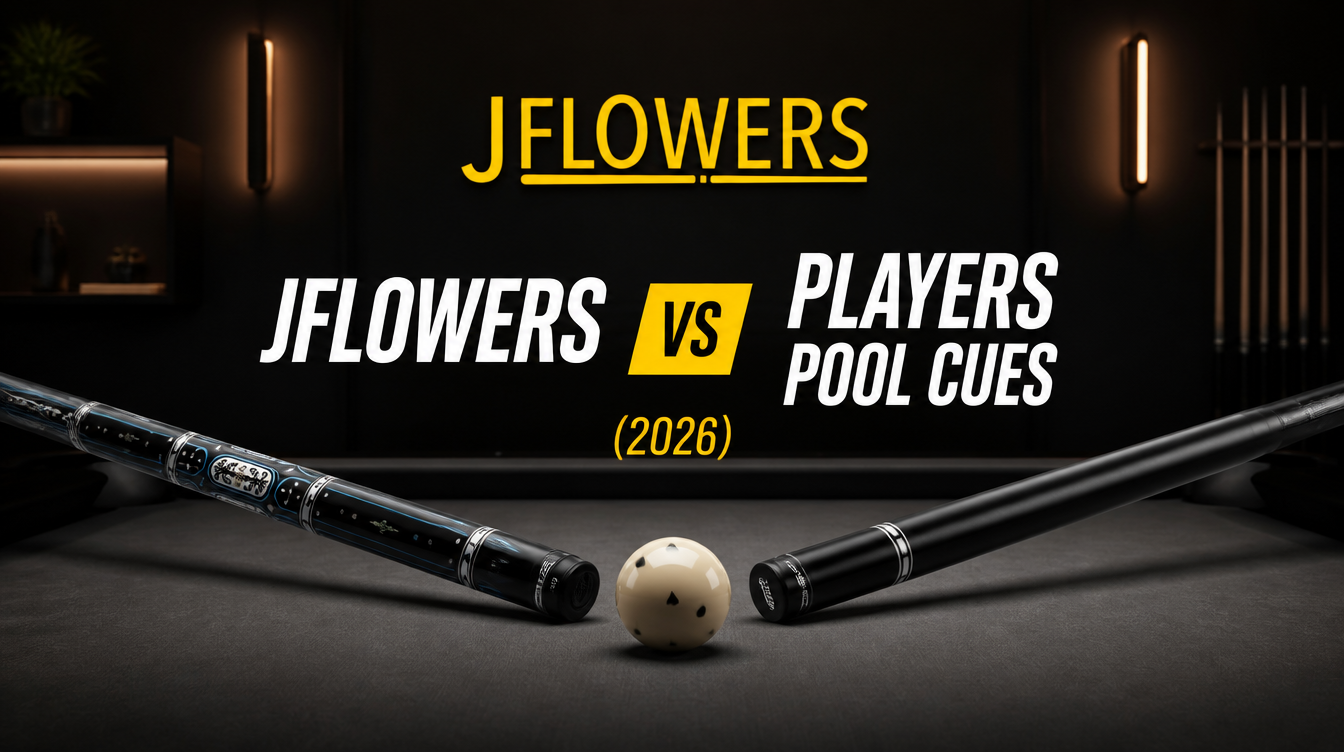
Players Technology is one of the most widely used cue brands in American pool halls. Their two-piece cues at $40-$150 have introduced millions of American players to personal cue ownership. Nearly every serious pool player in America either started on a Players cue or played against someone who did. Comparing Players to JFlowers isn’t really a direct competition — it’s a marker on the journey from beginner to serious competitor.