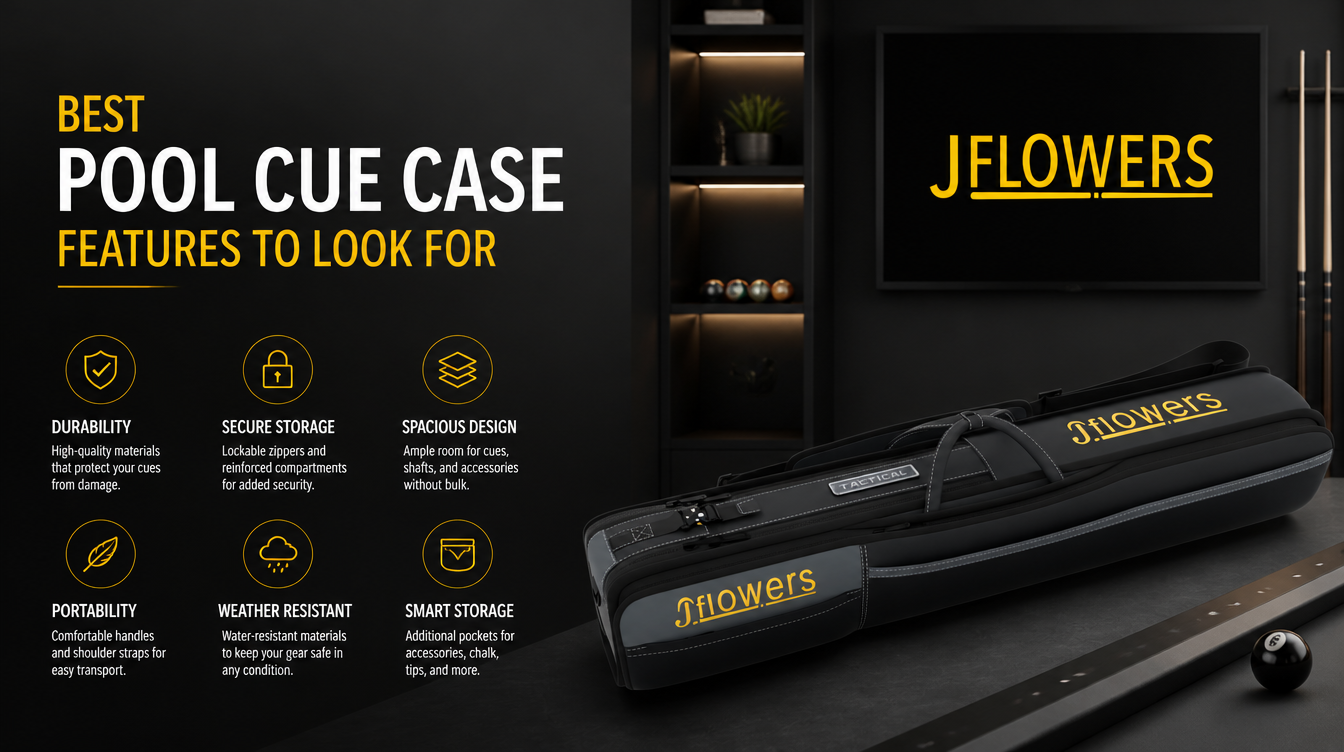
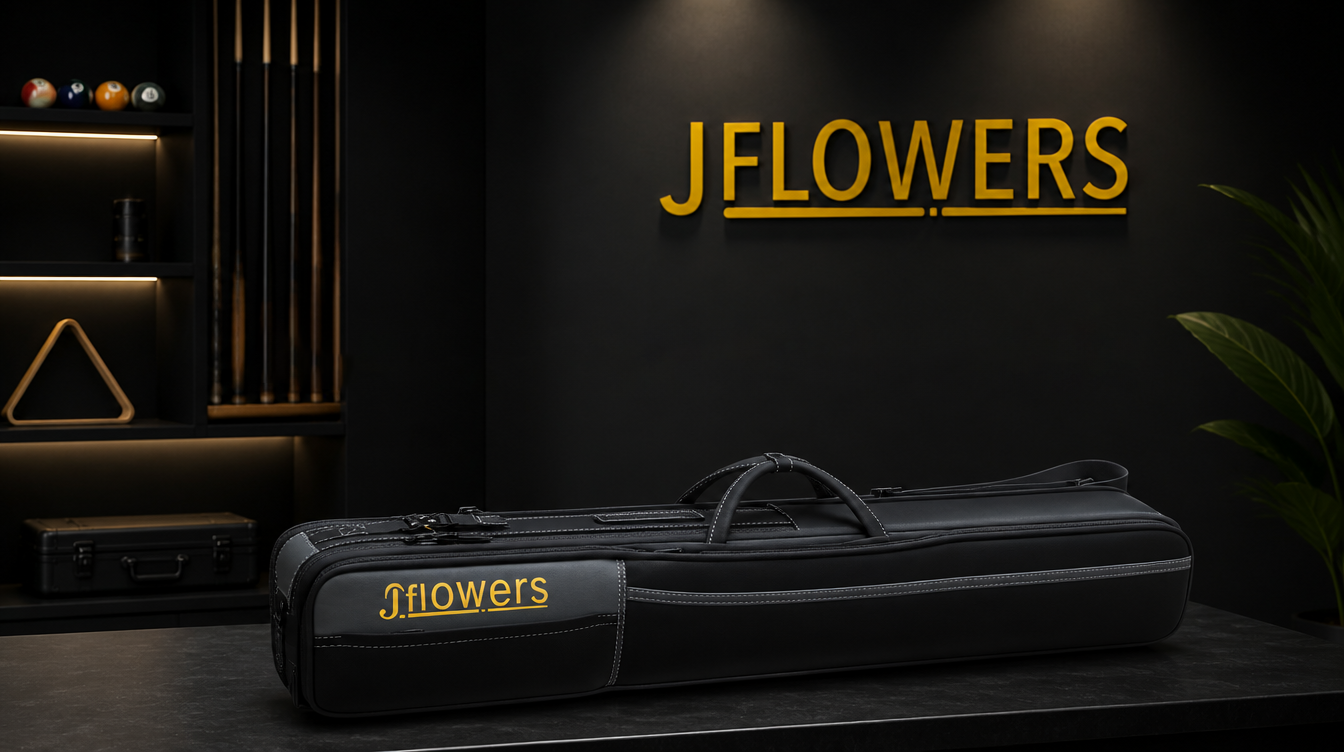
The pool cue case market is full of options at every price point, and it's easy to be swayed by the case that looks best in photos. But photos don't show you zipper quality, interior padding density, shaft tube fit, or any of the features that determine whether a case actually protects your cue and holds up over years of use.
Listen to this article
This guide covers every key feature in a quality cue case — what to look for, what to avoid, and why each feature matters for protecting your equipment.
Shaft Tube Quality: The Most Important Interior Feature
The shaft tubes are where your cue actually lives inside the case. Everything else is secondary to whether the shaft tubes properly protect and secure the shaft and butt.
Diameter fit: tubes should fit your shaft snugly — close enough that the shaft can’t move laterally, but not so tight that inserting or removing the shaft requires force
Tip end protection: the most important specific feature — the tip end of the shaft tube must have soft, dedicated padding at the closed end. A hard plastic end cap without padding transmits impacts directly to the tip
Full-length support: tubes should support the shaft from tip to joint without leaving sections unsupported
Non-abrasive lining: the tube interior should be velvet, felt, or a smooth non-abrasive material that won’t scratch the shaft surface
Exterior Shell: Hard vs Soft
The exterior shell determines what the case protects against. Hard shells protect against impact and compression. Soft shells protect against abrasion and minor contact. For travel situations where the case leaves your hands, a hard shell is non-negotiable.
Hard shell materials by quality: tactical-grade composites (best) > ABS plastic (good) > thin aluminum (adequate) > rigid cardboard inner with fabric outer (poor). For the full protection comparison, see Hard Cue Cases Explained.
Zipper and Closure Quality
Zippers are the highest-wear component of any soft case. They’re opened and closed hundreds of times over the case’s life — in cold weather, with chalky hands, under time pressure at tournaments.
YKK zippers: the industry standard for quality. Look for the YKK logo on zipper pulls
Zipper pull size: large, grippy pulls are easier to use with chalky hands
Zipper coverage: does the zipper fully seal the compartment, or does it leave gaps at the corners?
For hard cases: latch quality matters the same way — solid metal latches with clear locking mechanism, not plastic clips that flex open under pressure
Carry System: Handles and Straps
How you carry the case between the car and the venue matters over years of use:
Handles: a comfortable grip handle that doesn’t cut into the hand under the case’s weight. Padded handles are better than naked nylon tape
Shoulder strap: a removable or attached shoulder strap significantly reduces carrying fatigue on longer walks. The strap attachment points should be reinforced — this is a failure point on budget cases
Backpack straps: for backpack-style cases, padding and adjustment range determine comfort on longer commutes
Accessory Pocket Organization
Most competitive players carry a significant accessory load: chalk, tip tools, spare tips, joint protectors, mechanical bridge, spare shafts, and personal items. The pocket layout determines whether the case works as an equipment system or just a cue carrier.
External pockets with zippers — open-top pockets can spill in transit
Chalk holder: a dedicated chalk pocket that keeps chalk chalk-dust contained
Small items organization: dividers or elastic loops that keep small items (tips, tools) from rattling around
Document pocket: useful for tournament registration and travel documents
or how to organize the case optimally once you have the right pockets, see Organizing Your Cue Case.
Case Weight
Heavier cases are often more durable but harder to carry. The right balance depends on your transport situation. For driving: weight matters less. For commuting on foot: minimize weight. For airline travel: weight matters against baggage limits.
A quality 2×4 hard case should run 3-6 lbs empty. Cases heavier than this for the same capacity usually indicate over-engineering (tactical cases) or low-quality materials that are heavy without being strong.
Waterproofing and Weather Resistance
DWR-treated nylon exteriors handle rain and minor moisture well. For serious water resistance — outdoor events, wet weather commuting, airline cargo holds — look for sealed zippers and seam-sealed construction. For the full moisture protection guide, see Waterproof Cue Cases.
Pros and Cons
High-quality case features
YKK zippers that work reliably for years
Snug shaft tubes with tip-end padding that prevents impact damage
Hard shell for travel situations where the case leaves your hands
Organized accessory pockets that work as a complete equipment system
Quality features cost more than budget alternatives
Best features may require trying the case in person to evaluate properly
Expert Recommendation The features that matter most for protection: shaft tube fit and tip-end padding (protect the shaft), hard vs soft exterior (protect against travel impacts), and zipper quality (protect against case failure). Get these right first. Then optimize for carry comfort and organization based on how you actually use the case.
Conclusion
The best cue case features work together as a protection system: shaft tubes that hold the cue without movement, a hard exterior that absorbs impacts from outside, quality closures that don’t fail, and a carry system that makes the case practical to use every day. Evaluate each feature before buying and you’ll end up with a case that protects your equipment for years.
Frequently Asked Questions
Q: What should I look for in a pool cue case? Snug-fitting shaft tubes with soft tip-end padding, quality YKK zippers, hard exterior for travel, comfortable carry system, and organized accessory pockets. Q: Are YKK zippers important on a cue case? Yes — zipper failure is one of the most common soft case problems. YKK zippers reliably last years of heavy use; budget zippers often fail within months. Q: What is tip-end padding in a cue case? Soft material at the closed end of each shaft tube that cushions the tip against impact. The tip end is the most vulnerable point on any shaft — particularly carbon fiber — and must be protected. Q: How important is the carry system on a cue case? Very important for comfort on longer carries. Padded handles and a shoulder strap make significant differences over a day of tournament carrying. Q: What size case should I buy? See our complete guide at https://jflowerscues.com/pool-cue-reviews-buying-guides-expert-advice/how many-butts-and-shafts-do-you-need/ for the capacity decision.
After comparing JFlowers to Predator, Mezz, McDermott, Meucci, Jacoby, Pechauer, and a dozen more brands across every price point and construction philosophy — the question that started all of it deserves a direct answer: which pool cue brand actually offers the best value for serious competitive players in
2026?
Players Technology is one of the most widely used cue brands in American pool halls. Their two-piece cues at $40-$150 have introduced millions of American players to personal cue ownership. Nearly every serious pool player in America either started on a Players cue or played against someone who did. Comparing Players to JFlowers isn’t really a direct competition — it’s a marker on the journey from beginner to serious competitor.