04
Aug
Aug
The answer is simple: before every shot. Not before english shots. Not before draw shots. Before every single shot, every time, without exception.
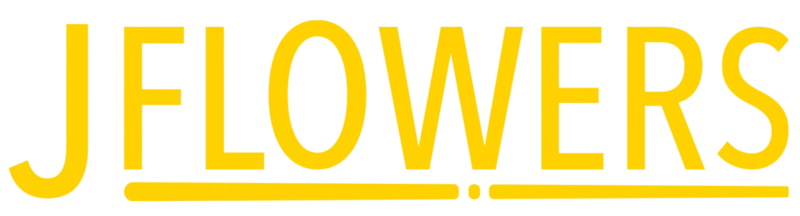
The answer is simple: before every shot. Not before english shots. Not before draw shots. Before every single shot, every time, without exception.
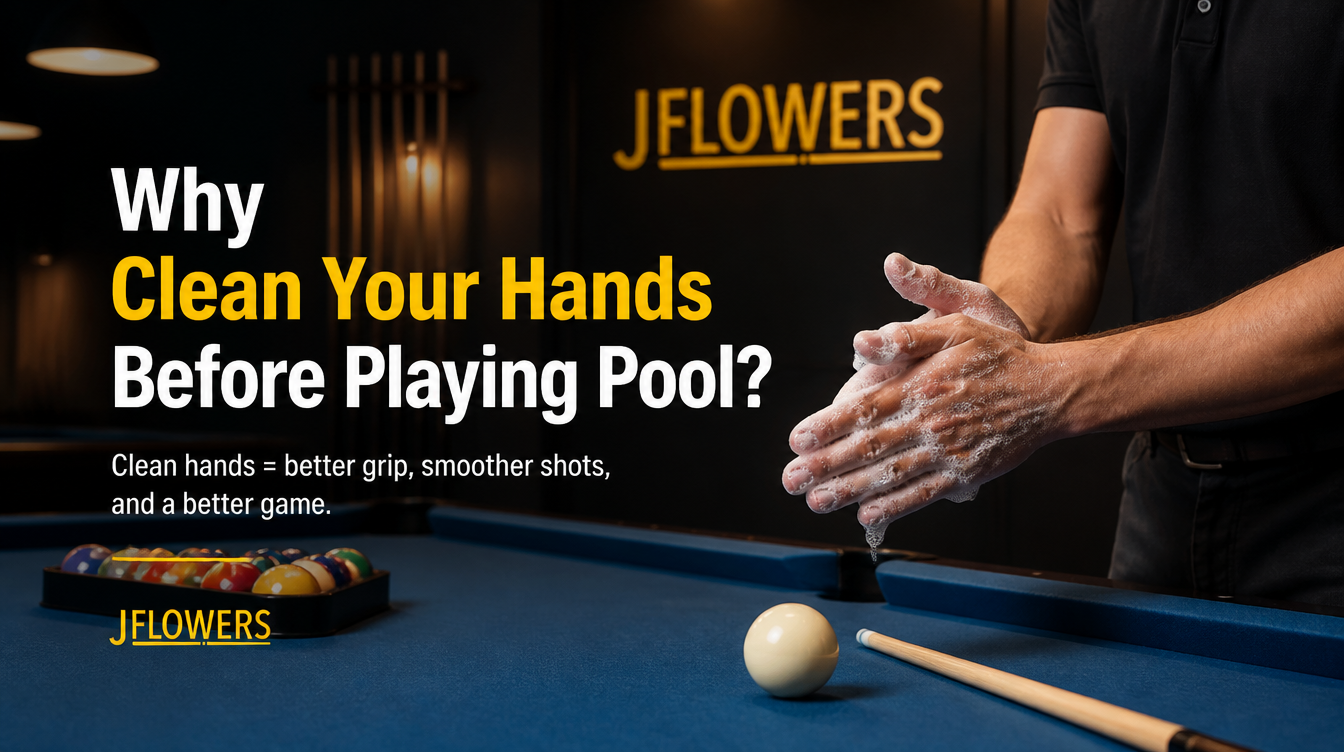
Experienced pool players clean their hands before important shots. Beginners often skip it entirely. The difference isn’t just about hygiene — it’s about equipment performance and contact consistency. Your
hands interact with multiple surfaces during every session: the cue shaft, the cue ball, the table rails, other players’ equipment. What’s on your hands affects all of those interactions.
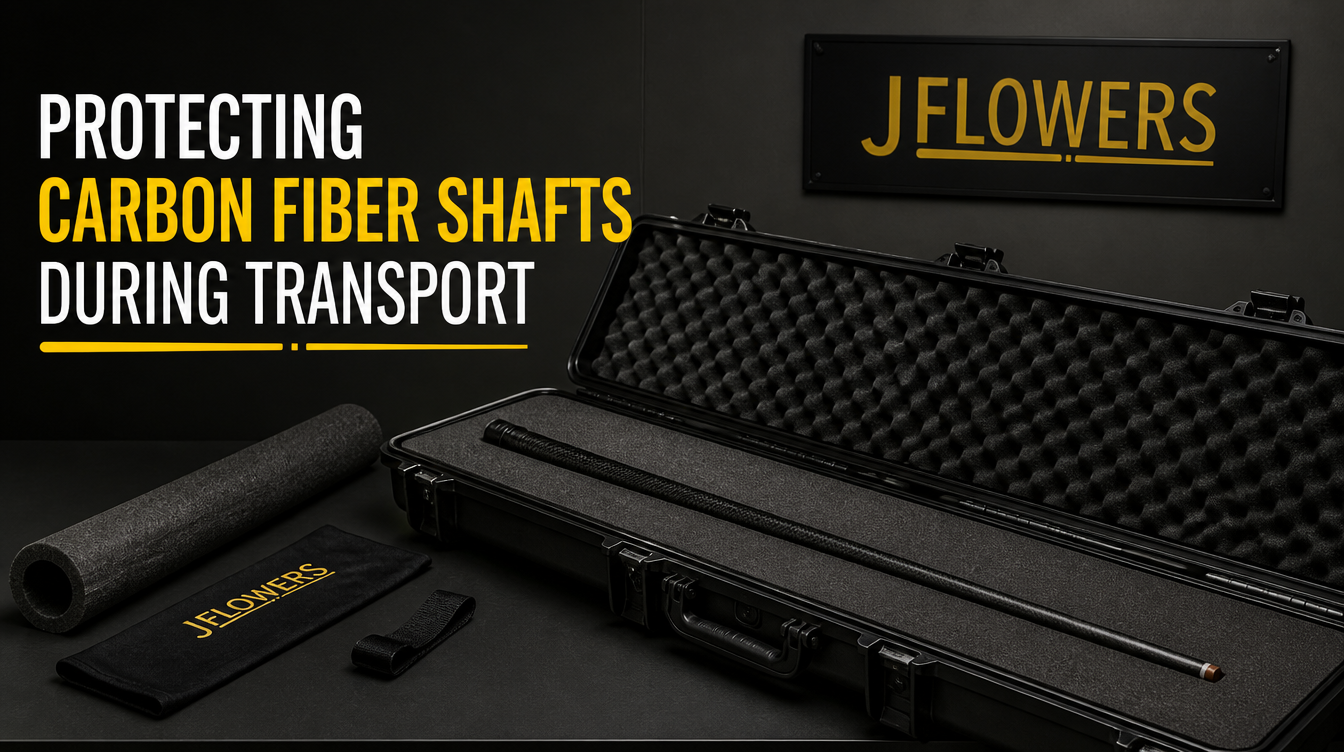
Carbon fiber shafts eliminate one of the biggest protection concerns in pool equipment — warping from humidity and heat. But they introduce a specific vulnerability that wood shafts are less susceptible to: tip-end impact damage. Understanding exactly what a carbon fiber shaft needs protection from — and what it doesn’t — helps you choose the right protection strategy without over engineering the solution.
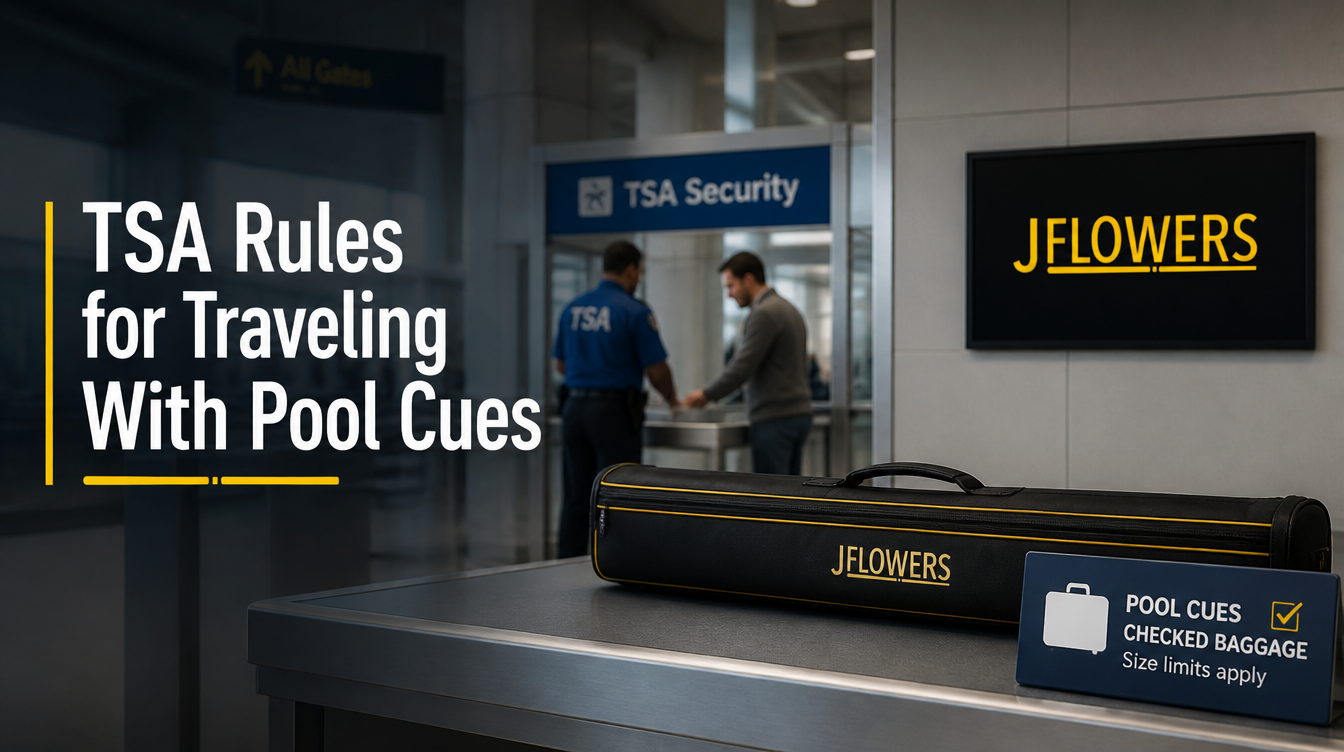
Pool players flying to tournaments often wonder exactly what TSA allows and what will get them held up at security. The good news: pool cues are not prohibited items. The nuance: how you pack them, where they’re stowed, and what individual officers decide in the moment all affect the experience.

Flying to a tournament with your pool cue involves navigating airline policies, security procedures, and the genuinely harsh environment of checked baggage handling. Do it right and your cue arrives exactly as it left. Do it wrong and you’re playing a tournament on whatever house cues the venue has available.
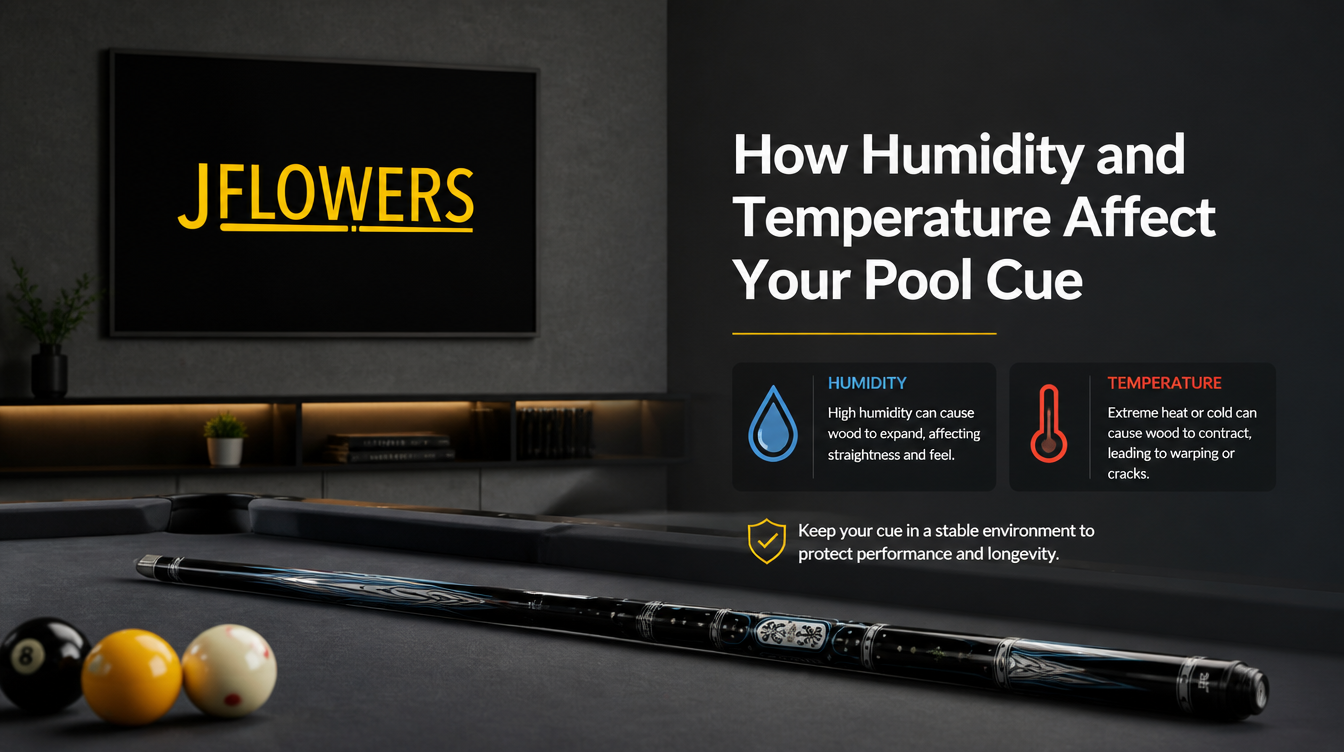
Pool cues are sensitive instruments. The same stick that plays perfectly in the controlled climate of your home practice room can feel and perform differently on a humid summer evening at the local pool hall. Wood is a living material that responds to its environment — and that responsiveness has real consequences for your game.
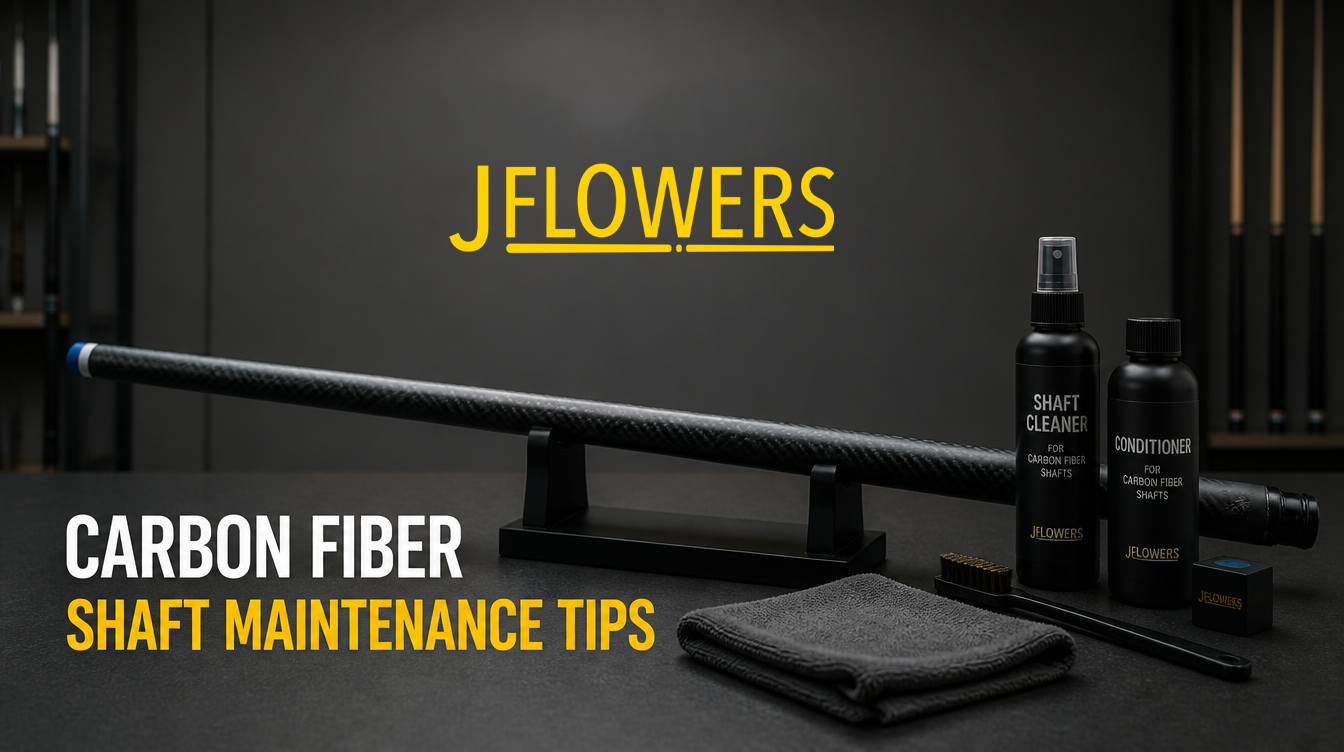
One of the big selling points of carbon fiber shafts is that they require far less maintenance than wood. That’s true — but ‘less maintenance’ doesn’t mean ‘no maintenance.’ A few simple habits keep a quality JFlowers SMO shaft performing at its best session after session.
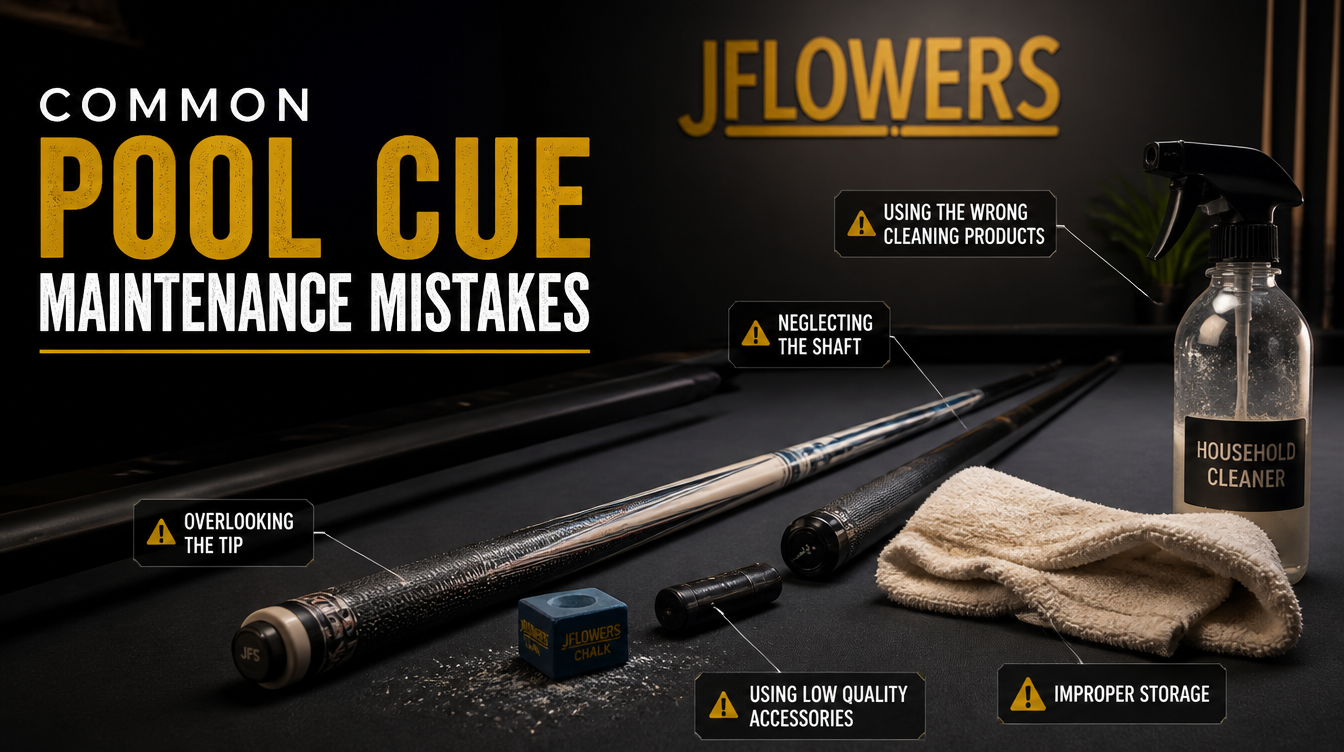
The errors that damage cues, shorten equipment life, and cost players money. Most cue maintenance mistakes fall into two categories: doing things that actively damage the cue, and not doing the things that protect it. Both are common. Both are avoidable.
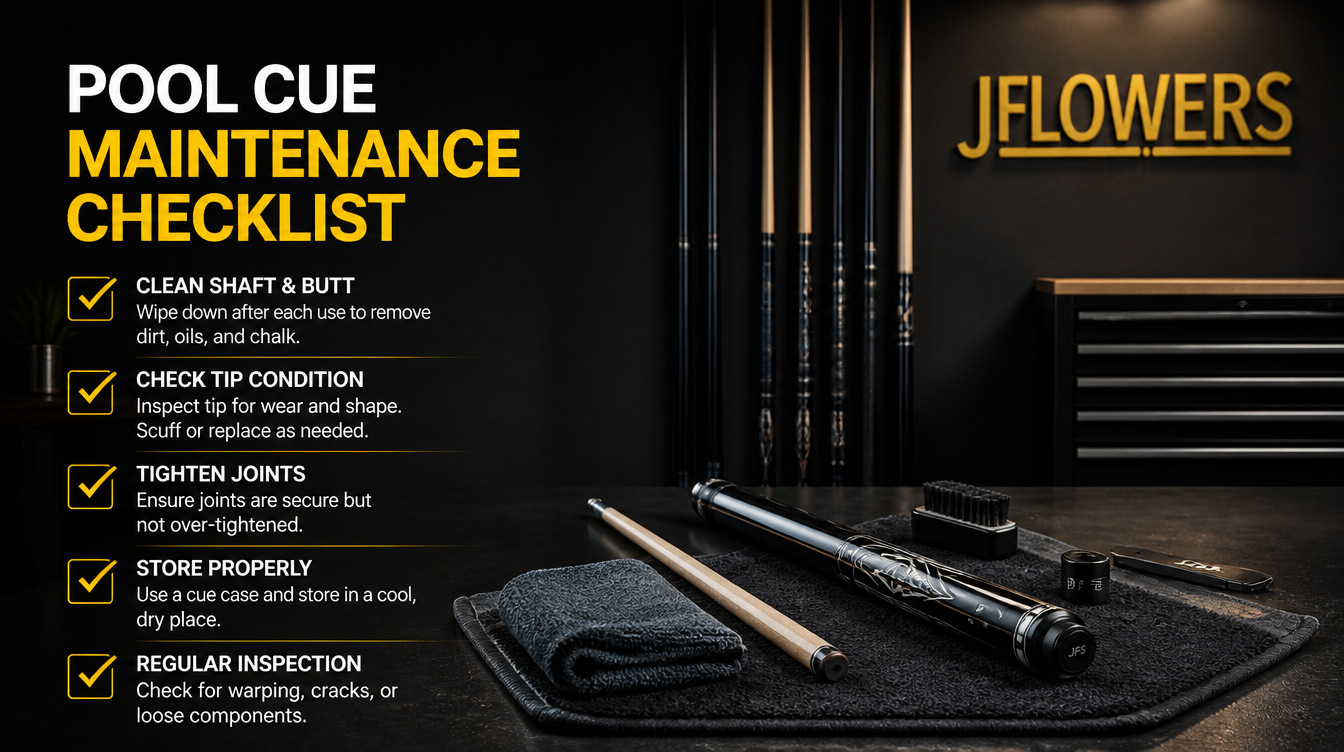
Most pool players either over-maintain their cues (applying products that aren’t needed and sometimes cause problems) or under-maintain them (doing nothing until something obviously breaks). The right maintenance routine is somewhere in the middle — simple, consistent, and organized by how often each task actually needs to happen.
What causes it, who it affects, and how to make sure it never happens to your cue.
A warped pool cue shaft is one of the most frustrating equipment problems in the game — and one of the most preventable. The warp doesn’t happen overnight. It develops slowly over weeks or months of suboptimal storage, usually without the player noticing until the shot inconsistency has gotten bad enough to investigate.