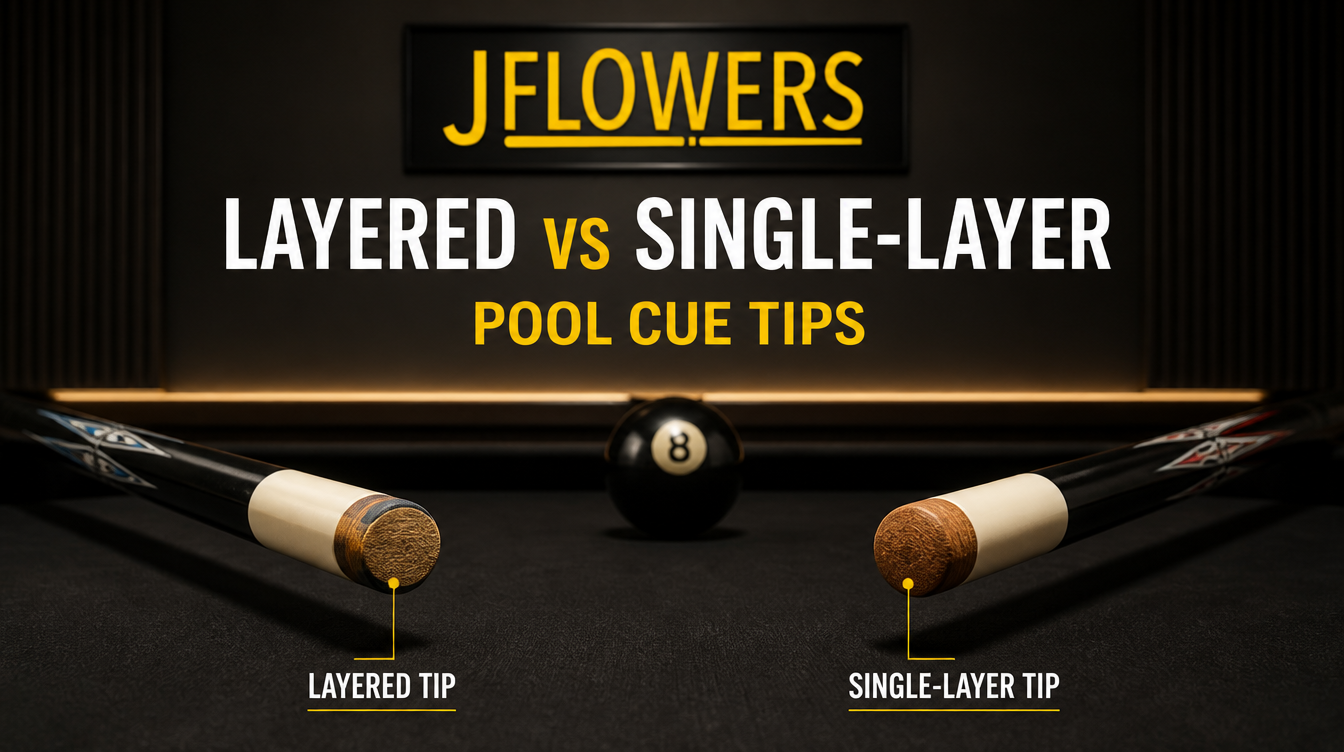
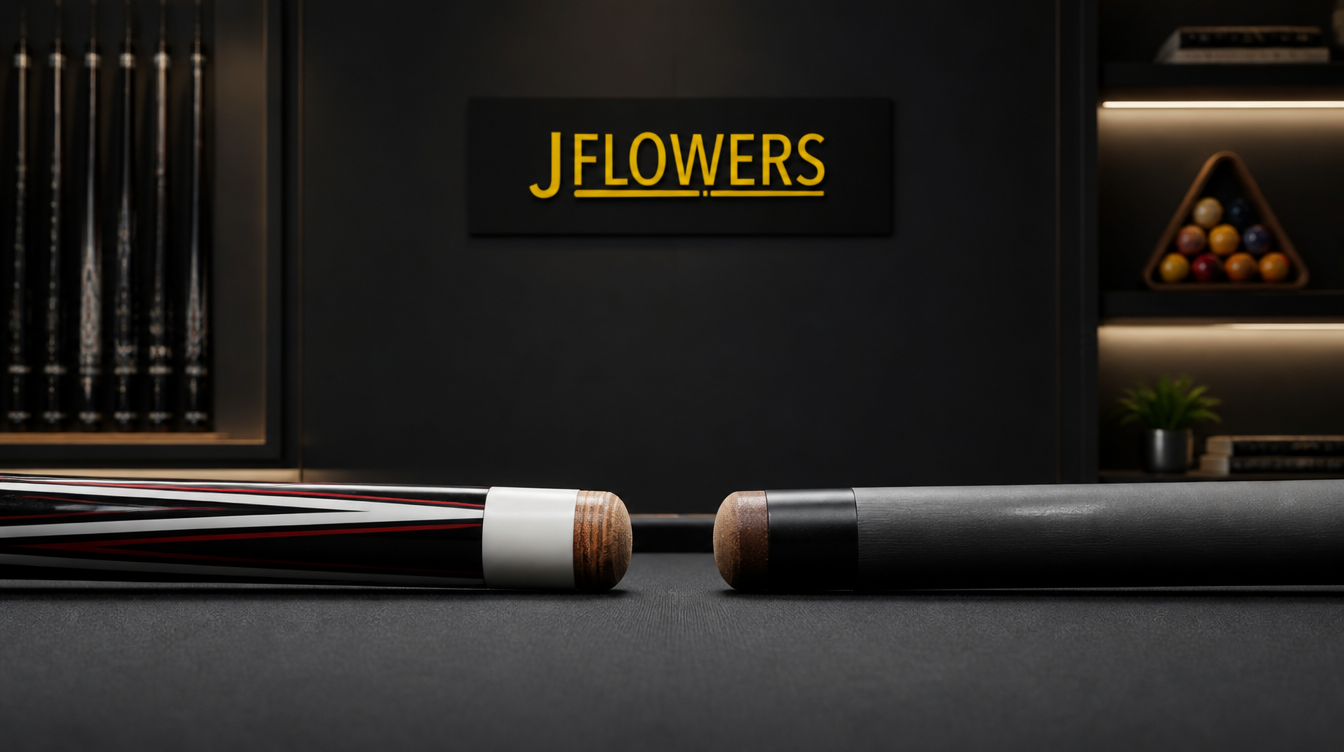
The pool cue tip market divides into two fundamental construction types: layered tips and single-layer tips. Walk into any billiards shop and you'll see both — cheap leather tips for $2-$5, and premium layered options from Taom, Kamui, and Tiger for $15-$35. The price difference is real and reflects genuine differences in construction and performance.
Listen to this article
This guide explains what separates these two construction types, what each delivers on the table, and why the upgrade from single-layer to layered is one of the best performance investments a pool player can make.
Single-Layer Tips: Construction and Performance
A single-layer pool cue tip is exactly what it sounds like: a single piece of leather, cut into a disc and bonded to the shaft. The leather is typically vegetable-tanned or chrome-tanned hide, cut to the appropriate diameter, and installed with the grain of the leather facing the cue ball.
Single-layer tips have been the standard in pool for generations. Every house cue in every pool hall runs a single-layer tip. They work — but they have significant limitations:
Mushroom easily — single-layer leather compresses quickly under repeated impact and spreads outward
Inconsistent hardness across the tip — the leather’s grain structure means the center plays differently from the edges
Variable chalk retention — depends heavily on the quality of the specific leather hide
Short lifespan under competitive use — a single-layer tip on heavy competitive use may need replacement in 2-4 months
The Elk Master is the most famous single-layer tip in pool — you’ve played on one. They’re fine for casual play and house cues. They’re inadequate for serious competitive play. For when to replace a single-layer tip, see Signs Your Cue Tip Needs Replacing.
Layered Tips: Construction and Performance
Layered tips are built from multiple thin layers of leather — typically 10-20 layers — pressed together and bonded with adhesive. The manufacturing process precisely controls the hardness, compression characteristics, and surface properties of the finished tip in ways that a single piece of leather cannot achieve.
Kamui Original uses 14 layers. Taom’s layered construction uses a proprietary process. Tiger Sniper uses multiple layers with specific hardness gradations. The specific number and type of layers contribute to each brand’s distinct feel and performance character. The performance advantages of layered construction are significant:
Better shape retention — the layered structure resists mushrooming much more effectively than single-layer leather
More consistent hardness across the full tip face — every part of the tip plays the same
Better chalk retention — the compressed multi-layer surface holds chalk more consistently
Longer lifespan — quality layered tips last 6-18 months of competitive play versus 2-4 months for single-layer
More consistent feel from tip to tip within the same brand and hardness grade
For the best layered tip brands and what each one offers, see Best Cue Tip Brands.
Why Layered Tips Cost More
The manufacturing process for layered tips is significantly more involved than for single-layer tips. Sourcing and preparing consistent leather, precisely controlling layer thickness, ensuring uniform bonding between layers, and maintaining consistency across production batches all add cost. The result is a tip that costs $15-$35 rather than $2-$5. The cost-per-use math works out clearly in favor of layered tips: a $20 Taom tip lasting 12 months costs less per month of play than a $5 single-layer tip replaced every 2-3 months. And the performance difference across that lifespan is enormous.
Layered Tips on Carbon Fiber Shafts
For players using the JFlowers SMO Carbon Fiber Shaft or other ferrule-less carbon fiber designs, layered tips are the correct choice. The consistent hardness profile of layered tips works well with carbon fiber’s crisp, direct hit character. Single-layer tips feel inconsistent and overly soft on carbon fiber shafts, where the shaft’s stiffness amplifies tip inconsistencies rather than masking them. For tip recommendations specific to carbon fiber, see Choosing the Right Pool Cue Tip.
When Single-Layer Tips Are Acceptable
Single-layer tips have legitimate uses: house cues in pool halls where tips get replaced infrequently, practice cues in high-volume environments where budget is the primary constraint, break and jump cues where the impact characteristics of single-layer leather are acceptable.
For any serious playing cue: layered is the right choice. The performance difference is not subtle — it’s immediately apparent to any player who has used both.
Pros and Cons
Layered tips
Superior shape retention — resist mushrooming under competitive use
More consistent hardness across the full tip face
Better chalk retention
Longer lifespan — better cost-per-use value over time
More consistent feel tip-to-tip within the same brand
Higher upfront cost — $15-$35 per tip
More involved installation for ferrule-less carbon fiber designs\
Single-layer tips
Very low cost — $2-$5 per tip
Widely available
Adequate for casual and recreational play
Mushroom quickly under competitive use
Inconsistent hardness across the tip face
Shorter lifespan — requires more frequent replacement
Expert Recommendation
Switch to layered tips. If you’re still playing on a single-layer leather tip and haven’t tried a quality layered alternative, the upgrade to a Taom medium is the single best equipment change you can make for $20. It will immediately improve your chalk retention, your shape retention, and your contact consistency. There’s no good reason to play on a single-layer tip on a serious playing cue.
Conclusion
The single-layer vs layered decision is the clearest performance upgrade in cue tip selection. Layered tips are better — in shape retention, chalk retention, consistency, and lifespan. The price premium is justified many times over in performance and cost-per-use terms. If you’re not already using a layered tip, the switch to a Taom or Kamui medium is the best $20-$25 equipment investment you’ll make in your pool game this year.
Frequently Asked Questions
Q: Are layered pool cue tips better? Yes, for competitive play. Layered tips offer better shape retention, chalk retention, consistency, and lifespan than single-layer alternatives. Q: What is a layered pool cue tip? A tip made from multiple thin layers of leather pressed and bonded together. The layered structure provides better performance characteristics than a single piece of leather. Q: How many layers do premium tips have? Typically 10-20 layers depending on the brand and series. Kamui Original uses 14 layers; other brands have proprietary layer counts optimized for their target hardness and feel. Q: Is Taom a layered tip? Yes. Taom tips use a layered construction that produces the consistency and chalk retention the brand is known for. Q: Can I put a layered tip on a house cue? Yes — and it will dramatically improve a mediocre house cue’s performance. If you own a house cue and play on it regularly, a layered tip upgrade is worthwhile. Q: Do layered tips need breaking in? Yes, though the break-in period for layered tips is generally shorter and more predictable than for single-layer tips. See https://jflowerscues.com/pool-cue-reviews-buying-guides-expert-advice/how-to-break-in-a-new-cue-tip/ for the full process. Q: How much do layered tips cost? Quality layered tips range from $10-$35 per tip. Taom: $15-$25. Kamui: $20-$35. Tiger: $10-$20. Q: Why does a layered tip hold chalk better? The compressed multi-layer construction produces a denser, more uniform surface that holds chalk more consistently than the grain structure of a single piece of leather.
After comparing JFlowers to Predator, Mezz, McDermott, Meucci, Jacoby, Pechauer, and a dozen more brands across every price point and construction philosophy — the question that started all of it deserves a direct answer: which pool cue brand actually offers the best value for serious competitive players in
2026?
Players Technology is one of the most widely used cue brands in American pool halls. Their two-piece cues at $40-$150 have introduced millions of American players to personal cue ownership. Nearly every serious pool player in America either started on a Players cue or played against someone who did. Comparing Players to JFlowers isn’t really a direct competition — it’s a marker on the journey from beginner to serious competitor.