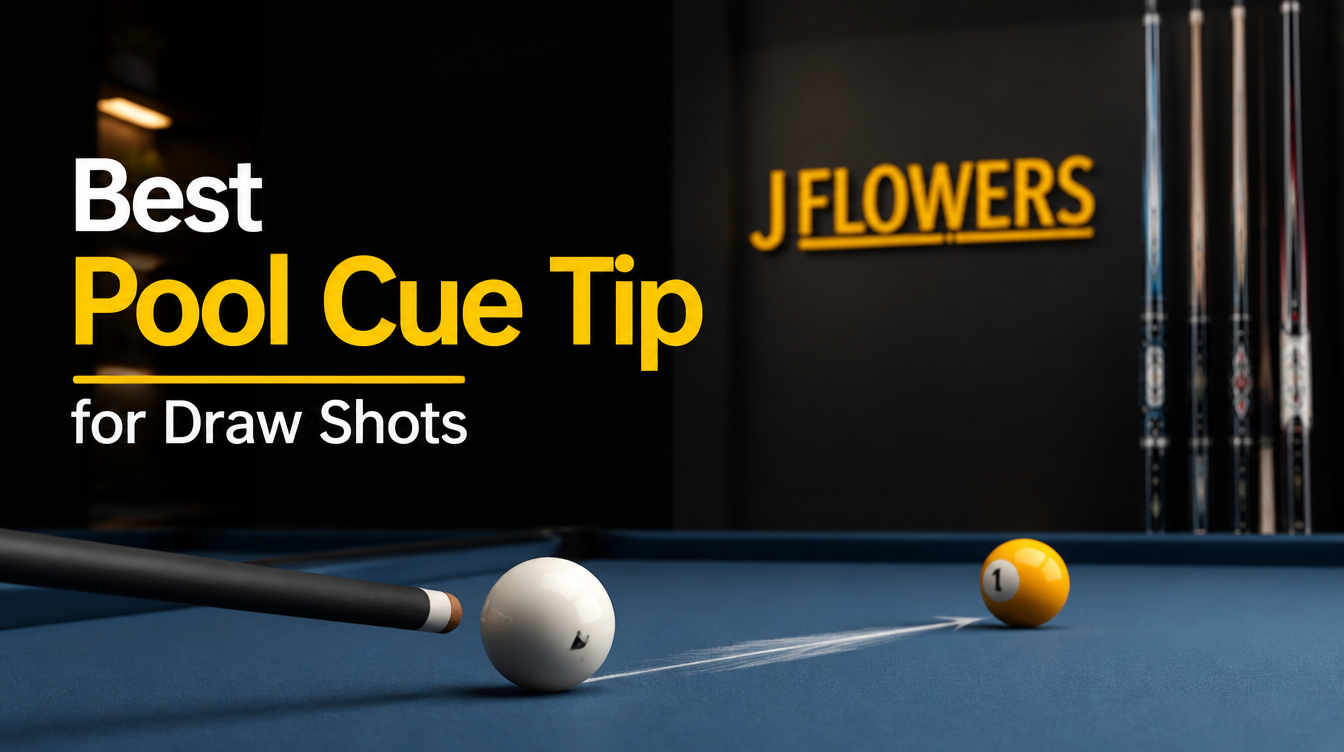
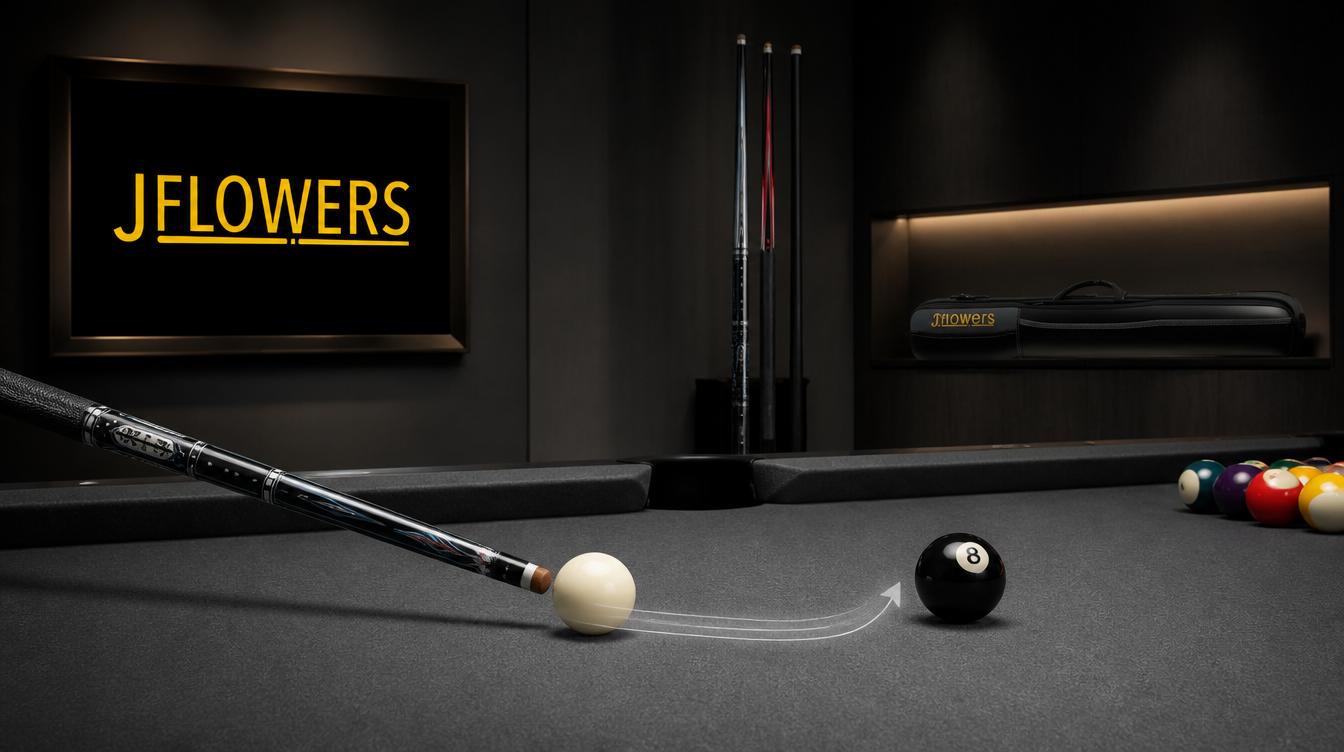
Draw shots — hitting below center on the cue ball to create backspin — are one of the most satisfying shots in pool when they work, and one of the most frustrating when they don't. The cue ball rolls back toward you, position opens up, and the rack unfolds. Get the draw wrong and you're hooked or out of position.
Listen to this article
Tip selection genuinely affects draw performance, though perhaps not in the way most players expect. This guide explains what actually matters for draw shots and how to optimize your tip selection for backspin work.
What Draw Shots Demand From a Tip
A draw shot contacts the cue ball below center — the further below center, the more backspin. At this below-center contact point, the tip needs to:
Grip the cue ball effectively to transfer reverse spin
Hold chalk reliably at the below-center contact position
Maintain consistent contact geometry across different amounts of draw
Resist slipping on the cue ball at the oblique contact angle of deep draw shots
Tip Hardness and Draw
The relationship between tip hardness and draw performance is more nuanced than the soft-gives-more-spin marketing suggests. Here’s what actually happens:
At slow to medium stroke speeds, softer tips do transfer draw spin more easily — the larger contact area and longer dwell time give more opportunity for spin transfer. A player learning draw shots often finds a softer tip more forgiving.
At competitive stroke speeds with committed draw technique, medium tips perform essentially as well as soft tips for draw. The tip is contacting the ball below center with enough force that the contact area and dwell time differences between soft and medium become negligible. What matters more is chalk and technique.
Hard tips can execute powerful draw shots — many straight pool players use hard tips and play excellent draw — but require more deliberate technique: more pronounced below-center contact, more committed follow-through. See Hard Tips Explained for the hard tip draw discussion.
The Chalk Factor in Draw Shots
Here’s the thing most players don’t realize: missed draw shots are more often a chalk problem than a tip hardness problem. The below-center contact point on a draw shot is one of the positions most susceptible to tip slipping without adequate chalk — the contact is oblique and the spin direction puts stress on the tip-to-cue-ball grip.
Apply chalk before every draw shot, particularly on deep draw attempts. Taom chalk bonds consistently to Taom and Kamui tips and provides excellent grip at below-center contact angles. Many players who have draw problems’ discover that consistent chalking resolves most of them.
Tip Shape for Draw
Nickel radius maintained consistently is important for draw shots. A flat tip contacts the cue ball at an increasingly poor angle on below-center shots — the same problem it causes for english, just in the vertical axis instead of horizontal. A properly maintained dome provides consistent contact geometry at below-center positions across the full draw range.
For most competitive players who want the best draw performance: Taom medium or medium-soft, or Kamui Original medium-soft. Both provide:
Good spin transfer at competitive stroke speeds
Excellent chalk retention at below-center contact positions
Consistent contact geometry on draw shots across the full range
For players who specifically specialize in draw-heavy play (e.g., rotation, where power draw shots are frequent): medium-soft gives a slight feel advantage on delicate draw position shots at lower speeds. For the full brand comparison, see Kamui vs Taom Cue Tips.
Draw on Carbon Fiber Shafts
Draw shots on carbon fiber shafts are an area where some players need adjustment. The crisp, direct hit of carbon fiber produces very efficient draw spin transfer — but the cue ball behaves more predictably under draw (less exaggerated movement from deflection) than on high-deflection maple. Players switching from maple to carbon fiber sometimes feel their draw is ‘weaker’ — it’s not; the position result is just different because there’s less deflection kick. Once calibrated, most players find draw on carbon fiber more predictable and reliable.
Pros and Cons
Medium-soft tip for draw
Good spin transfer across a wide range of draw stroke speeds
Forgiving on slightly off-center below-center contacts
Adequate feedback on draw shot quality
Mushrooms somewhat faster than medium under heavy use
Medium tip for draw
Better shape retention than medium-soft
Sufficient draw performance at competitive stroke speeds
All-round balance for players who play both draw and follow
Slightly less grip at very low speeds compared to softer options
Expert Recommendation For draw-focused play: Taom medium-soft or Kamui Original medium-soft is our recommendation. Apply chalk before every draw shot. Maintain nickel radius consistently. The JFlowers SMO carbon fiber shaft’s crisp energy transfer pairs well with a medium-soft tip for reliable draw performance at competitive speeds.
Conclusion
Draw shots reward good technique over tip selection — but the right tip removes obstacles from your draw game. Medium-soft to medium, properly chalked and maintained at nickel radius, gives you reliable grip at below-center contacts across the full draw speed range. Don’t blame the tip for draw problems caused by insufficient chalk or a flat tip surface. Fix those first, then evaluate whether tip hardness adjustment helps.
Frequently Asked Questions
Q: What is the best tip for draw shots in pool? Taom medium-soft or Kamui Original medium-soft for most competitive players. Medium also works well at competitive stroke speeds. Q: Do soft tips draw better? At low speeds, soft tips have a slight advantage. At competitive speeds with proper technique, the difference between medium-soft and medium is minimal. Q: Why do I keep missing my draw shots? Most commonly: insufficient chalk on a below-center contact (most common), tip gone flat, or stroke mechanics issues. Try chalk before every draw attempt and check your tip shape. Q: Does tip shape affect draw shots? Yes. A flat tip contacts the cue ball at a poor angle on below-center shots, reducing grip and increasing slip risk. Nickel radius maintained consistently is essential. Q: Does carbon fiber shaft affect draw? Yes — carbon fiber produces more predictable draw results because there’s less deflection variability. Some players initially feel their draw is weaker when switching, but this is a calibration effect, not an actual reduction in draw performance. Q: How hard should I hit a draw shot? Draw shots are stroke-speed-dependent. Light draw requires less force; power draw across the table requires a full committed stroke. Tip hardness should match your common stroke speed range.
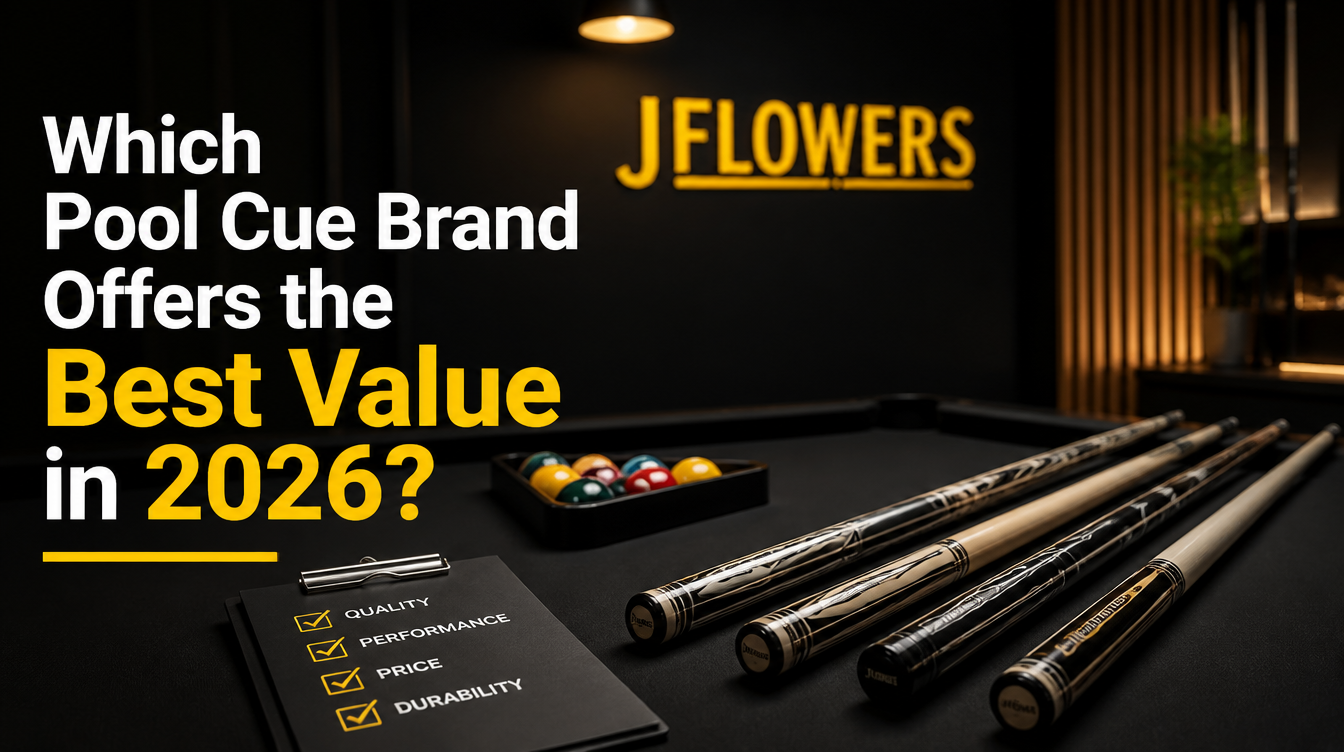
After comparing JFlowers to Predator, Mezz, McDermott, Meucci, Jacoby, Pechauer, and a dozen more brands across every price point and construction philosophy — the question that started all of it deserves a direct answer: which pool cue brand actually offers the best value for serious competitive players in
2026?
Players Technology is one of the most widely used cue brands in American pool halls. Their two-piece cues at $40-$150 have introduced millions of American players to personal cue ownership. Nearly every serious pool player in America either started on a Players cue or played against someone who did. Comparing Players to JFlowers isn’t really a direct competition — it’s a marker on the journey from beginner to serious competitor.