The lifespan question is one of the most practical considerations when justifying a carbon fiber shaft investment. A quality carbon fiber shaft costs $250-$500. If it lasts 10 years, that’s a strong value proposition. The honest answer: a well-maintained quality carbon fiber shaft will last many years — often adecade or more of competitive play.
Author Archives: JFlowers Cues
One of the big selling points of carbon fiber shafts is that they require far less maintenance than wood. That’s true — but ‘less maintenance’ doesn’t mean ‘no maintenance.’ A few simple habits keep a quality JFlowers SMO shaft performing at its best session after session.
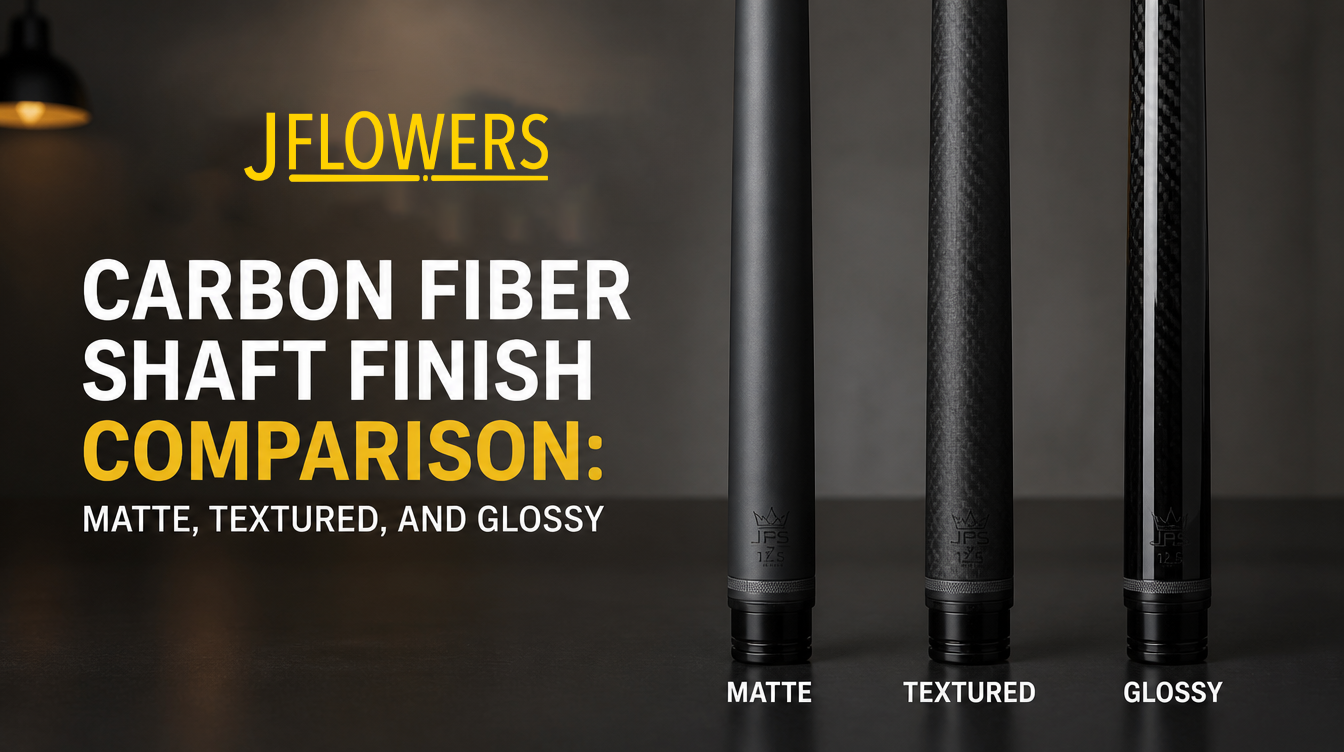
When you pick up different carbon fiber pool cue shafts, one of the first things you notice is that they don’t all feel the same — even if the underlying construction is similar. The surface finish plays a much bigger role in the playing experience than most players expect.
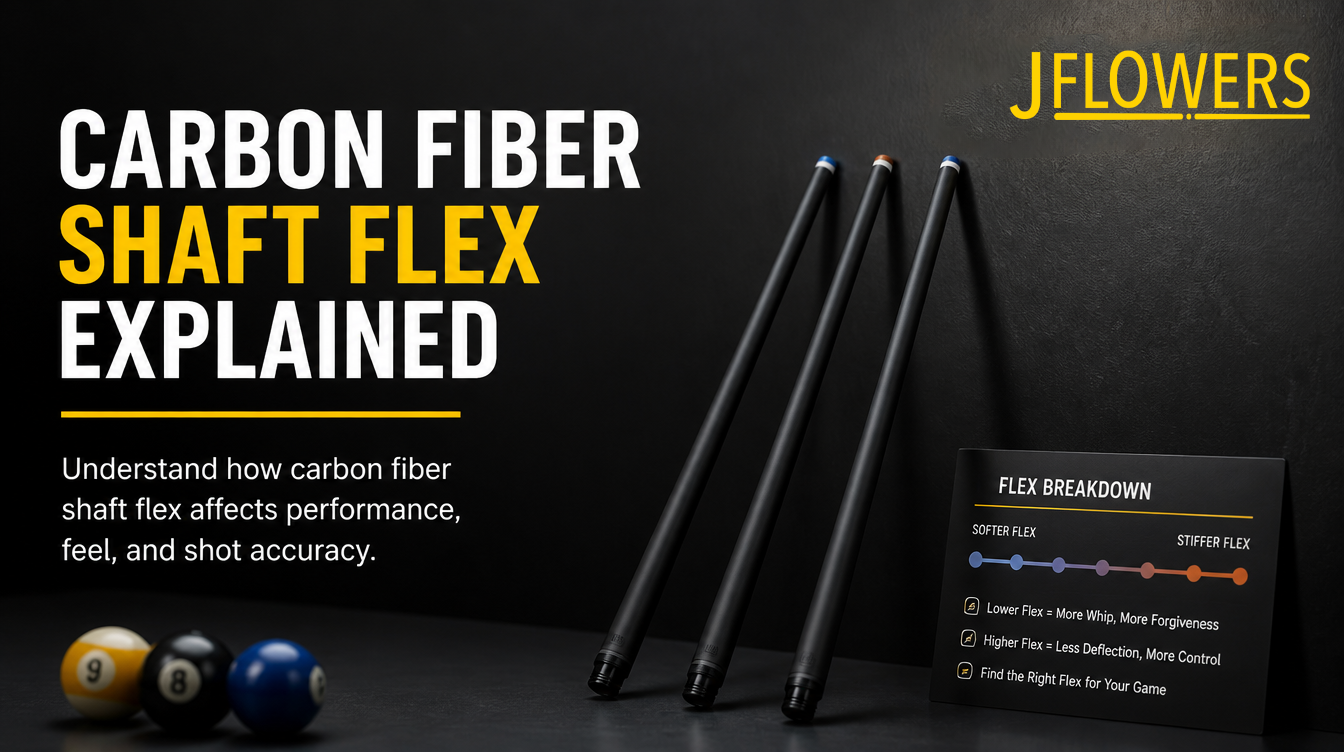
When a pool cue shaft strikes the cue ball off-center, it flexes. That flex is what causes cue ball deflection — the sideways movement of the cue ball away from your aim line when you apply english. Understanding how carbon fiber shafts flex differently from wood explains the core performance advantage of carbon fiber technology.
Feel is the most personal and hardest-to-describe aspect of switching to carbon fiber. Ask ten players what a carbon fiber shaft feels like and you’ll get ten slightly different answers — but most will include
words like ‘crisp,’ ‘direct,’ ‘different,’ and eventually, for players who stuck with it, ‘better.’
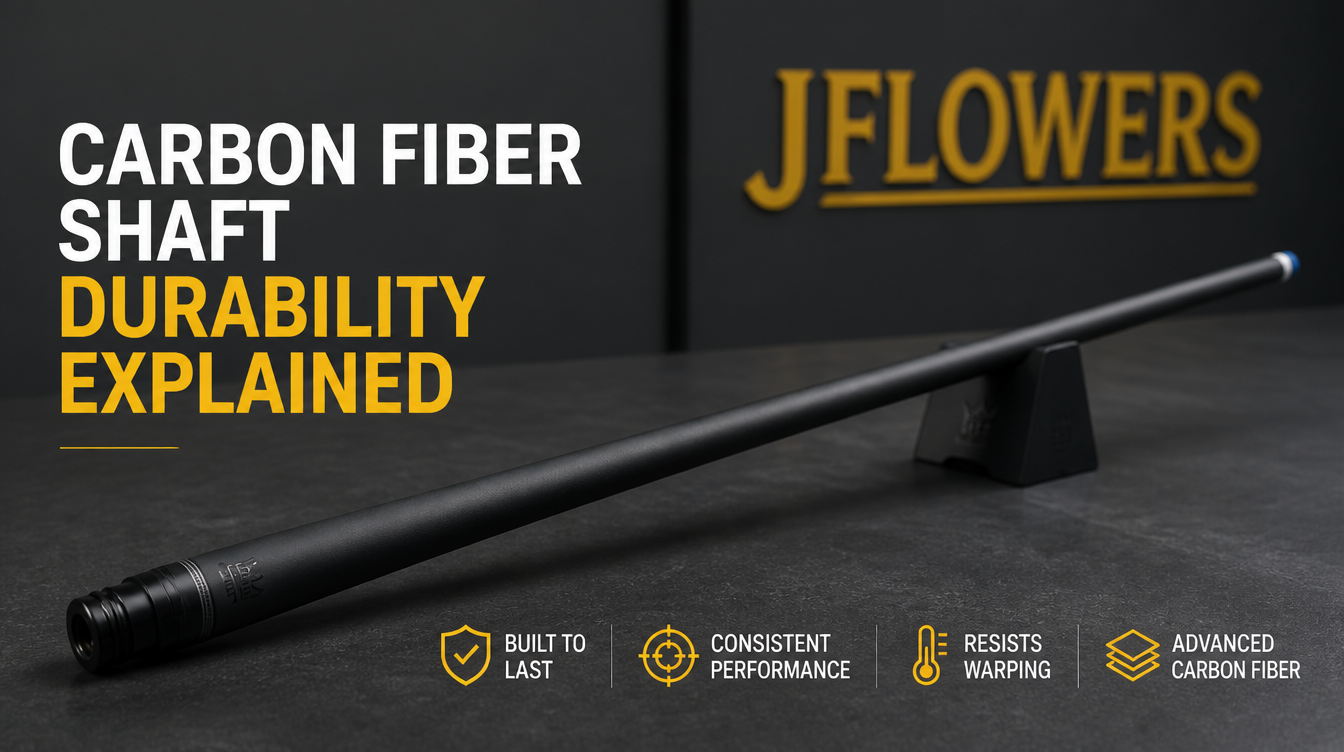
One of the most common questions from players considering a carbon fiber upgrade: how durable are they actually? It’s a fair question when you’re looking at a $300-$500 investment. The answer is genuinely good news — but it comes with nuance about what wears and what doesn’t.
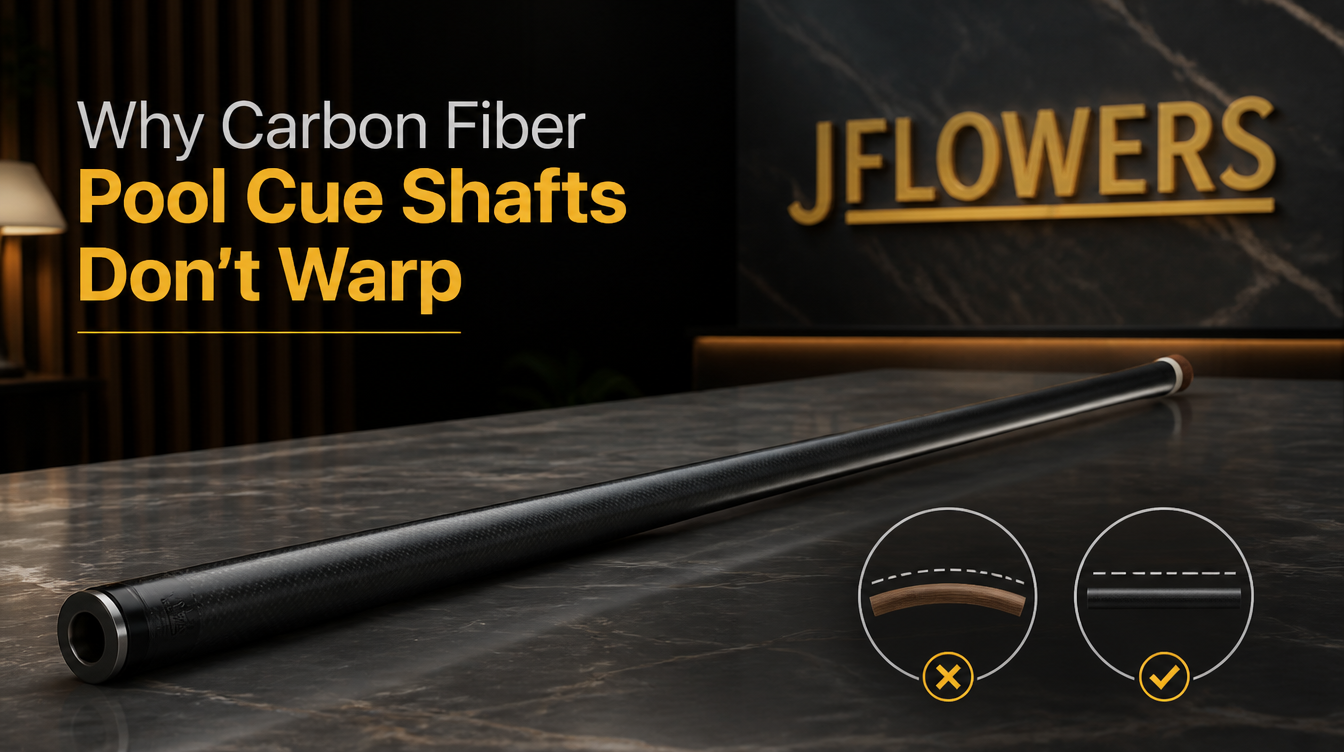
Every serious pool player who has played on a wood shaft has dealt with warp at some point. Sometimes it’s a gradual curve that develops over months. Sometimes it’s a dramatic bend from a single hot-carn storage incident. Either way, a warped shaft is a performance problem — and on a budget cue, it’s often the beginning of the end.
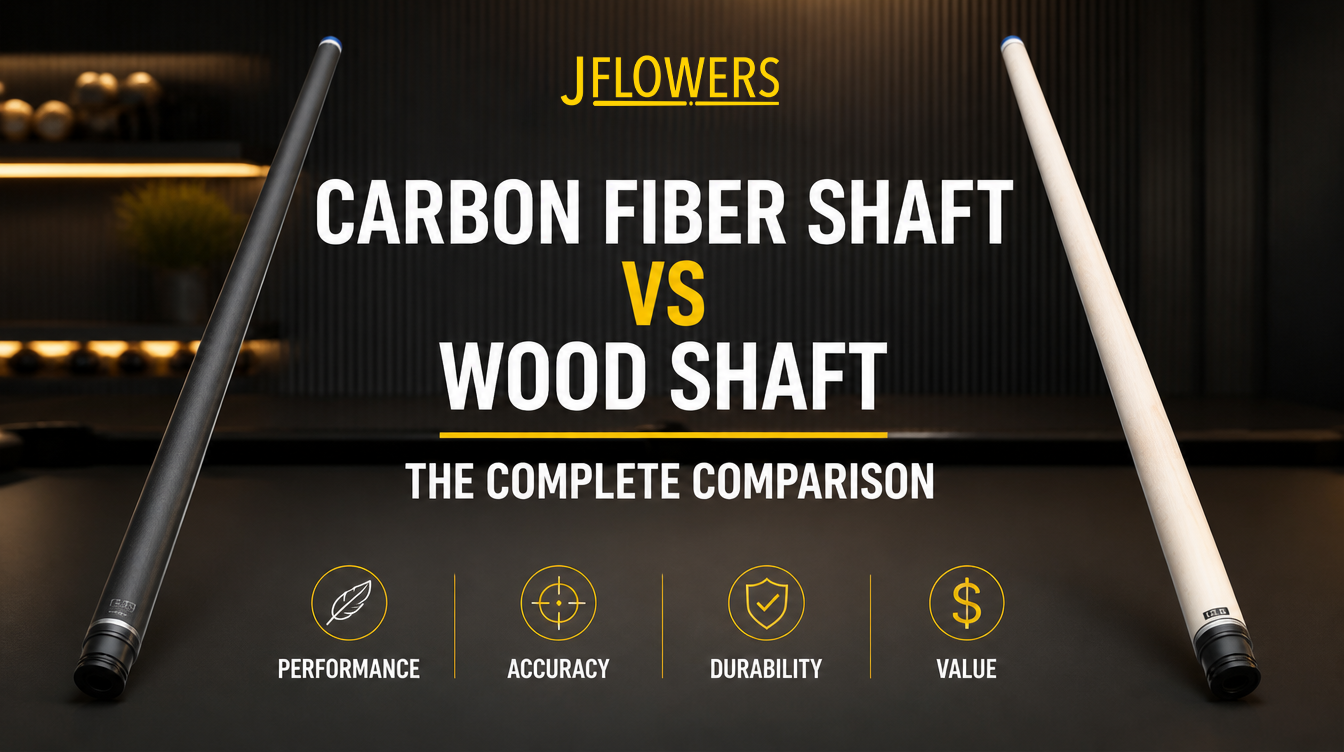
No equipment debate in billiards gets more airtime than carbon fiber vs wood. Players who’ve never tried carbon fiber are skeptical. Players who’ve switched often won’t go back. Somewhere in the middle are thousands of players trying to figure out which one is right for their game.
Most players buy their first real pool cue wrong. Sometimes spectacularly wrong. A $600 cue purchased in the first month of play. A cheap stick bought because it looked good in photos. A carbon fiber shaft ordered without understanding the aim adjustment. An expensive custom cue specced before the player knew what they actually wanted.
Tournament pool is a different animal from weekly league play. The stakes are higher, the nerves are real, and equipment that performs inconsistently in a regular session becomes a genuine liability when you’re
playing a $500 entry fee bracket match. Everything gets amplified under tournament conditions — including equipment variability.