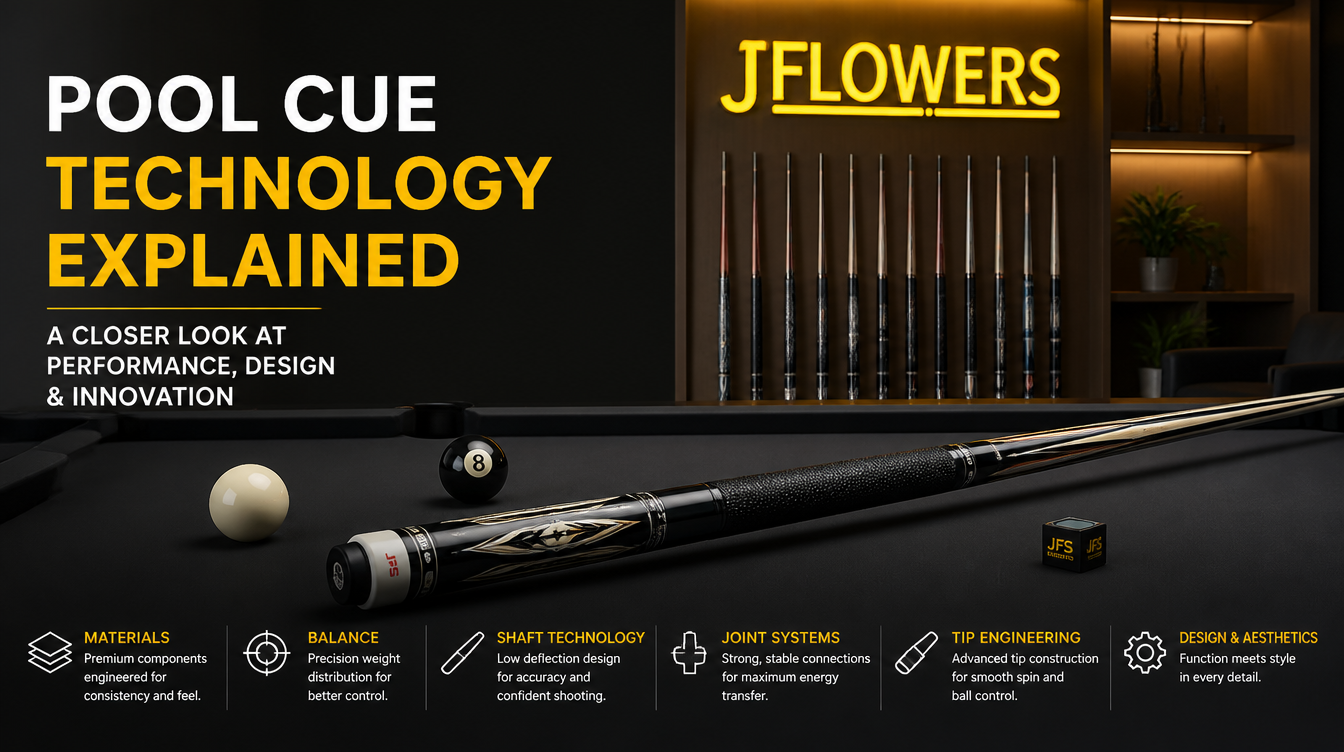
At the advanced level, buying a pool cue is a completely different conversation than it is for beginners or intermediate players. You’ve developed a stroke. You know your weight preference. You have opinions about tip hardness, shaft feel, and joint type. The question isn’t “what should I get” — it’s “how do I find the specific combination of features that my game actually demands.”
Author Archives: JFlowers Cues
It’s the biggest equipment debate in pool right now. Carbon fiber shafts have gone from a novelty product to a mainstream option that a growing number of players at every level are choosing over traditional maple. The marketing on both sides can be loud — so here’s an honest, detailed look at what actually separates these two materials and what that means for your game.
There’s a specific moment most pool players recognize — the point where the cue they started with stops being good enough. Not because anything is wrong with it, exactly, but because your game has developed to a level where the equipment is now a limiting factor.
You’re applying more english, thinking about position, running balls — and your shaft is introducing inconsistencies that your technique can’t fully overcome.
If you’re new to pool and thinking about buying your first cue, you’re already ahead of mo beginners. Most new players rely on house cues for months or even years — and that’s one of the main things that slows their development down.
Walk into any pool supply shop or browse online for five minutes and you’ll quickly realize the same thing every new buyer realizes: there are hundreds of pool cues out there, a dozen confusing spec terms, and prices that range from $30 to well over $3,000. It’s a lot to sort through — especially when you’re not sure what actually matters and what’s just marketing noise.